
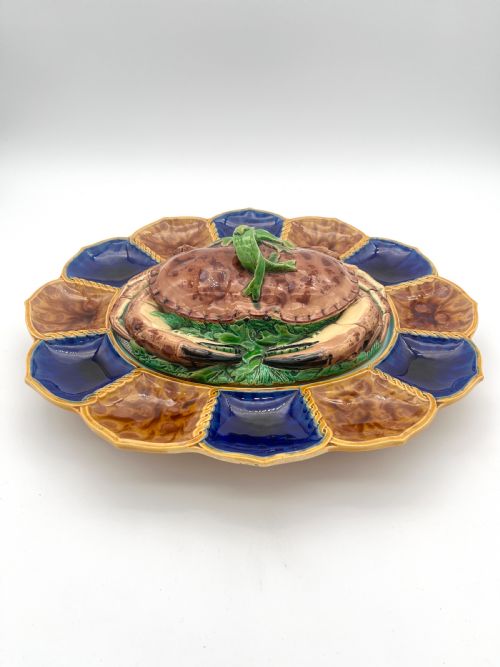


Blue Majolica Dish
A blue majolica dish brings rich cobalt and deep turquoise to the table, combining heavy earthenware forms with vibrant lead or tin glazes.
Blue Majolica Dish
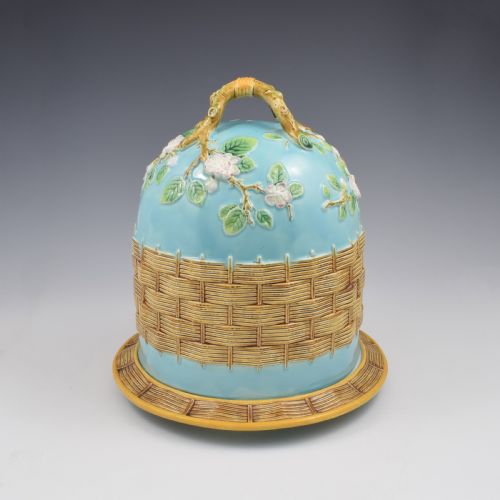
When you search for a blue majolica dish, you encounter an array of heavy earthenware vessels spanning from the seventeenth century through the Victorian era. These pieces range from large charger plates and serving dishes to elaborate cheese domes and decorative platters.
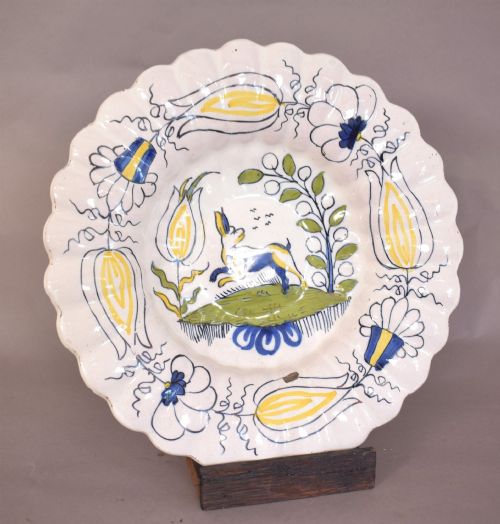
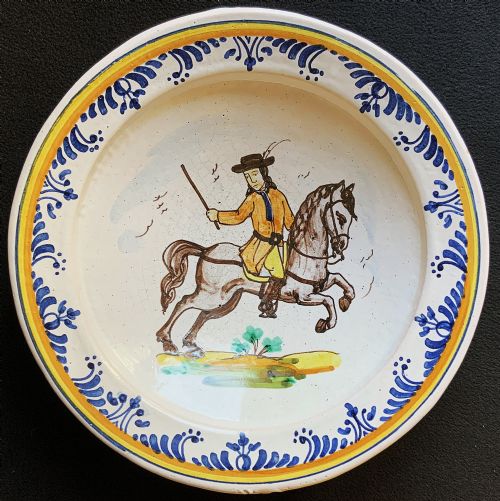
The nineteenth century yields the highest concentration of Victorian majolica and faience, often featuring rich moulded reliefs. Earlier centuries are represented by tin-glazed earthenware and Dutch Baroque or Spanish delft chargers.
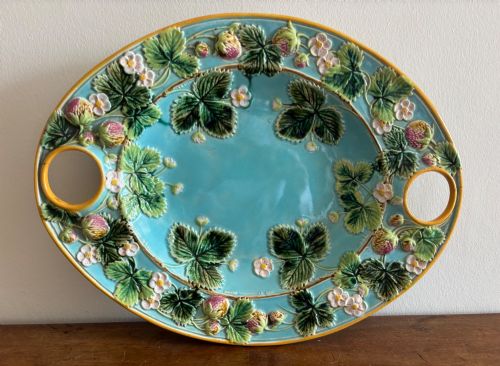
Forms vary significantly, encompassing botanical strawberry dishes, sardine boxes, and figural crab tureens alongside classical Italian maiolica istoriato charger plates.
Materials and construction
Potters shaped these objects from earthenware and terracotta bodies, building up substantial forms suitable for cheese domes, large chargers, and tureens. The raw clay was moulded or thrown before receiving its initial firing.
Coloured lead glazes and majolica glazes were applied over the surface, often interacting with hand-painted tin-glazed earthenware or faience pigments. This glazing technique created the signature glossy finish and pool of vibrant hues seen across French, English, and Italian pieces.
The listings span earthenware, terracotta, and ceramic bodies finished with tin, lead, and majolica glazes.
Judging quality and character
Quality rests in the crispness of the moulded relief and the depth of the coloured glazes. Superior nineteenth-century Victorian pieces display sharp botanical details and controlled glaze pooling without excessive pooling or dullness.
The ambition of the form dictates distinction, separating simple serving dishes from complex moulded cheese bells, figural tureens, and intricate Pesaro school historical scenes.
George Jones·Minton·Thomas Forester And Sons·Gien Faience
The Blue Majolica Dish Glossary
- Majolica
- A type of pottery glazed with an opaque tin-lead or coloured lead glaze, known for bright, saturated colour palettes. It achieved immense popularity during the Victorian period.
- Charger
- A large decorative plate traditionally used for ceremonial display or placed beneath other courses at a grand table. Surviving examples often feature elaborate hand-painted historical or floral scenes.
- Faience
- Tin-glazed earthenware produced primarily in France, Spain, and the Netherlands. It provides a smooth white background for intricate hand-painted decoration.
- Istoriato
- A style of majolica decoration depicting historical, mythological, or biblical narratives across the entire surface of the plate. It originated in Renaissance Italy and influenced later nineteenth-century revivals.
- Cheese dome
- A specialised lidded vessel designed to preserve cheese on the dining table. Victorian examples often feature matching stands and elaborate moulded plant motifs.
Blue Majolica Dish: Frequently Asked Questions
What is a blue majolica dish used for?
These dishes served practical and decorative functions in historical dining rooms, ranging from holding large cheeses under domed covers to serving seafood in specialised tureens.
Many of the larger chargers and decorated plates were also displayed on walls or sideboards purely for visual impact.
How do I distinguish Victorian majolica from earlier pieces?
Victorian examples typically exhibit heavier moulded relief work with vibrant, glossy lead glazes, often incorporating naturalistic plant or animal forms.
Earlier pieces from the seventeenth and eighteenth centuries rely more on tin-glazed earthenware surfaces with flat or softly rounded painted designs.
Can I use a antique cheese dome for daily dining?
While these ceramic domes and stands were built for table service, their age and glaze composition make gentle handling advisable.
Most collectors prefer to use them for display or occasional presentation rather than rigorous daily utility.
What is the difference between majolica and faience?
Majolica generally refers to earthenware with coloured lead glazes, which became a staple of Victorian production.
Faience typically denotes tin-glazed earthenware associated with French, Dutch, and Spanish traditions, often featuring hand-painted scenes.