


Cobalt Blue Ceramic Box
These cobalt blue ceramic box examples range from 19th-century Limoges lidded dishes to early Vietnamese blue and white covered boxes, offering striking colour and practical storage.
Cobalt Blue Ceramic Box
A cobalt blue ceramic box encompasses a variety of lidded vessels, trinket boxes, and sugar boxes spanning several centuries. These pieces display deep blue pigment beneath or above the glaze, often complemented by gilt detailing or hand-painted motifs.
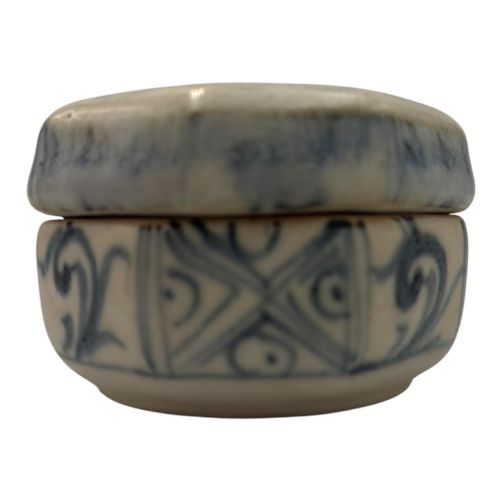
The pieces on this page lean heavily towards 19th-century European porcelain and stoneware, alongside earlier Asian examples such as the Lê Dynasty octagonal covered box. Forms vary from simple circular patch boxes to boat-shaped dishes and biscuit barrels.
Buyers seeking a cobalt blue ceramic box will find domestic containers designed for sugar, trinkets, or biscuits, each reflecting the prevailing decorative style of its period, from Regency elegance to Victorian arts and crafts.
Materials and construction methods
The fabrication of these pieces relies primarily on porcelain, stoneware, and ironstone bodies shaped by hand or mould, then fired at high temperatures. Cobalt pigment is applied either under the glaze for a soft, integrated hue or over the glaze before a secondary firing.
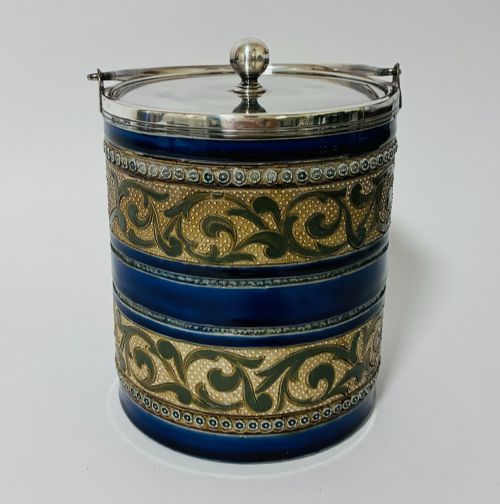
Surface enrichment frequently involves gold leaf or gilt detailing applied over the fired glaze, alongside hand-painted cobalt pigment scenes. Certain items incorporate metal mounts, such as silver plating on biscuit barrels, to reinforce rims and provide hinged lids.
Some sardine boxes demand a fish-shaped handle just to remind everyone what swam inside.
Assessing quality in cobalt blue ceramics
Quality in a cobalt blue ceramic box rests upon the crispness of the moulding and the depth of the cobalt pigment. Superior pieces exhibit precise brushwork or clean transfer printing without blurring or pooling in the glaze.
The fineness of the porcelain body and the neatness of any gilt detailing distinguish standard production items from finer factory outputs. Intricate gilding that remains crisp and bright indicates careful application and subsequent firing.
Doulton Lambeth·Limoges·Ridgway·Wedgwood·Thomas Forester and Sons
The Cobalt Blue Ceramic Box Glossary
- Sucrier
- A small lidded vessel designed to hold sugar, commonly produced in porcelain during the 18th and 19th centuries. These often mirror the form of contemporary tea wares.
- Jasperware
- A type of vitreous stoneware developed by Wedgwood, famous for its matte surface and contrasting white relief figures applied against a coloured ground such as dark blue.
- Biscuit Barrel
- A cylindrical container with a fitted lid, often featuring metal mounts or plating, utilised in Victorian dining rooms for storing dry biscuits.
- Imari
- A style of Japanese porcelain decorated in underglaze blue and overglaze red, gold, and other colours, which heavily influenced European potteries.
- Patch Box
- A small container utilised in the 18th and 19th centuries to hold small fabric patches worn on the face to conceal blemishes.
Cobalt Blue Ceramic Box: Frequently Asked Questions
What were cobalt blue ceramic boxes used for?
These vessels served various domestic functions depending on their shape and size, ranging from storing sugar on the tea table to keeping small trinkets or face patches on a dressing table.
Larger cylindrical examples functioned as biscuit barrels in Victorian dining settings, while smaller circular boxes held personal items.
How can I tell the period of a box?
Dating relies upon examining the ceramic body, glaze characteristics, and any factory marks stamped or painted on the base. Stylistic clues such as Regency neoclassical motifs or Victorian aesthetic movement patterns also help establish the era of manufacture.
Comparing the potting technique and pigment application to documented examples provides further confirmation of age.
Are all blue ceramic boxes made of porcelain?
Materials vary across the selection, including stoneware, ironstone, and earthenware alongside fine porcelain. Each material imparts a different weight and opacity to the piece.
Stoneware often presents a heavier, more robust body, whereas porcelain tends to be thinner and sometimes translucent under strong light.
How should I clean my antique ceramic box?
Maintenance requires gentle cleaning with a soft, damp cloth to remove dust without harming fragile gilt detailing or overglaze pigments. Harsh chemical cleaners and abrasive cloths must be avoided entirely.
Items with metal mounts or silver plating benefit from specialised metal cleaner applied carefully away from the ceramic surface.