


Majolica Covered Dish
These majolica covered dish pieces are vibrant earthenware vessels from the Victorian era, offering collectors brilliant coloured glazes and sculptural utility.
Majolica Covered Dish
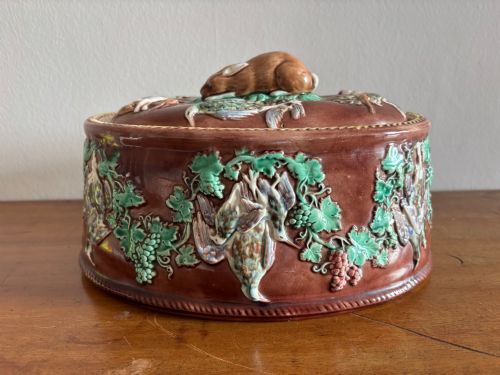
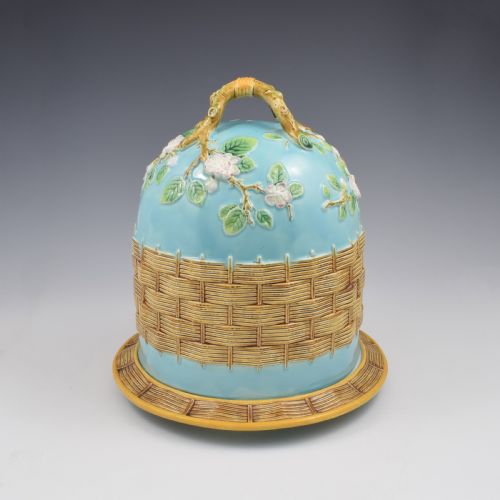
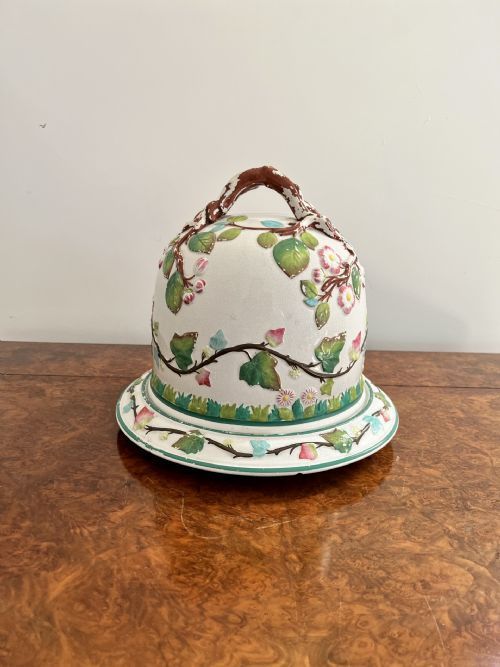
When you search for a majolica covered dish, you find nineteenth-century earthenware vessels created for the dining table, most frequently taking the form of large cheese domes, sardine boxes, game pie dishes and tureens.
The pieces on this page are overwhelmingly Victorian creations from the eighteen-eighties, combining functional serveware with bold, three-dimensional naturalistic modelling.
A buyer encounters substantial lidded boxes and cheese bells with matching stands, designed to preserve food while serving as colourful centrepieces.
How They Were Made
Potters shaped these vessels from earthenware or terracotta, building up rich sculptural details before firing the clay bodies.
Artisans applied vibrant majolica glazes directly to the unfired or biscuit body, allowing the metallic oxides to pool and blend across the raised botanical and animal motifs.
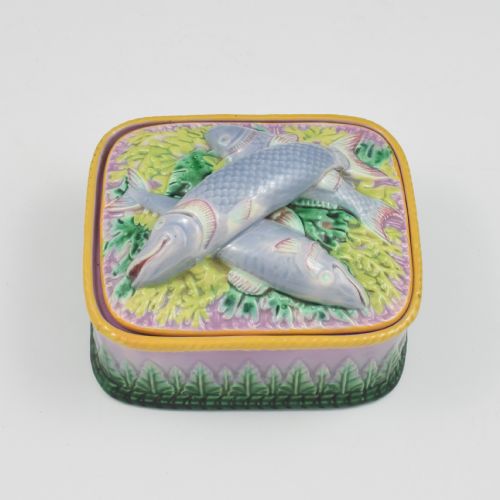
Victorian diners apparently required a dedicated ceramic box just for sardines, topped with swimming fish.
What Varies in Quality
The distinction between ordinary production and the finest work lies in the crispness of the moulded relief and the control of the coloured glaze application.
Superior examples exhibit deep, harmonious saturation in the glaze pigments and meticulous attention to the fine modelling of natural forms.
Wedgwood·George Jones·Thomas Forester and Sons
The Majolica Covered Dish Glossary
- Majolica
- A type of pottery decorated with opaque coloured lead glazes over an earthenware body. This technique creates a glossy, brilliant surface capable of rich colour variation.
- Cheese Dome
- A large lidded cover designed to protect cheese on the dining table. It usually sits upon a matching circular ceramic stand.
- Sardine Box
- A small lidded container made to hold preserved fish at the table. These boxes often feature marine or botanical motifs on the cover.
- Tureen
- A deep covered bowl used for serving soups or stews. Victorian versions in this glaze often incorporate game or vegetable themes.
- Terracotta
- Fired brownish-red clay used as the structural base for many glazed ceramic objects. It provides a sturdy foundation for thick glaze layers.
Majolica Covered Dish: Frequently Asked Questions
What were majolica covered dishes used for?
Victorian households utilised these vibrant covered vessels primarily for serving and preserving specific foodstuffs at the dining table. Cheese domes protected large blocks of cheese, while smaller boxes held sardines or game pies.
Beyond practical dining functions, their sculptural forms and brilliant coloured glazes served as decorative centrepieces when not in active use during meals.
How do I date a Victorian majolica dish?
Dating relies heavily on stylistic markers, registry marks, and known periods of operation for prominent potteries like Wedgwood and George Jones. Most pieces on this page originate from the Victorian era around eighteen-eighty.
Examining the base clay, glaze characteristics, and registration numbers stamped into the earthenware helps narrow the decade of production.
Are these dishes safe for modern food use?
Historic nineteenth-century majolica glazes often contained lead oxides, making them unsuitable for storing acidic foods today. Modern collectors generally treat them as decorative display items rather than functional tableware.
Gentle cleaning with mild soap and warm water preserves the glossy glaze without risking chemical leaching or physical damage to the antique earthenware.
How should I display a cheese dome?
A large cheese dome and stand requires a stable surface with adequate depth, such as a sideboard or dedicated cabinet. Because the glazes are intensely colourful, placing them where natural light catches the surface enhances their visual impact.
Keep them away from direct heat sources and heavy foot traffic to protect the protruding botanical or animal elements from accidental knocks.