
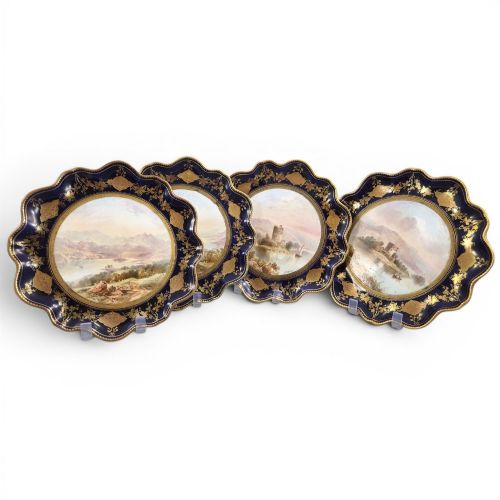


Blue Landscape Plates
Blue landscape plates bring river scenes and pastoral vistas to the table, spanning English earthenware, Chinese export porcelain and Japanese Imari.

Blue Landscape Plates
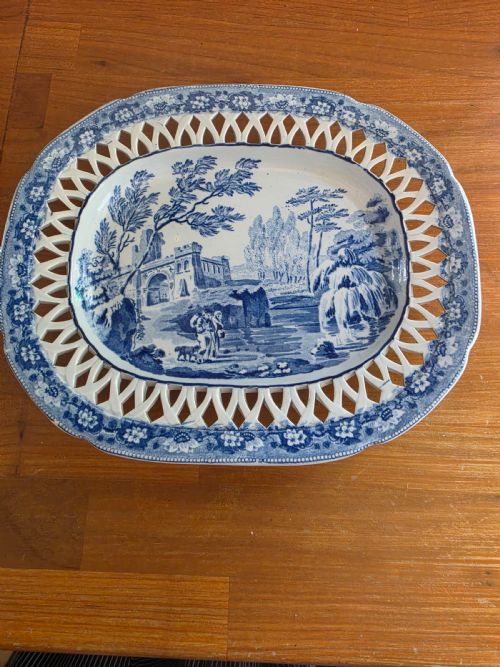
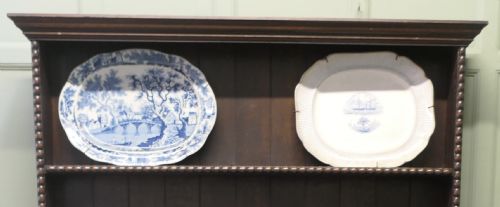
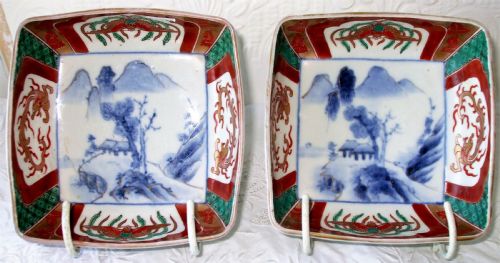
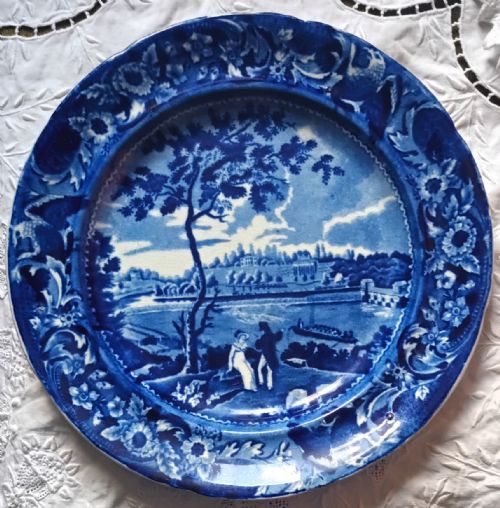
When searching for blue landscape plates, collectors encounter varied ceramic forms including cabinet plates, chargers, and serving platters. These pieces display scenic views ranging from English transferware views to Chinese export porcelain and Japanese Imari compositions.
The selections span the eighteenth, nineteenth, and early twentieth centuries, covering Georgian, Regency, and Victorian periods. Makers from Staffordshire potteries, Worcester, and Paris factories produced these pictorial wares for display and dining.
Transfer printing and hand-painting form the primary methods of decoration. Buyers find single plates alongside pairs and larger meat platters, each carrying distinct regional landscapes and architectural motifs.
Assessing quality
Quality rests upon the crispness of the transfer print or the precision of the hand-painted brushwork in the landscape. Crisp architectural lines and clear botanical details separate superior plates from softer, blurred impressions.
The purity of the ceramic body and the smoothness of the glaze influence the overall finish. Well-executed pieces show careful kiln placement without warping or heavy firing blemishes across the scenic reserves.
Listings feature porcelain, earthenware, and pearlware items spanning the eighteenth to the early twentieth century.
Davenport·Stubbs·Aynsley·Darte Brothers·Coalport·Barr Flight Barr Worcester·Spode·William Adams·Royal Worcester·Mason's
The Blue Landscape Plates Glossary
- Transferware
- Earthenware or porcelain decorated by applying a printed design from an engraved copper plate onto tissue paper, then transferring it to the unglazed ceramic body.
- Cabinet plate
- A decorative ceramic plate intended primarily for display on a wall or within a cabinet rather than for daily dining use.
- Charger
- A large ornamental plate or platter used traditionally as a base under other courses or displayed upright on a sideboard.
- Imari
- A Japanese style of porcelain featuring dark cobalt blue and iron red, often augmented with gold, produced originally for export.
- Ironstone
- A patented heavy earthenware developed in the nineteenth century offering increased durability and a dense white body.
Blue Landscape Plates: Frequently Asked Questions
How do I date a blue landscape plate?
Dating relies on ceramic body composition, factory marks stamped or painted on the reverse, and stylistic clues within the landscape.
Transfer-printed patterns from the Regency and Victorian eras often feature registry marks or specific maker stamps that narrow the production year.
Can I use these plates for dining?
Many of these pieces were manufactured for serving food, particularly larger platters and meat dishes.
Cabinet plates and delicate porcelain pieces with overglaze enamels benefit from gentle handling and display rather than regular dining use.
What is the difference between transferware and hand-painted plates?
Transferware utilised a copperplate engraving to stamp repeating blue landscape patterns onto the ceramic surface efficiently.
Hand-painted examples show individual brushstrokes and minor variations in the pigment where artists rendered scenic views directly onto the glaze.
How should I display antique platters?
Platters and chargers suit wall mounting using secure wire hangers designed to distribute the weight evenly across the rim.
Displaying them on plate stands inside cabinets also protects the glazed ceramic surfaces from accidental knocks.