
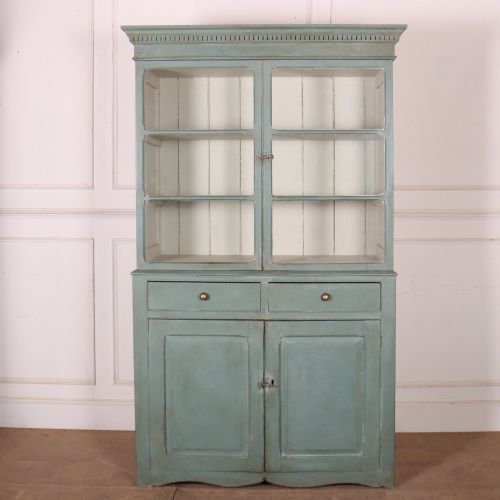
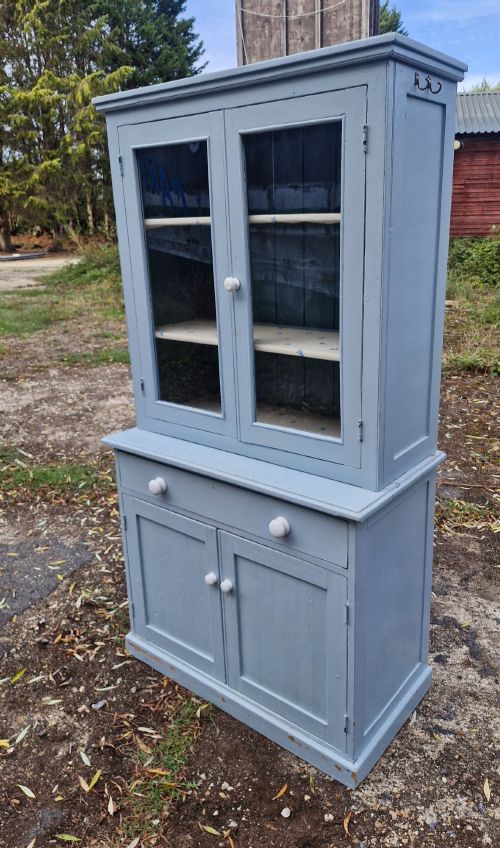
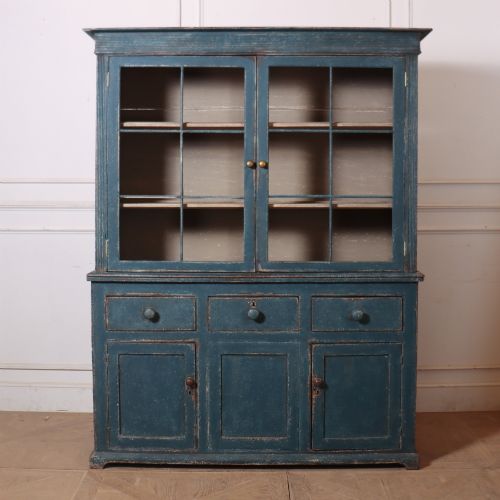


Blue Kitchen Dresser
A blue kitchen dresser brings honest regional craft and practical storage into a room, offering sturdy pine construction finished in paint.
Blue Kitchen Dresser
A blue kitchen dresser combines utilitarian storage with vernacular style, bringing regional character into domestic spaces. These pieces serve as functional furniture for displaying crockery and storing kitchen provisions.
Buyers searching for a blue kitchen dresser encounter items spanning the eighteenth century through to the early twentieth century. These include two-part cupboards, dresser bases, glazed cabinets, and sideboards from English, Scottish, Welsh, and Scandinavian origins.
The most common examples on this page are pine pieces carrying painted finishes, often associated with English regional traditions like the West Country or Scandinavian styles such as Gustavian.
How they were made
Makers utilised pine as the primary timber, constructing sturdy carcasses suitable for daily domestic utility. Iron, brass, and glass frequently appear as supplementary materials for hinges, handles, and glazed doors.
Surfaces received layers of paint, with some examples displaying regional techniques like ragwork or original painted finishes. Joinery relied on traditional methods appropriate for provincial furniture production.
Some nineteenth-century cupboards wear their ragwork paint like a well-thumbed novel, refusing to look too tidy for their age.
What varies in quality
The degree of original painted surface preservation distinguishes one piece from another, alongside the crispness of regional joinery. Untouched provincial proportion and honest signs of age elevate certain examples above standard utilitarian builds.
Construction details such as timber selection and the integrity of the original hardware influence the overall character of each dresser. Pieces maintaining their early or original paint schemes hold distinct visual depth compared to later surface treatments.
The Blue Kitchen Dresser Glossary
- Dresser base
- The lower section of a kitchen dresser, usually featuring drawers and cupboards without the upper plate rack.
- Gustavian
- The Swedish interpretation of neoclassical style, known for pale painted surfaces and restrained ornamentation.
- Ragwork
- A decorative paint technique applied with rags or cloths to create a textured, mottled surface pattern.
- Vernacular
- Architecture and furniture built by local craftsmen using traditional regional methods and readily available materials.
- Glazed cabinet
- A storage unit featuring glass-fronted doors designed for the display of ceramics or glassware.
Blue Kitchen Dresser: Frequently Asked Questions
What is a blue kitchen dresser?
A blue kitchen dresser is a utilitarian storage unit made from timber, typically pine, and finished with a painted surface. These pieces range from dresser bases to glazed cabinets created in various regional styles.
They provide practical shelving and surface space while introducing historical character and colour to a kitchen or dining area.
How do I date a painted pine dresser?
Dating relies on construction methods, timber characteristics, and the nature of the painted finish. Pieces from the eighteenth century show different joinery techniques compared to those made in the nineteenth or early twentieth century.
Paint analysis also helps determine whether the surface finish dates to the original period of manufacture or represents a later application.
Where were these dressers made?
The pieces originate from various regions including English counties like the West Country, alongside Scottish, Welsh, and Scandinavian workshops. Each area developed distinct proportions and decorative vocabulary.
Regional variations appear in the choice of mouldings, drawer configurations, and local painting traditions.
How do I care for painted pine furniture?
Care involves keeping the furniture away from direct heat sources and excessive moisture to protect the timber and paint layers. Dusting with a soft, dry cloth maintains the surface without introducing harsh chemicals.
Avoiding abrasive cleaners ensures the original or historic paint finishes remain undisturbed over time.