




Blue Guilloche Box
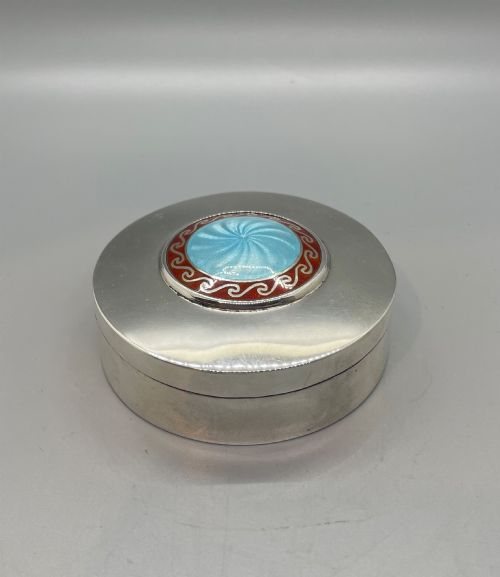
A blue guilloche box brings together precision-turned metalwork and luminous coloured glass enamels to hold small personal treasures on a dressing table.
Blue Guilloche Box
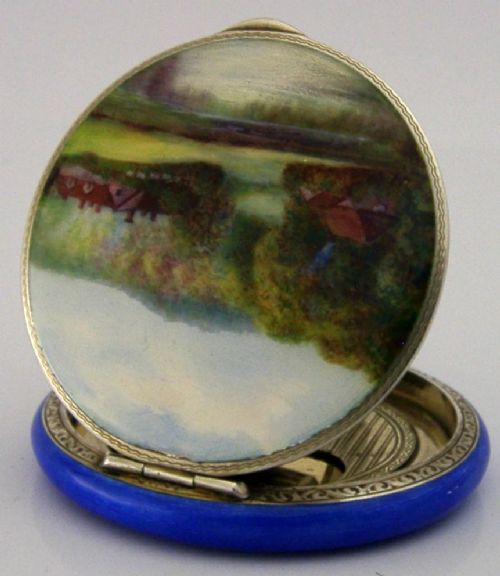
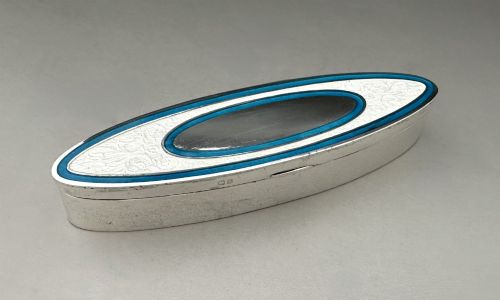
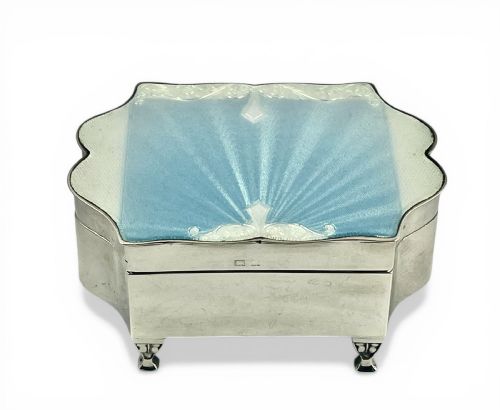
When searching for a blue guilloche box, collectors encounter small containers created primarily for vanities, such as trinket boxes, pill boxes, powder jars, and compacts. The selection relies heavily on English manufacture from the twentieth century, particularly Birmingham assay office marks spanning the nineteen-twenties and nineteen-thirties.
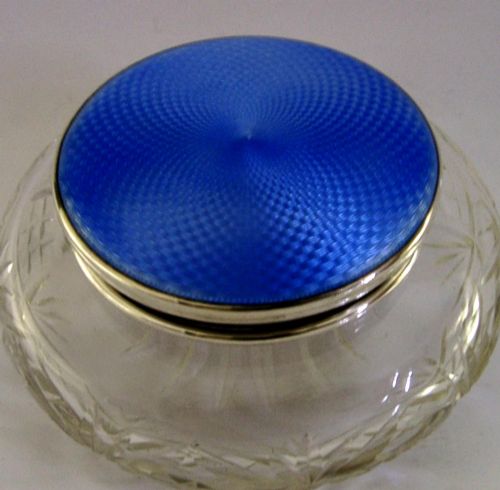
The dominant aesthetic draws upon Art Deco geometry and Edwardian elegance, often presenting circular, square, or oblong silhouettes. Alongside dedicated boxes, the lineage includes vanity jars with cut glass bodies and matching enamel lids, dressing table accessories, and pocket-sized cases.
Earlier examples stretch back to the late nineteenth century and occasionally the eighteenth century, showing finer Continental workmanship in gold and silver. These vessels served practical roles on dressing tables and inside evening bags, designed to hold powder, rouge, cards, or small jewels.
How they were made
The foundation of every piece relies on sterling silver, gilt metal, or occasionally gold, shaped into frames, collars, and bases. Glass and cut crystal form the lower bodies of jars and powder boxes, providing a heavy, clear contrast to the coloured lids.
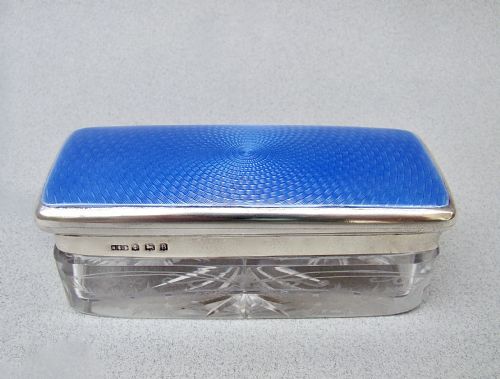
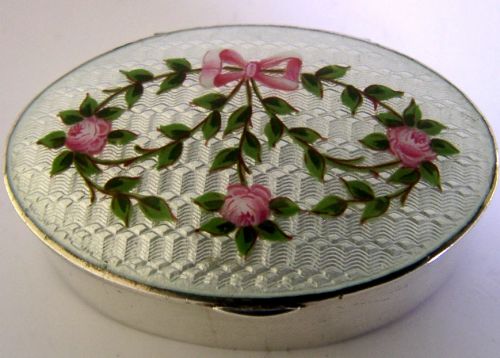
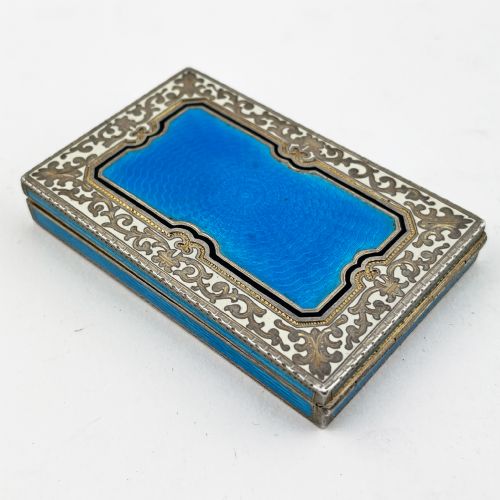
The defining decorative technique involves engine-turning metal on a lathe to cut intricate, repeating geometric patterns into the surface. Translucent vitreous enamel is then applied over this engraved pattern, allowing the machined metallic texture to shine through the blue colour.
Listings feature sterling silver, vitreous enamel, and cut glass across Edwardian, Art Deco, and Belle Epoque styles.
What varies in quality
The sophistication of the engine-turned pattern beneath the enamel dictates much of the visual depth. Finer examples display crisp, complex geometric rays that catch the light evenly, whereas simpler pieces show shallow or plain mechanical engraving.
The clarity and depth of the vitreous enamel layer also separate standard production from superior items. Smooth, evenly fired enamel without cloudiness or heavy surface pooling indicates superior skill in the kiln.
Henry Clifford Davis·Henry Matthews·Evans
The Blue Guilloche Box Glossary
- Guilloche enamel
- A decorative technique where metal is engraved with a precise mechanical pattern before translucent enamel is applied over the top. This lets the underlying geometric design show through the colour.
- Sterling silver
- A silver alloy containing ninety-two point five percent pure silver and seven point five percent other metals, usually copper. It provides the structural metal framework for most English boxes.
- Vitreous enamel
- A material made by fusing powdered glass to a substrate by firing, usually between seven hundred and eight hundred and fifty degrees Celsius. The result is a durable, glossy coloured coating.
- Vinaigrette box
- A small ornamental container fitted with an internal perforated grille, used to hold a sponge soaked in aromatic vinegar. These date mostly to the eighteenth and nineteenth centuries.
- Assay office
- A statutory body that tests the purity of precious metals and stamps items with hallmarks. Birmingham is a prominent location found on many twentieth-century pieces.
Blue Guilloche Box: Frequently Asked Questions
What were blue guilloche boxes used for?
These containers held personal items on dressing tables, including powder, rouge, pills, and small pieces of jewellery. Pocket versions also carried calling cards or cheroots.
Their compact sizes made them portable accessories for daily social routines during the Edwardian and Art Deco eras.
How do I identify the date of a box?
English silver pieces carry hallmarks stamped directly into the metal, indicating the assay office, standard of silver, and a specific date letter. Birmingham hallmarks from the nineteen-twenties and nineteen-thirties appear frequently.
Stylistic cues also help, as linear geometric forms point to Art Deco design, while softer floral motifs suggest Edwardian origins.
Are the glass bases original to the lids?
Many dressing table jars and powder boxes pair cut glass or crystal bodies with matching enamel lids secured by silver mounts. The weight and clarity of the glass generally match the quality of the silver collar above it.
Checking that the collar fits flush against the glass rim confirms the integrity of the piece.
How should I clean my enamel box?
Enamel requires gentle maintenance using a soft, dry cloth to remove dust from the glossy surface. Avoid harsh chemical dips or abrasive silver polishes that can scratch the glass coating or seep beneath the mounts.
Keep the items away from prolonged direct sunlight to protect the vibrancy of the blue tones.