


Guilloche Enamel Pot
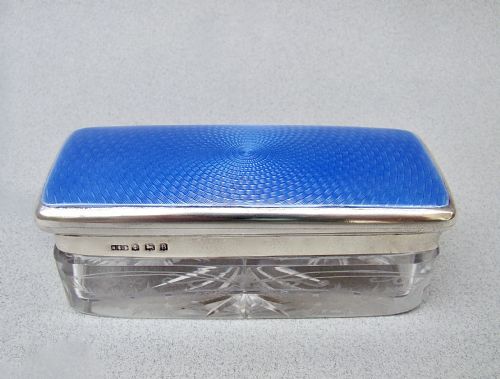
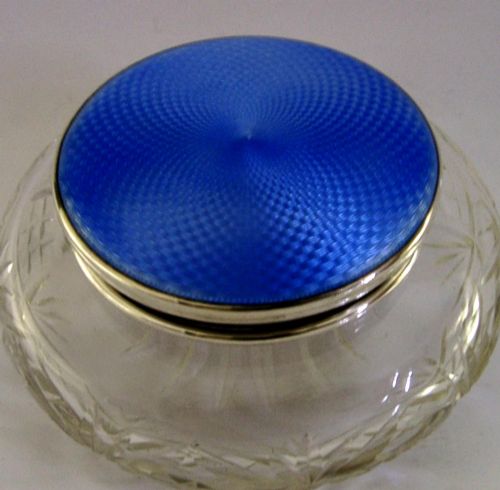
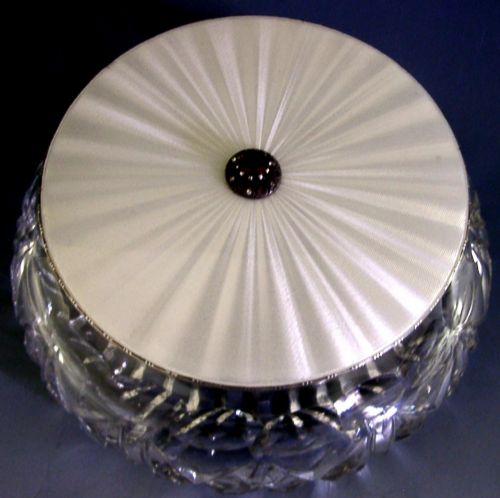
A guilloche enamel pot brings together precision metal engine-turning and translucent coloured glass paste to create a jewel-like desktop or dressing table container.
Guilloche Enamel Pot
A guilloche enamel pot is a small lidded container designed for the dressing table, desk, or vanity, encompassing forms such as rouge pots, pill boxes, trinket boxes, inkwells, and larger jars. When searching for a guilloche enamel pot, a buyer encounters domestic accessories dating from the Victorian and Edwardian eras through to the Art Deco period, George V, and mid-century manufacture.
The objects combine a base of cut glass, cut crystal, or sterling silver with a decorative metallic lid. The most common survivals on this page are dressing table jars and small trinket pots produced in British assay offices during the early twentieth century.
Makers and workshops utilised precious metals alongside decorative glass to house cosmetics, salves, and small personal valuables. These pieces reflect the functional elegance of private dressing rooms across several decades of the nineteenth and twentieth centuries.
What varies in quality
The fineness of the engine-turned engraving beneath the translucent enamel determines the visual depth and complexity of the lid. Sharper geometric cuts catch the light differently than shallower, simpler machine work.
The weight and gauge of the sterling silver mounts, combined with the clarity and hand-cutting quality of the glass or crystal bodies, separate standard production items from finer workshop pieces. Intact enamel free from heavy surface disruption marks the upper tier of surviving examples.
Listings feature items spanning the Victorian era through the Edwardian period, Art Deco decades, George V, and mid-century modern design.
Henry Clifford Davis·Levi and Salaman
The Guilloche Enamel Pot Glossary
- Guilloche enamel
- A decorative technique where a metal surface is mechanically engraved with repetitive geometric patterns and then covered with translucent enamel. The underlying pattern remains visible through the coloured glass layer.
- Sterling silver
- An alloy of silver containing 92.5 percent silver and 7.5 percent other metals, commonly copper. British pieces typically bear hallmarks indicating this standard.
- Dressing table jar
- A small lidded container used to hold cosmetics, hairpins, or small personal items. These pieces sat upon vanity surfaces in Victorian and twentieth-century bedrooms.
- Assay office
- An official body that tested precious metals and stamped items with hallmarks to guarantee their metallic purity. Cities such as Birmingham and London housed prominent offices.
- Engine-turning
- A mechanical method of ornamenting a hard surface using a lathe to cut precise geometric patterns. This process formed the foundation for enamelled lids.
Guilloche Enamel Pot: Frequently Asked Questions
What were guilloche enamel pots used for?
These small containers held cosmetic preparations such as rouge, salves, powder, and pills, or served as receptacles for trinkets and hairpins on dressing tables. Owners kept them close at hand for daily grooming routines.
Desk variants like inkwells provided secure vessels for writing fluids while adding decorative colour to a study or writing slope.
How do I date a silver and enamel pot?
British pieces typically feature hallmarks stamped on the silver mounts, which include date letters corresponding to specific assay office years. Stylistic indicators like Edwardian proportions or Art Deco geometric motifs help narrow down the decade.
Makers' marks alongside the standard lion passat and anchor or leopard head stamps provide precise chronological clues.
How should I clean these antique pots?
The glass and silver portions require gentle wiping with a soft cloth to remove dust and tarnish without disturbing the delicate enamel surface. Enamel is essentially glass and remains vulnerable to harsh chemical polishes and abrasive scrubbing.
Keep silver cleaning creams away from the enamel edges to prevent dulling or staining the translucent coloured layer.
What materials make up these jars?
The bodies consist primarily of cut glass, cut crystal, or plain glass, frequently paired with sterling silver collars and lidded tops. Certain examples feature solid silver bases or incorporate agate elements.
The decorative lid surfaces combine engine-turned sterling silver with fired vitreous enamel in various solid and dual-colour schemes.