


Blue Grey Oil Painting
These atmospheric blue grey oil painting works capture muted coastal light and urban haze across diverse periods from the nineteenth century to the mid twentieth century.
Blue Grey Oil Painting
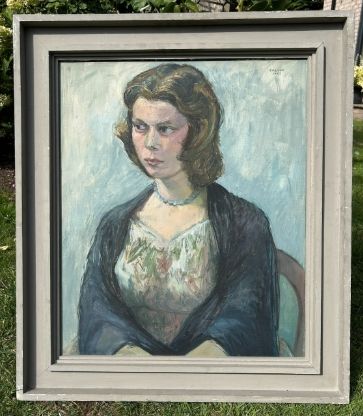
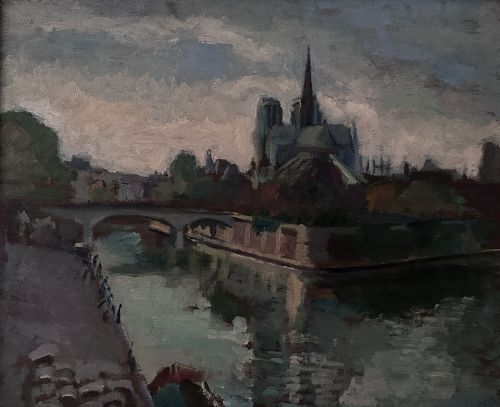
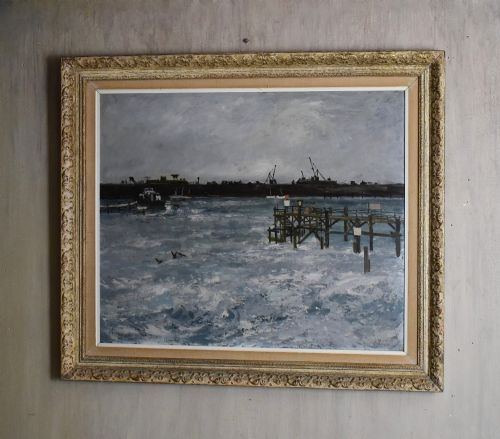
A blue grey oil painting brings together muted palettes of slate, steel, and indigo to render coastal seascapes, river views, and architectural scenes. When searching for a blue grey oil painting, a buyer encounters works spanning Victorian marine art, British impressionism, and twentieth century realism.
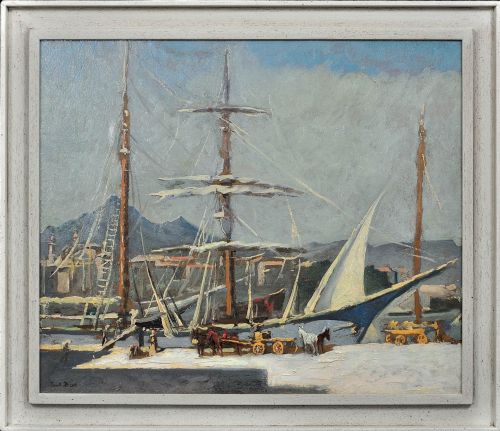
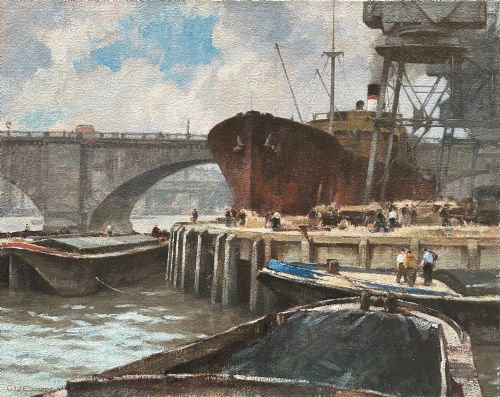
The selection on this page draws heavily from early twentieth century landscapes and post impressionist harbour views. Canvases and boards depict French ports, Yorkshire moors, and London bridges rendered in restrained, tonal colour schemes.
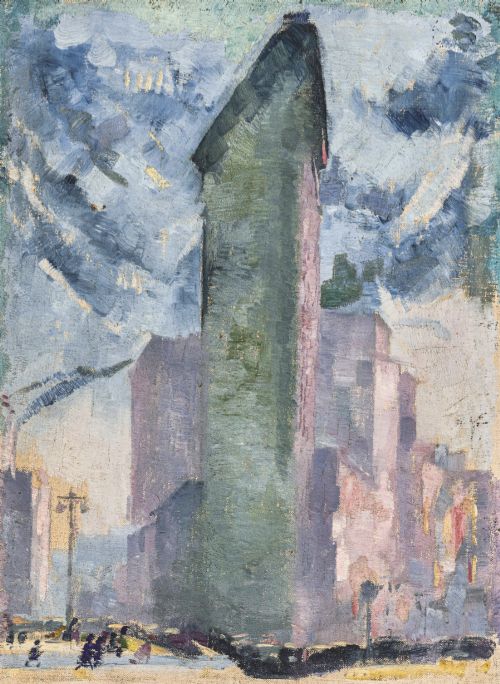
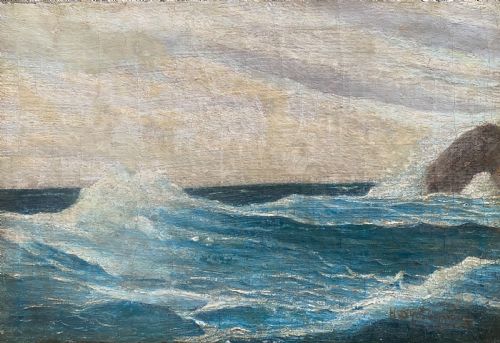
Works range from intimate panel sketches to large framed canvases. The subjects lean towards maritime activity, quiet estuaries, and urban street scenes where cool atmospheric tones dominate the composition.
Materials and technique
Pigments ground in oil are applied to stretched canvas, wooden panels, or rigid boards to create these works. Painters of these periods utilised loaded brushes and palette knives to build rich textures that hold the light.
Substrates vary from traditional woven canvas supported by wooden stretcher frames to smooth panel boards. Many of these pieces rely on thin glaze layers combined with heavier impasto passages to establish depth and shadow.
An air ace shoots his pistol straight from a cockpit.
Judging quality
The strength of a composition rests on the artist's handling of tonal values and atmospheric depth within a restrained palette. Superior works demonstrate a confident control over subtle shifts in shade without losing structural form.
The vitality of the brushwork distinguishes accomplished paintings from routine examples. Direct, assured application of pigment creates movement and light that elevates the entire surface of the panel or canvas.
Kenneth Cozens·Peter Brannan·Paul Bret·Cyril Walduck Edwards·Alfred Wolmark·Dubovsky·Lilian Colbourn·Florence Adelina Hess·A McDonald·Herbert Royle·William Grant Murray·Paul Jones·George Gregory·Kershaw Schofield·Paul Jean Clays·Fred Stead·Ernest Higgins Rigg·Herbert James·Henri Cadiou·Nora Munro Summers·Edward T Jones·Bertram Priestman·Sidney Riesenberg·William Cave Day·William Marlow
The Blue Grey Oil Painting Glossary
- Canvas
- A heavy woven fabric stretched across a wooden frame to serve as a painting surface. It provides slight spring and texture under the oil paint layers.
- Board
- A rigid wooden or composite panel used as a support for painting. Artists frequently utilised board for smaller plein air sketches painted on location.
- Impasto
- Paint applied thickly to a canvas or panel so that it stands proud of the surface. This technique preserves the physical gesture of the brush or knife.
- Plein air
- Painting outdoors to capture natural light and atmospheric conditions directly. This method was widely adopted by nineteenth and twentieth century landscape artists.
Blue Grey Oil Painting: Frequently Asked Questions
What subjects appear in these paintings?
The compositions feature maritime scenes, coastal ports, rolling moorlands, and river bridges. Many depict specific locations across Britain, France, and Spain under overcast or evening light.
Artists focused heavily on harbours, shipping vessels, and architectural landmarks rendered in cool, desaturated tones. These subjects allowed painters to explore atmospheric weather and shifting natural illumination.
How do I date a canvas?
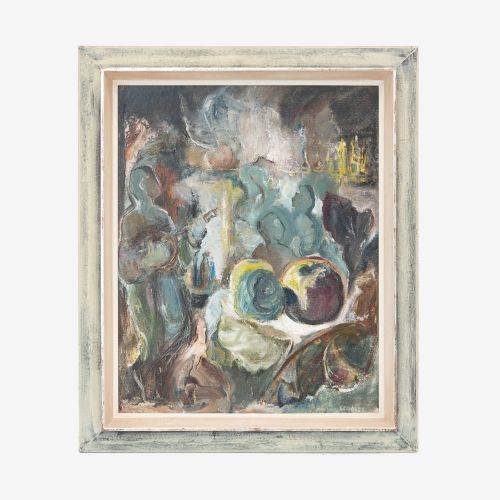
Dating relies on stylistic markers, framing conventions, and artist signatures recorded in the titles. Works span from the nineteenth century through the mid twentieth century, reflecting shifts from Victorian marine art toward modernist abstraction.
Support materials also offer clues, as prepared wooden boards and specific canvas weaves correspond to particular manufacturing eras. Examining the stretcher frames and inscriptions on the reverse often clarifies the timeline.
How should I hang these artworks?
These paintings suit spaces with neutral interior walls that allow the cool slate and indigo tones to stand out. Proper placement avoids direct sunlight to protect the oil pigments over time.
Consider pairing the frame style with the period of the painting, whether matching an ornate Victorian moulding or a clean mid century profile. Adequate ambient lighting helps reveal the subtle texture of the brushwork.
What distinguishes board from canvas?
Boards provide a completely rigid surface that painters often favoured for outdoor sketching and smaller compositions. Canvases offer flexibility and tensile strength across larger wooden frames.
Both supports hold oil paint effectively, but the choice alters how the artist worked the surface. Panel paintings often showcase direct, rapid brushstrokes while canvases accommodate layered glazes.