


Blue Gold Pottery Urn
A blue gold pottery urn brings a striking clash of deep cobalt and rich metallic lustre into any room.
Blue Gold Pottery Urn
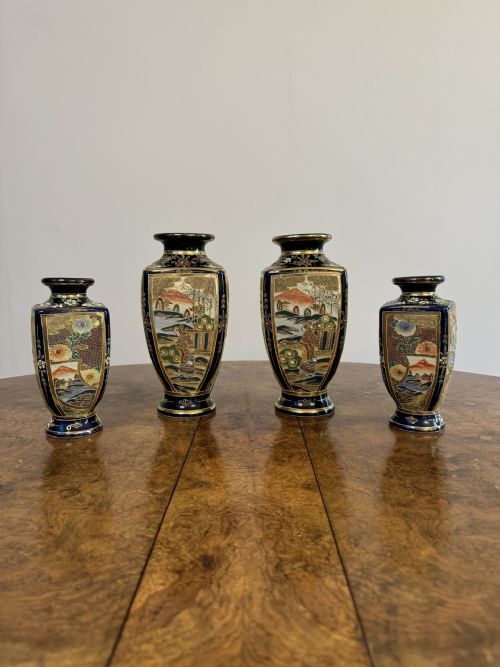
When you search for a blue gold pottery urn, you encounter a distinct gathering of decorative vessels spanning the nineteenth and early twentieth centuries. These pieces combine rich blue grounds with gleaming gilding, drawing on styles from Victorian art pottery and Japanese Satsuma to Art Nouveau and Art Deco Chinoiserie. You will find that jardinieres, planters, garnitures, and twin-handled vases make up the core of these offerings.
The objects stem from diverse origins, ranging from British factories like Royal Doulton, Minton, and Wedgwood to Japanese kilns and Austrian studios. The forms vary from intimate cabinet vases to large pairs intended for prominent display on mantelpieces or pedestals. Each piece reflects the decorative priorities of its period, whether through hand-enamelled floral motifs or elaborate religious and landscape panels.
Materials and production methods
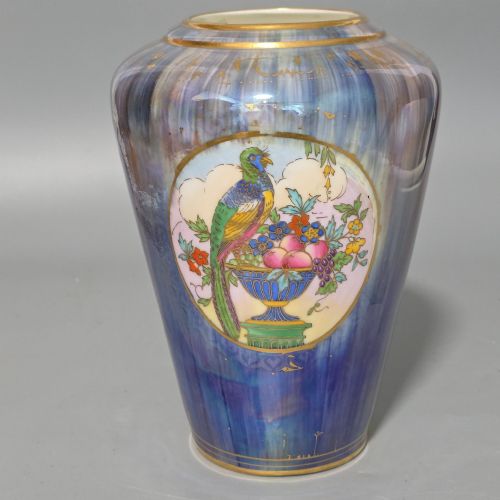
Potters shaped these vessels using earthenware, porcelain, and stoneware bodies, which provided the solid foundation needed for intricate decoration. Artisans then applied vibrant glazes and enamels, often building up raised moriage details or slip decorations to create tactile surface textures. Finally, craftsmen added gold leaf and gilding to highlight specific design elements, contrasting sharply against deep blue backgrounds.
Parrots occasionally perch upon these ceramic surfaces, keeping watch over centuries of glaze.
Distinctions in craftsmanship
Quality rests upon the precision of the hand-painting and the depth of the cobalt glaze. Pieces featuring crisp, detailed enamelling and heavy, well-preserved gold leaf stand apart from simpler productions. The intricacy of moulded relief work, such as moriage or raised paste gilding, further separates standard wares from superior examples.
William Moorcroft·Royal Doulton·Ernst Wahliss·Royal Worcester
The Blue Gold Pottery Urn Glossary
- Moriage
- A Japanese decorating technique using raised clay paste to create textured decorative patterns on pottery before glazing and gilding.
- Garniture
- A set of matching vases or ornamental jars designed to be displayed together on a mantelpiece or sideboard.
- Jardiniere
- A large ornamental pot or stand designed to hold growing plants or flowers.
- Enamel
- A decorative glass-like substance melted onto the surface of ceramic pieces to add colour and protect the body.
- Stoneware
- A robust type of pottery fired at high temperatures until vitrified, making it impermeable and durable.
Blue Gold Pottery Urn: Frequently Asked Questions
What is a blue gold pottery urn?
A blue gold pottery urn is a decorative ceramic vessel characterised by a blue glaze or background paired with gold leaf or gilding. These pieces encompass Japanese Satsuma wares, British art pottery, and continental porcelain.
They serve primarily as ornamental centrepieces rather than functional containers for cut flowers. The combination of rich cobalt and metallic gold creates a dramatic visual impact.
How were these urns used historically?
Historically, these vessels occupied prominent places in Victorian and Edwardian drawing rooms, often displayed upon mantelpieces, tables, or specialised pedestals. Pairs and garniture sets brought symmetry and colour to formal interior schemes.
They were collected as marks of refinement and artistic taste, reflecting global influences from Japanese craft and European revival styles.
How do I date a blue gold pottery urn?
Dating relies on maker marks, factory stamps, and stylistic cues such as Art Nouveau curves or Victorian ornamentation. Examining the base often reveals impressed or painted ciphers that tie the piece to specific decades.
The materials and manufacturing techniques, from Satsuma earthenware to stoneware bodies, also point to particular eras of production.
How should I care for a ceramic urn?
Display these delicate pieces away from direct sunlight to protect the integrity of the enamel and gilding. Dust them gently with a soft, dry cloth rather than using liquid cleaners.
Avoid placing them in areas subject to rapid temperature fluctuations or high humidity to preserve the underlying pottery and glaze.