



Blue Gold Decorative Urns
These blue gold decorative urns bring cobalt grounds and gilded mounts together, offering a commanding centrepiece for a traditional interior.
Blue Gold Decorative Urns
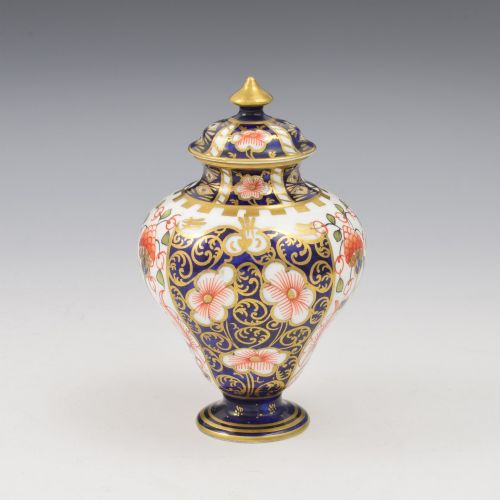
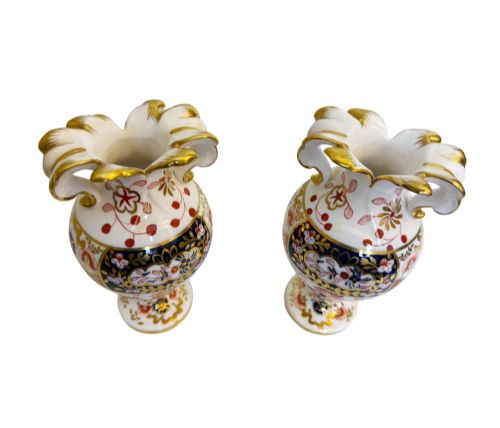
Buyers examining blue gold decorative urns encounter ceramic vessels built for display rather than utility, frequently taking the form of campagna urns, lidded jars, and vase garnitures. The selection spans the eighteenth, nineteenth, and early twentieth centuries, drawing heavily upon English porcelain manufactories, French export houses, and Japanese earthenware studios.
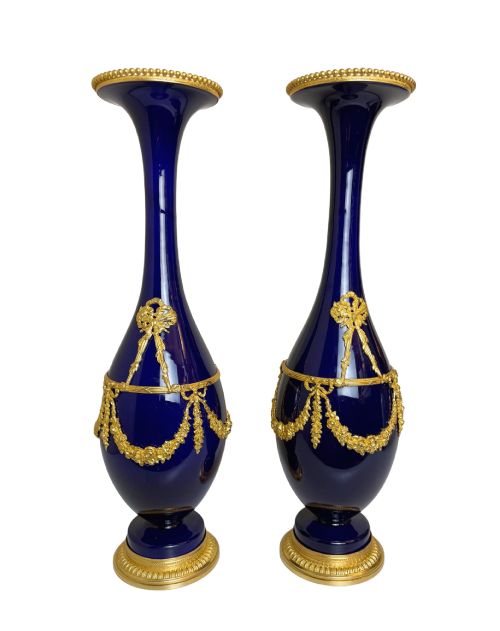
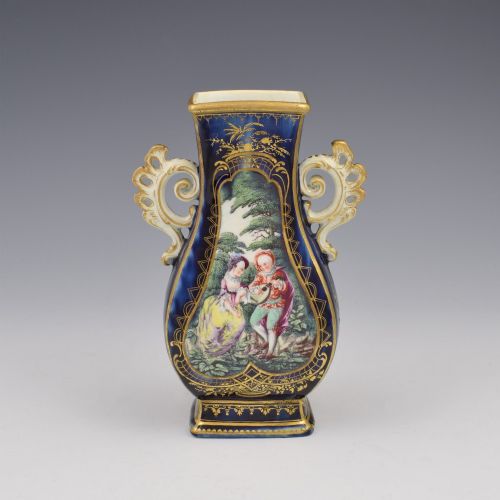
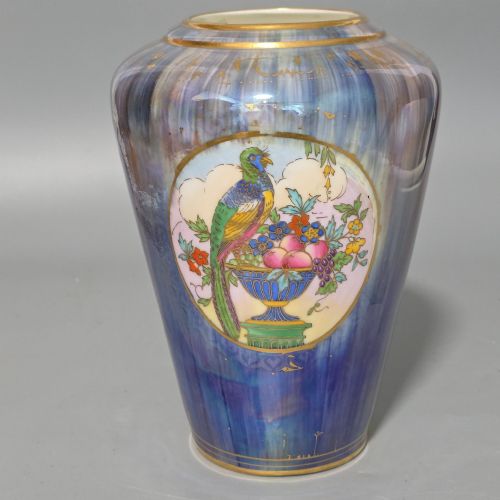
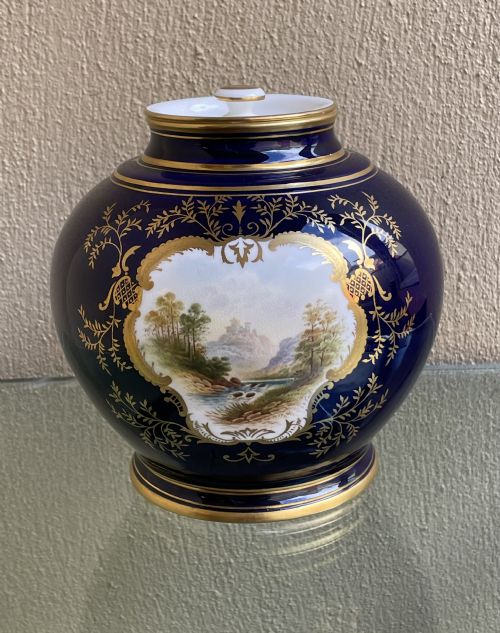
The most common formats on this page are pairs of twin-handled porcelain vases and lidded urns displaying deep cobalt blue grounds overlaid with heavy gilding or ormolu mounts. Pieces emerge from distinct stylistic movements, ranging from classical Regency and Empire designs to ornate Victorian, Edwardian, and Art Nouveau interpretations.
Materials and construction methods
The foundation of these objects typically relies on hard-paste or soft-paste porcelain, earthenware, and stoneware, shaped on the wheel or cast in moulds before receiving rich cobalt blue glazes. Artisans then applied surface decoration through hand enamelling, transfer printing, and intricate moriage relief work.
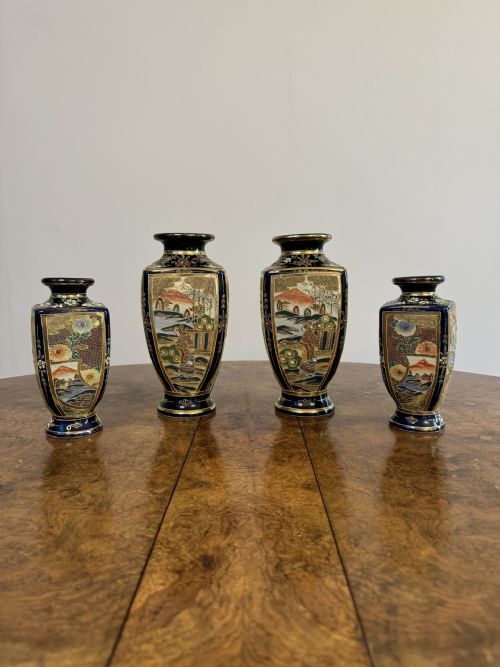
Gilding forms a vital component of the construction, utilising gold leaf, liquid gold, and cast ormolu or gilt bronze mounts fixed to handles, rims, and bases. French and English pieces frequently combine fired enamel pigments with fire-gilded bronze, whilst Japanese Satsuma wares integrate raised enamels directly onto the ceramic body.
Listings feature pieces spanning the eighteenth to the early twentieth century, incorporating porcelain, earthenware, ormolu, and gold leaf.
Assessing quality in ceramic and gilt urns
Quality reveals itself in the precision of the hand-painted details, the depth and saturation of the cobalt glaze, and the crispness of the gilt bronze or ormolu mounts. Superior examples demonstrate finely executed figural or landscape panels alongside controlled, substantial gilding that resists rubbing.
The execution of secondary materials also dictates the standard of the piece, with heavier, securely mounted cast bronze elements and cleanly potted ceramic bodies indicating superior craftsmanship. Factory marks and artist signatures provide further distinction, separating standard commercial production from master-painted exhibition works.
Royal Crown Derby·Spode·Chelsea Porcelain·Coalport·Minton·William Moorcroft·Flight Barr and Barr·Royal Doulton·Royal Vienna·Wedgewood
The Blue Gold Decorative Urns Glossary
- Campagna urn
- A bell-shaped classical urn form featuring a distinct foot, stem, and flared rim, popular during the eighteenth and nineteenth centuries.
- Ormolu
- Finely chopped high-karat gold or gold-mercury amalgam applied to a bronze base, creating a rich metallic mount for porcelain vessels.
- Moriage
- A Japanese ceramic technique using clay slip piped through a syringe to build raised decorative patterns beneath or over the glaze.
- Garniture
- A set of three or more matching vases or urns designed to be displayed together on a mantelpiece or sideboard.
- Champleve
- An enamelling technique where troughs are dug into a metal surface and filled with vitreous paste before firing.
Blue Gold Decorative Urns: Frequently Asked Questions
How were these urns used historically?
These vessels served primarily as ornamental centrepieces on mantelpieces, credenzas, and large tables within formal nineteenth-century reception rooms. They were intended for visual display rather than holding floral arrangements, often arranged as balanced pairs or larger garnitures.
Larger lidded versions occasionally functioned as potpourri containers, releasing fragrance through pierced covers. Their prominent placement signified domestic refinement and the owner's appreciation for global ceramic traditions.
How do I care for antique gilded porcelain?
Dust these decorative objects gently with a soft, dry brush to prevent abrasive particles from scratching the delicate enamel or gold leaf. Avoid using water, chemical cleaners, or damp cloths, especially on gilt bronze mounts and overglaze hand-painted surfaces.
Keep the pieces out of direct sunlight to prevent fading in the cobalt grounds and enamel colours. Ensure they sit on stable, level surfaces away from heavy vibrations to protect vulnerable handles and removable lids.
How can I tell the difference between English and French periods?
English pieces from manufactories like Coalport and Spode typically rely on refined porcelain bodies decorated with Imari palettes or botanical panels. French pieces, such as those in the Empire style or Sevres tradition, frequently integrate heavier ormolu mounts and classical mythological scenes.
Examining the base often reveals factory marks, pattern numbers, or cipher stamps that pinpoint the geographic origin. Stylistic cues, such as the rigid symmetry of French Empire work versus the softer floral motifs of Edwardian English design, also clarify the provenance.
What is Japanese Satsuma ware?
Satsuma ware is a type of Japanese earthenware characterised by a distinctive ivory-coloured, crackle-glaze ceramic body. Artisans decorated these pieces with dense gold leaf and intricate enamel painting, often depicting figures, landscapes, and religious scenes.
Production expanded significantly during the Meiji period to satisfy Western demand for ornate decorative arts. Pieces range from small cabinet vases to large palace urns featuring heavy moriage relief work.