


Cobalt Blue Mantle Vases
Cobalt blue mantle vases bring striking depth to a room, pairing rich colour with ornate metal mounts.
Cobalt Blue Mantle Vases
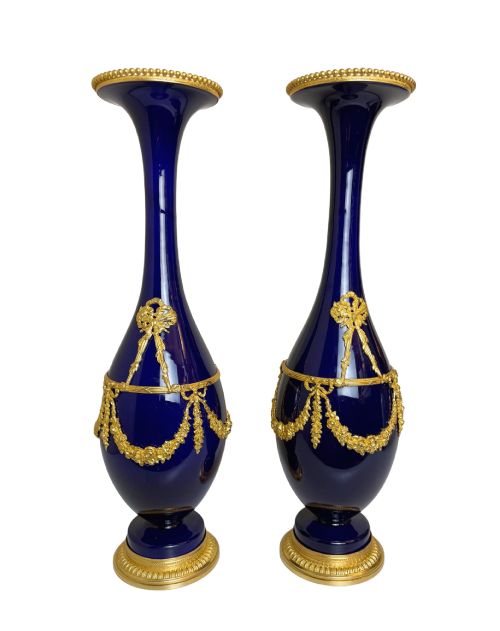
Cobalt blue mantle vases are decorative vessels designed for display on a fireplace shelf, appearing primarily as pairs or multi-piece garniture sets. The selection spans the nineteenth century through the early twentieth century, taking the form of porcelain and glass vessels.
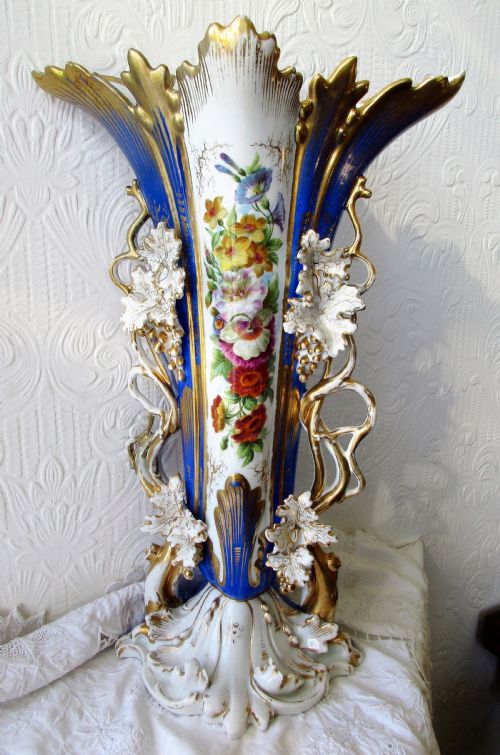
Makers from various European and international traditions produced these items, employing distinct regional styles ranging from French Empire to Japanese Satsuma and Imari. Pieces frequently emerge as matched pairs or larger sets of three and four, complete with lids or wide rims.
The aesthetic centres on the intense blue body, which serves as a backdrop for elaborate metalwork or hand-painted details. These vessels reflect the Victorian and Edwardian taste for symmetrical mantelpiece display.
Materials and construction
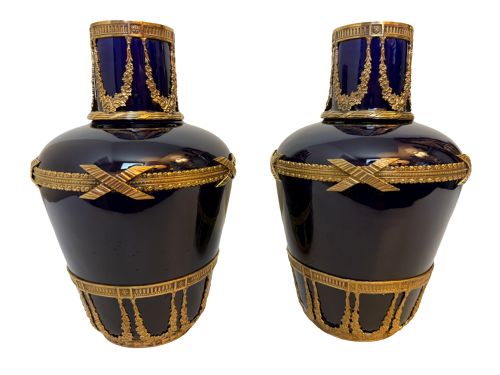
Makers utilised high-fired porcelain and rich blue glass as the foundational bodies for these vases, applying deep cobalt pigments to achieve their signature tone. Skilled artisans then mounted these ceramic and glass forms in cast or gilt bronze and ormolu.
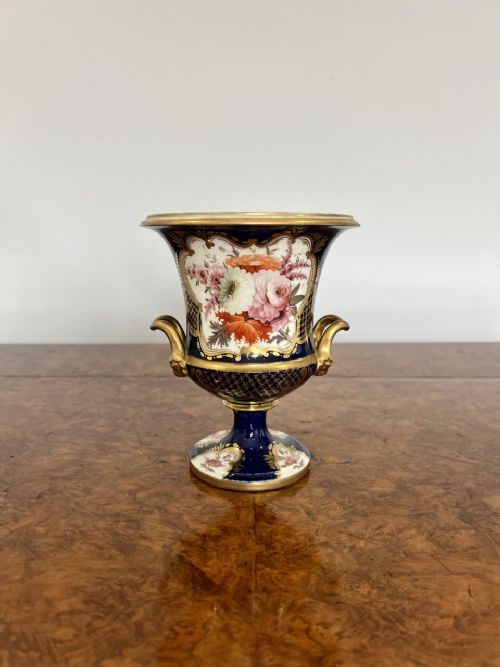
Decoration often involved applied gold leaf, hand-painted scenes, or intricate metallic trims secured around the rims and bases. The combination of ceramic or glass with heavy metal mounts required specialist casting and fitting techniques typical of nineteenth-century workshops.
Listings feature items from the nineteenth and early twentieth centuries, incorporating porcelain, glass, bronze, and gold leaf.
Markers of quality
Quality reveals itself in the crispness of the bronze or ormolu mounts and the depth of the cobalt glaze. Superior examples display finely chased metalwork and precise hand-painted enrichment that integrates smoothly with the body.
Completeness dictates much of the standing of a garniture set, with matched multi-piece arrangements commanding greater design presence. The heaviness and clarity of the glass or the refinement of the porcelain paste further distinguish the finest work.
Spode·Royal Crown Derby·Royal Vienna·Sevres
The Cobalt Blue Mantle Vases Glossary
- Garniture
- A matched set of decorative vessels designed to be displayed together on a mantelpiece or sideboard. They typically comprise three or more matching pieces.
- Ormolu
- Finely ground high-carat gold applied to a bronze base using a mercury-gilding process. This technique gives metal mounts a warm, enduring lustre.
- Satsuma
- A type of Japanese earthenware featuring a pale, ivory-coloured crackle glaze, often heavily decorated with enamels and gilt. These wares were widely exported to Europe during the Meiji period.
- Imari
- A traditional Japanese style of porcelain decorated in underglaze blue and contrasting overglaze red, green, and gold. European factories frequently copied these distinct patterns.
Cobalt Blue Mantle Vases: Frequently Asked Questions
What is a garniture set?
A garniture set consists of three or more matching vases or urns created to sit together symmetrically on a mantelpiece.
These coordinated groupings were central to nineteenth-century interior decoration, providing a balanced and formal focal point for a room.
How do porcelain and glass vases differ?
Porcelain vases feature an opaque ceramic body that holds deep cobalt glazes and hand-painted motifs.
Glass versions utilise transparent or translucent cobalt material, often allowing light to pass through the tinted body beneath metal mounts.
Where were these vases displayed?
These pieces were placed prominently on fireplace mantels, where the reflective gilt bronze and deep blue colour caught the light.
They also appeared on large sideboards and console tables within formal nineteenth-century reception rooms.
How do I identify the period of a vase?
Dating relies on examining the style of the metal mounts, the type of ceramic paste, and any maker marks on the base.
Nineteenth-century pieces often reflect specific revival movements like Rococo or Empire, while later items show Edwardian or Meiji characteristics.