
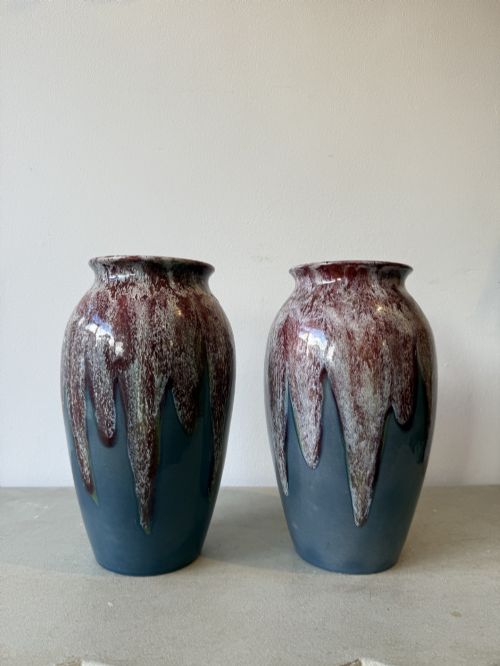
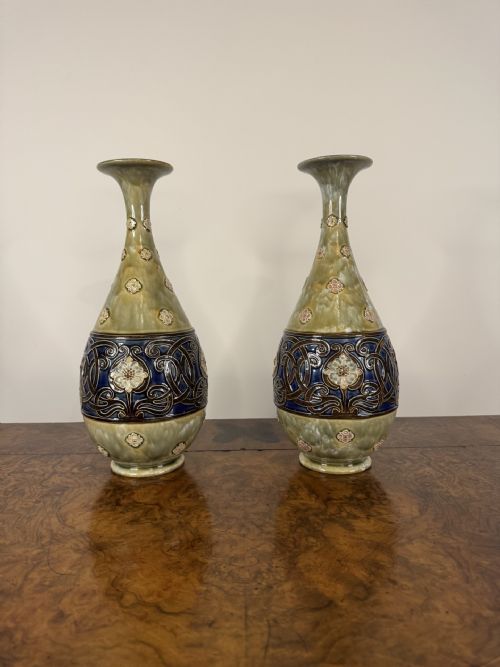


Blue Glazed Decorative Urn
A blue glazed decorative urn brings rich colour and classical form to a room, drawing the eye with vibrant cobalt and turquoise ceramics.
Blue Glazed Decorative Urn
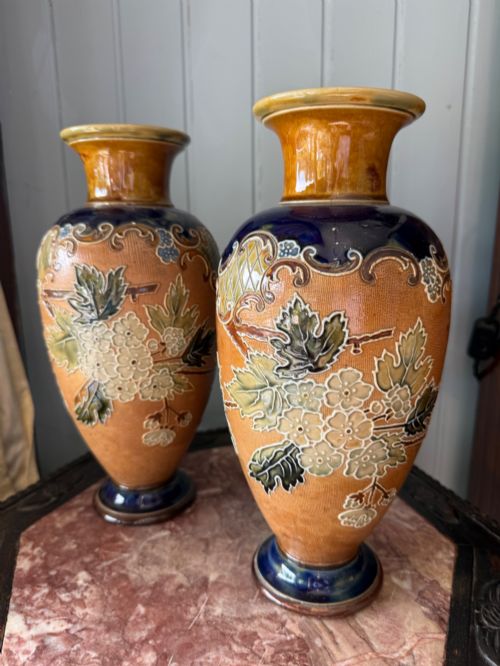
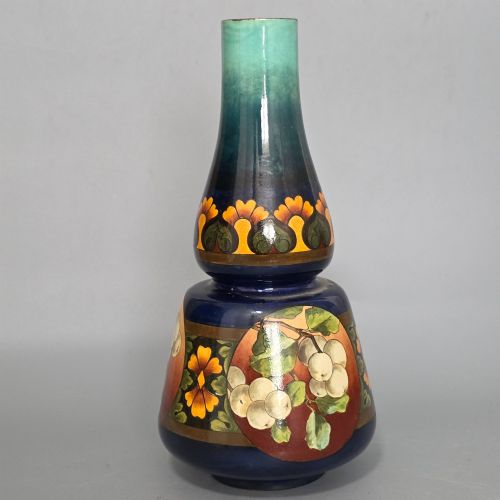
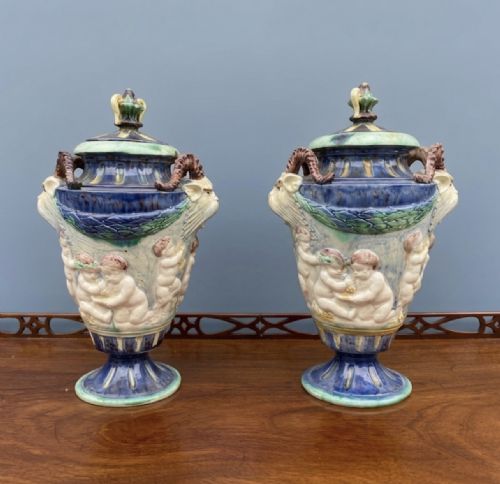
When you search for a blue glazed decorative urn, you encounter a variety of ceramic vessels originating from the eighteenth, nineteenth, and early twentieth centuries. These objects span several distinct traditions, including Victorian art pottery, majolica, faience, and porcelain wares created in Britain, France, Italy, and beyond.
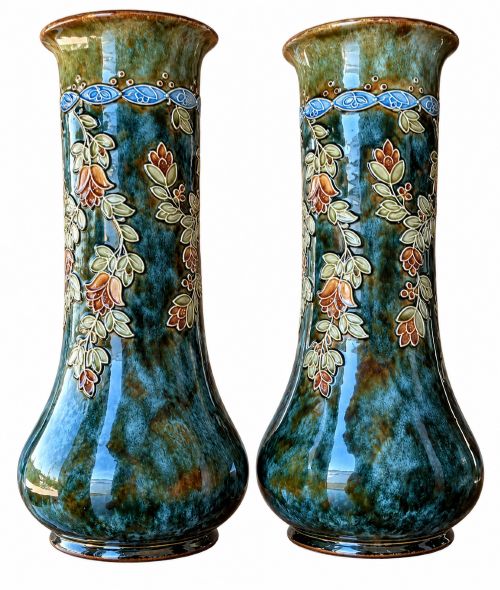
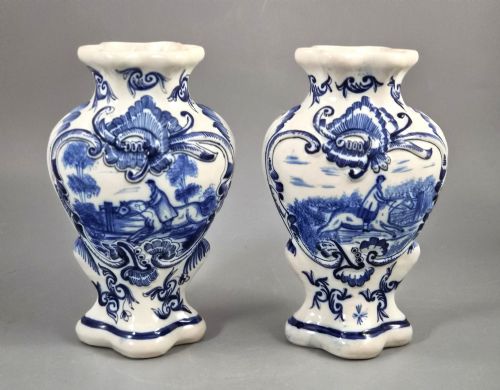
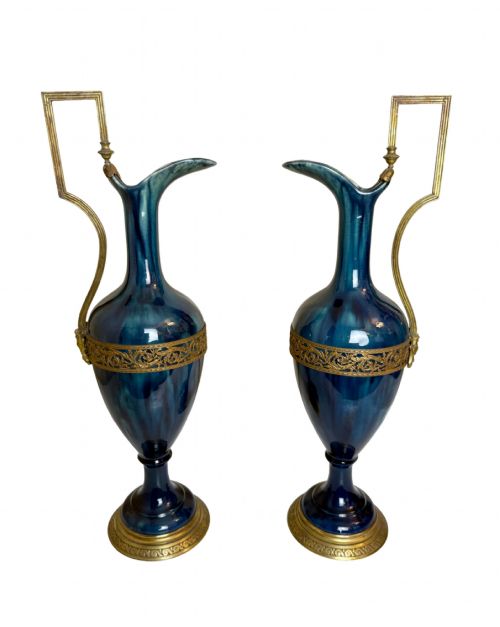
The pieces appearing on this page range from grand monumental vases and covered urns to smaller baluster vases, jardinieres, and ewers. Many examples arrive as symmetrical pairs, reflecting the formal interior display practices of the Victorian and Edwardian eras.
How they were made
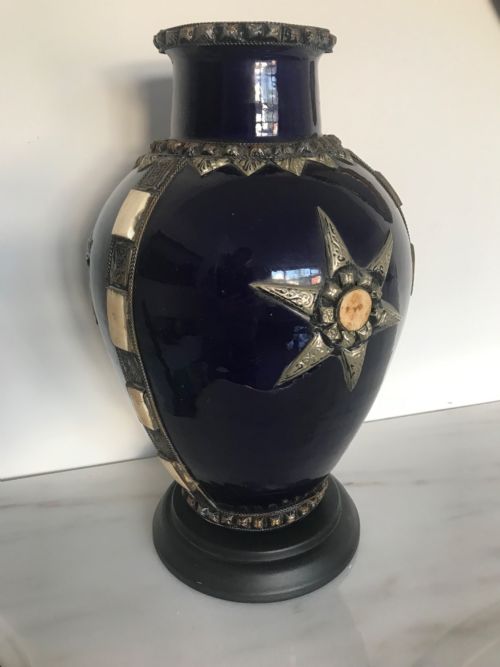
Makers shaped these vessels using stoneware, earthenware, terracotta, and porcelain bodies, often throwing them on a potter's wheel or casting them in moulds. Artisans then applied rich blue glazes, ranging from deep cobalt and lapis tones to turquoise and salt-glazed finishes, sometimes incorporating enamel painting and gold leaf detailing.
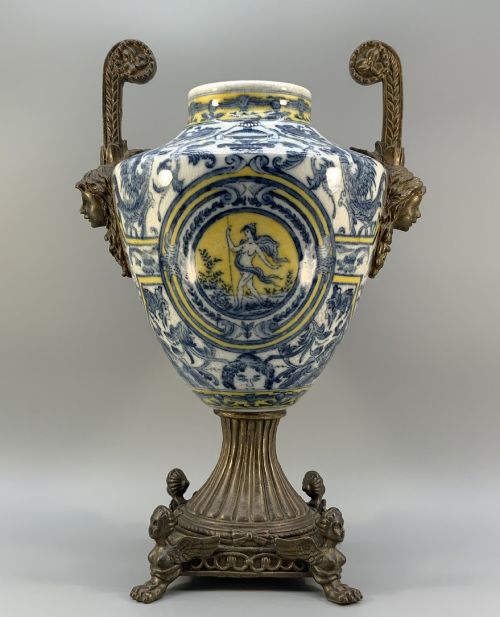
Many of the finer ceramic bodies received additional decorative treatments such as bronze mounts, silver cabochons, and gilt trim, combining metalwork with pottery to create substantial display pieces.
What varies in quality
The distinction between ordinary production pieces and superior works lies in the depth and control of the glaze, the precision of the modelling, and the involvement of named artists or established potteries. Pieces bearing hand-painted details or specialised slip-decorated techniques show a higher level of individual craftsmanship.
The presence of original mounts, such as cast bronze or gilt trim, alongside the overall balance and crispness of the ceramic form, determines the standing of a vessel within its period.
Royal Doulton·Doulton Lambeth·Minton·Fourmaintraux-Courquin·Carlton Ware·William Moorcroft·Pilkingtons Royal Lancastrian·Falcon Ware
The Blue Glazed Decorative Urn Glossary
- Faience
- Tin-glazed earthenware, often decorated with colourful pigments before firing. It frequently appears in nineteenth-century revival styles.
- Majolica
- A type of earthenware glazed with an opaque tin enamel and painted with brightly coloured metal oxides. It became popular during the nineteenth century for decorative garden and indoor vessels.
- Baluster
- A vase form with a rounded lower body that tapers towards a narrow neck. This shape provides stability and visual balance.
- Stoneware
- A robust, vitrified ceramic fired at high temperatures. It resists liquid absorption and takes dense salt or coloured glazes effectively.
- Jardiniere
- An ornamental ceramic pot or stand designed to hold live plants. They often feature robust handles and wide openings.
Blue Glazed Decorative Urn: Frequently Asked Questions
What is a blue glazed decorative urn used for?
These vessels were primarily designed as ornamental objects for mantelpieces, pedestals, and entrance halls during the nineteenth and early twentieth centuries. They served to display floral arrangements or simply to add vibrant colour and classical symmetry to formal domestic interiors.
Today, they function as focal points in a room, appreciated for their rich glazes and historical character rather than everyday utilitarian tasks.
How do I distinguish between Victorian and earlier pieces?
Distinguishing periods involves examining the ceramic body, the style of the glaze, and any factory marks stamped or painted on the base. Eighteenth-century pieces often display hand-thrown irregularities and traditional tin-glazed earthenware surfaces, while Victorian and later works frequently showcase industrial standardisation and specialised art pottery glazes.
Comparing the specific aesthetic movement, such as Art Nouveau or Renaissance Revival, helps narrow down the decade of production.
How should I clean a ceramic urn?
Dusting gently with a soft, dry cloth is the safest way to maintain the glazed surface of these antique ceramics. Avoid using chemical cleaners, abrasive pads, or soaking the piece in water, as moisture can penetrate unglazed areas or damage historical metal mounts.
If the interior requires cleaning, use a damp cotton bud very carefully and dry the area immediately afterwards.
Can these urns be displayed outdoors?
Most antique ceramic and porcelain urns are intended strictly for indoor display. Changes in temperature and freezing winter conditions can cause historic earthenware, stoneware, and applied glazes to crack or spall.
Heavier jardinieres made of robust stoneware or terracotta were historically used in sheltered outdoor or conservatory spaces, but interior placement preserves their glazes and mounts best.