

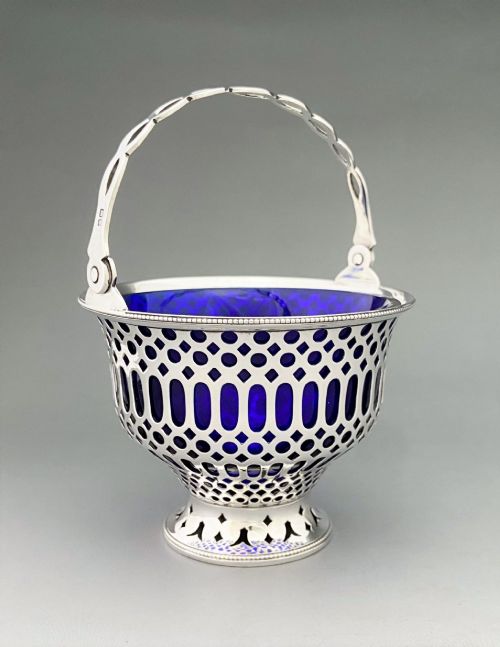


Blue Glass Sugar Basket
A blue glass sugar basket brings rich colour and metalwork together on the table, pairing deep vessels with bright silver or silver plate.
Blue Glass Sugar Basket
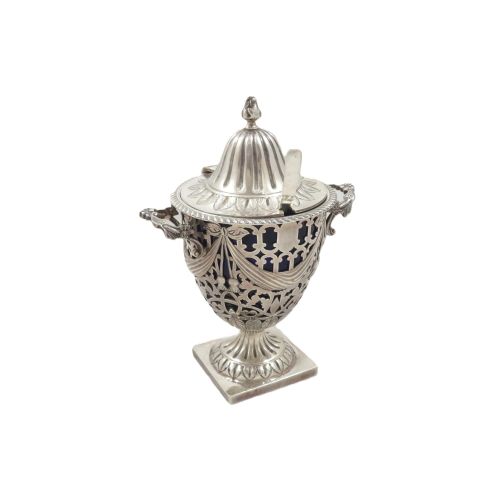
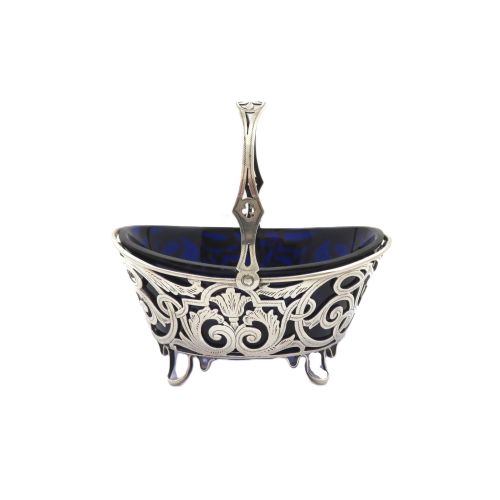
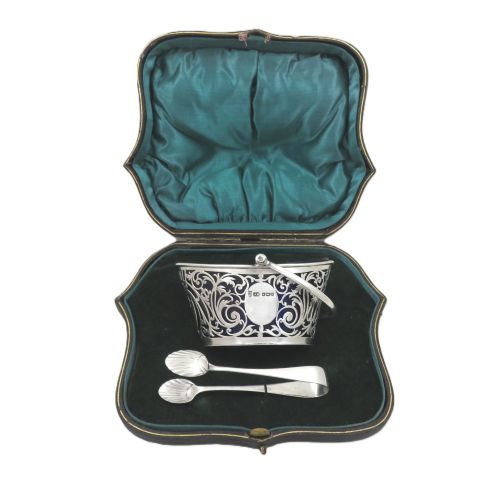
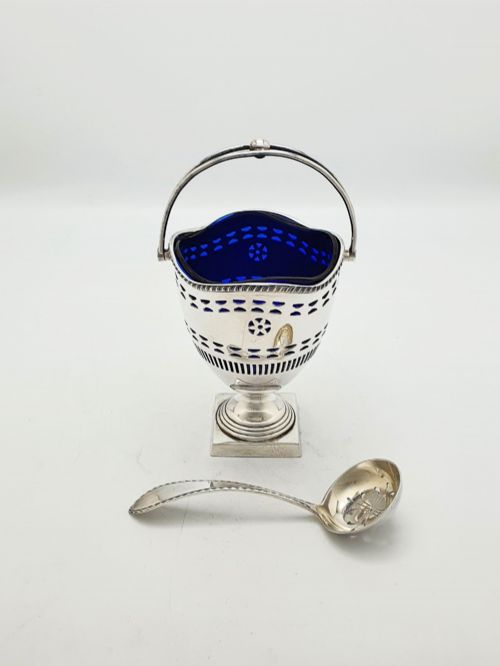
A blue glass sugar basket combines a rich cobalt or Bristol blue glass liner with an openwork frame of silver or silver plate, forming a striking centrepiece for the table. When you search for a blue glass sugar basket, you encounter pieces spanning the Georgian, Victorian and Edwardian eras, each showing distinct craftsmanship in metal and glass.
How they were made
Makers produced the metal frames using techniques such as piercing, wirework and casting in sterling silver or silver plate. Pierced designs required careful hand-sawing of the silver sheet to create delicate geometric or scrolling patterns.
The blue glass liners were mouth-blown and shaped to fit snugly inside the metal frames. Cobalt and Bristol blue hues were achieved by adding metallic oxides to the molten glass during production.
Some baskets come with matching sifters, ready to dust sugar over your tea table just as they did centuries ago.
What varies in quality
Quality rests in the crispness of the metalwork, whether piercing, wirework or cast floral handles, and the weight of the silver used in the frame. Hand-pierced Georgian frames demand a high level of skill compared to later cast or plated alternatives.
The presence of the original blue glass liner significantly affects the character of the piece. Liners that fit the frame precisely without wobble, alongside clear hallmarks on the silver, distinguish finer examples.
Aldridge & Green·Elkington & Co·Adie Bros.
The Blue Glass Sugar Basket Glossary
- Cobalt Glass
- A deep blue glass coloured with cobalt oxide. It provides the striking liner colour seen in many sugar baskets.
- Cream Pail
- A small cylindrical or bucket-shaped vessel with a swing handle, often used alongside or interchangeably with sugar baskets.
- Pierced
- A metalworking technique where patterns are cut out from a silver sheet. This creates the openwork lattice or fretwork seen on Georgian and Edwardian baskets.
- Bristol Blue
- A deep vibrant blue glass traditionally associated with Bristol glasshouses. It is frequently found in George III and later sugar baskets.
- Silver Plate
- A base metal coated with a thin layer of silver. Many Victorian and Edwardian examples utilise this technique for decorative tableware.
Blue Glass Sugar Basket: Frequently Asked Questions
What is a blue glass sugar basket?
A blue glass sugar basket is a table accessory consisting of a blown blue glass liner held within a pierced or wirework metal frame. They were designed to hold loose sugar lumps on the dining table.
The metal frame typically includes a swing handle and rests on a footed base. The combination of deep blue glass and bright silver made them decorative items during the Georgian, Victorian and Edwardian periods.
How were sugar baskets used?
These baskets sat on the dining or tea table to hold sugar for tea or dessert service. Guests would use sugar tongs to select pieces from the bowl.
The removable glass liner allowed for easy cleaning after the sugar was served. Their decorative frames also permitted them to function as ornamental pieces on sideboards.
How do I care for blue glass?
Care for the glass liner by washing it gently in warm soapy water without harsh abrasives. Remove the liner from the metal frame before cleaning to protect both materials.
Polish the silver frame separately using a suitable cloth, avoiding contact between silver polish and the glass liner. Store the basket in a dry environment to prevent tarnish on the metal.
How do I date a sugar basket?
Dating relies on hallmarks stamped on the silver frame, which indicate the assay office and year of production. Stylistic clues such as Georgian wirework or Edwardian urn shapes also point to specific eras.
Check for maker marks and silver purity marks on the base or rim of the metal frame. Archival comparisons with similar dated pieces help confirm the period of manufacture.