


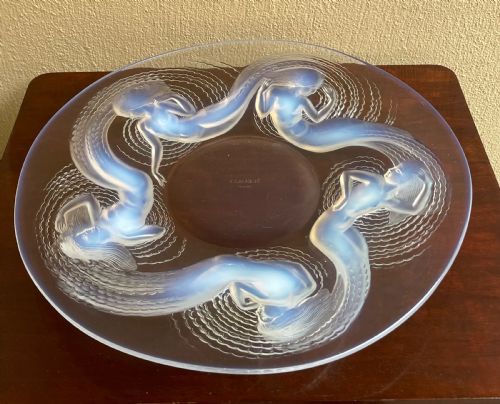


Blue Glass Centerpiece
A blue glass centrepiece brings deep cobalt tones or milky opalescence to a dining table.
Blue Glass Centerpiece
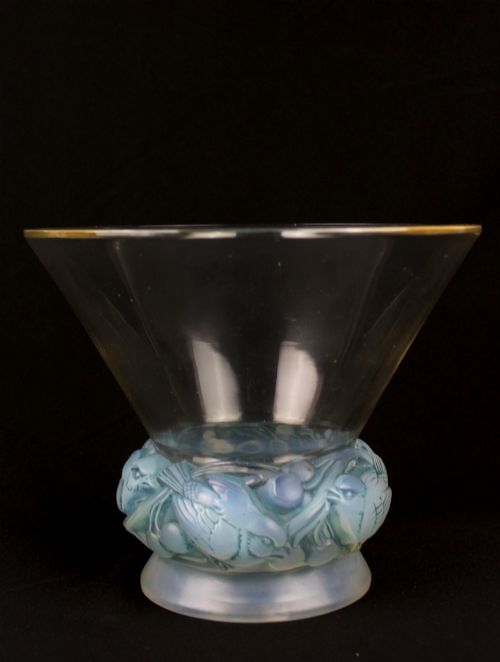
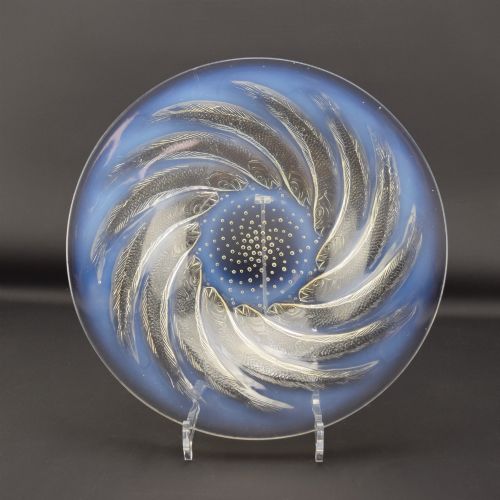
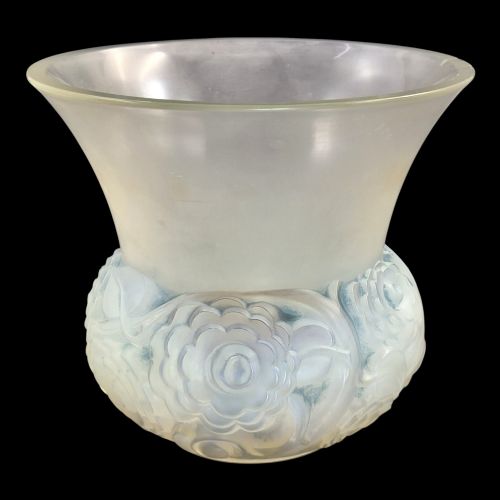
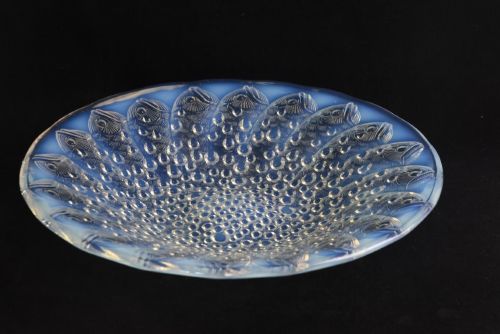
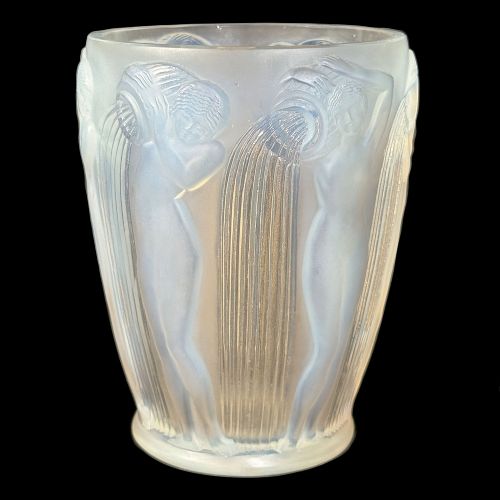
A blue glass centrepiece acts as a focal point for a table, taking the form of large bowls, shallow coupes, chargers, and footed vessels. These pieces range from Victorian cobalt tableware to Art Deco opalescent creations.
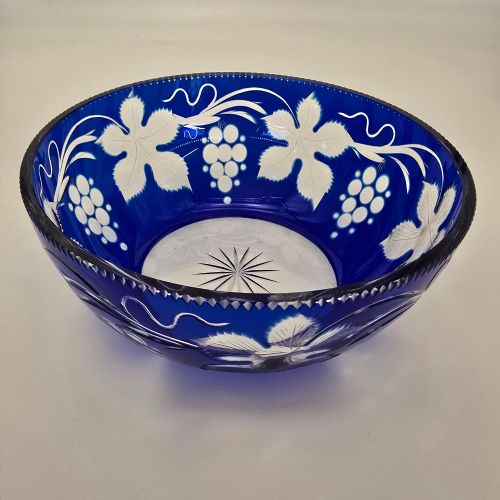
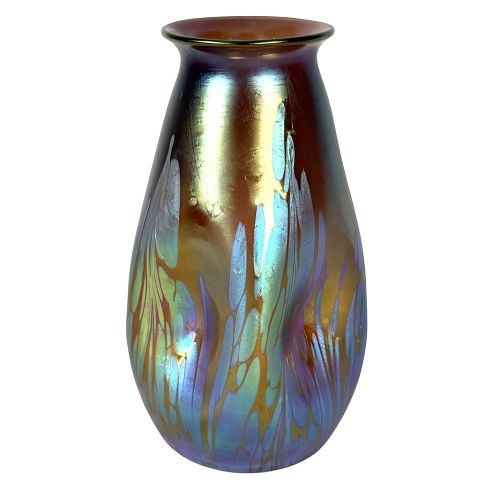
The selection here leans heavily towards twentieth-century moulded glass alongside nineteenth-century cobalt vessels, often mounted in sterling silver or silver-plated frames. Buyers meet everything from Bohemian cobalt and clear glass bowls to Scottish Monart vessels and French opalescent works.
Vessels span the eighteenth, nineteenth, and twentieth centuries, encompassing Georgian neoclassical forms, Victorian cut glass, Edwardian bon bon dishes, and Art Nouveau or Art Deco designs. Each era brings a distinct silhouette and method of handling colour, from deep saturated cobalt to pale opalescent tints.
How they were made
Makers utilised lead crystal, cobalt glass, and opalescent glass, often working molten material into moulds or free-blowing forms before applying surface decoration. Cut glass pieces relied on wheel-cutting through a coloured overlay down to clear crystal underneath.
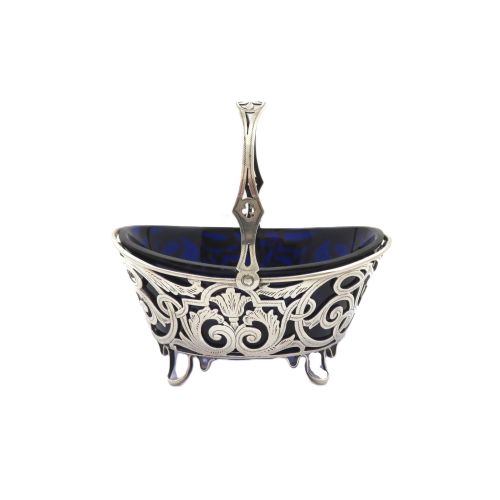
Many items combine glass with metalwork, housing the blue glass vessels inside sterling silver baskets, swing-handled mounts, pierced dish rings, or silver-plated frames. Enamel and moulded relief techniques further defined the surface texture of twentieth-century pieces.
Blue Glass Centerpiece Retail Price Guide 2026
Typical asking prices for blue glass centerpiece among the pieces listed under this phrase on Sellingantiques today, from the lower quarter to the upper quarter. They describe what is for sale here now, not the wider market.
Listings feature opalescent glass, cobalt glass, and lead crystal alongside sterling silver and silver-plated mounts.
What varies in quality
Quality rests on the depth of the glass colour, the crispness of the moulded relief or hand-cut facets, and the integrity of any accompanying silver mount. Heavier lead crystal and well-defined opalescence distinguish the finer examples from standard production.
The execution of the metal mounts, such as solid sterling silver frames or complex pierced silver baskets, elevates a piece. Maker attribution and the preservation of original surface finishes also dictate the standing of an individual item.
Rene Lalique·Val St Lambert·Monart Glass·Loetz·Jobling
The Blue Glass Centerpiece Glossary
- Opalescent Glass
- Glass that diffuses light to display milky, semi-translucent highlights, often shifting in tone from blue to amber depending on the angle of illumination. This effect was widely utilised by twentieth-century makers.
- Cobalt Glass
- Glass coloured deep blue through the addition of cobalt oxide during the melting process. It produces a rich, saturated tone seen across Victorian and continental tableware.
- Coupe Ouverte
- An open bowl or shallow dish designed for display or serving. These forms frequently showcase moulded floral or figural motifs across the interior.
- Cut to Clear
- A technique where a vessel of coloured glass receives an outer layer of clear glass, or vice versa, and portions are ground away on a wheel to reveal the contrasting layer underneath.
- Dish Ring
- A spool-shaped stand, typically made of silver, designed to elevate a bowl or dish above the surface of a table. They frequently feature pierced and chased ornamentation.
Blue Glass Centerpiece: Frequently Asked Questions
How do I clean an antique blue glass centrepiece?
Wash the glass gently in warm, soapy water using a soft cloth, avoiding abrasive pads that might scratch the surface. If the piece includes a fitted silver mount, keep the metal dry and use a dedicated silver cloth away from the glass.
Harsh chemical immersion can damage vintage enamel or fragile silver-plated finishes. Pat the piece thoroughly dry with a lint-free towel after washing.
Were these vessels used for fruit or flowers?
Large bowls and comports served primarily as table centrepieces for holding fruit, flowers, or sweetmeats during formal dining. Shallow coupes and chargers acted as decorative presentation pieces.
Smaller footed dishes and bon bon containers held confectionery or small decorative items. Many silver-mounted baskets were constructed with removable glass liners for practical everyday use.
How do I distinguish Art Deco opalescent glass from Victorian cobalt?
Art Deco pieces, often associated with the 1920s and 1930s, typically feature moulded opalescent relief decoration with milky highlights and stylised floral or figural motifs. Victorian examples rely on deep, uniform cobalt tones, heavy lead crystal weight, and hand-cut facets.
Victorian items are frequently encased in ornate sterling silver frames or swing-handled baskets. Art Deco designs lean towards geometric or nature-inspired moulded glass forms produced in France and Britain.
Can I use a silver-mounted bowl on a dining table?
These pieces function well on dining tables or sideboards as decorative focal points. Ensure the supporting surface is stable, as older silver mounts and heavy glass vessels can be weighty.
Avoid placing them in direct, harsh sunlight for extended periods to protect the depth of the blue colour. Handle items with integrated silver frames carefully when moving them between rooms.