
Blue Gilded Vase
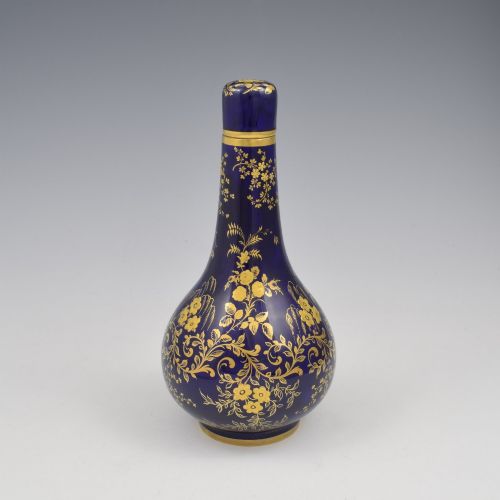
A blue gilded vase combines deep cobalt surfaces with rich gold leaf, offering both vibrant colour and formal elegance for a room.
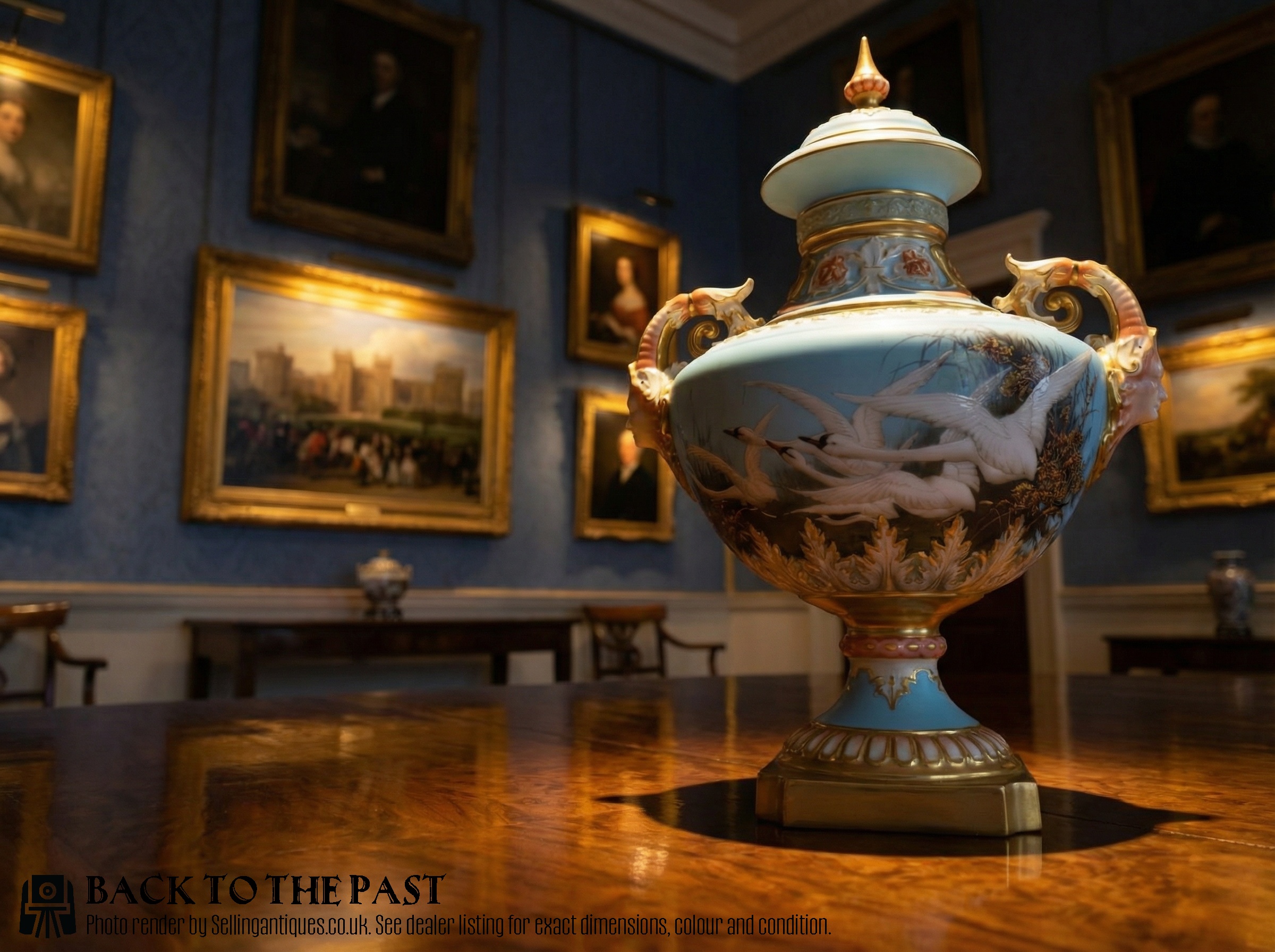
Blue Gilded Vase
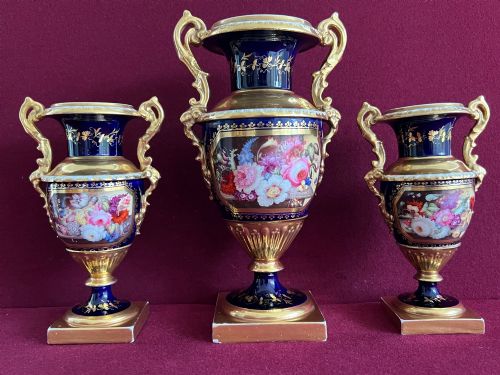
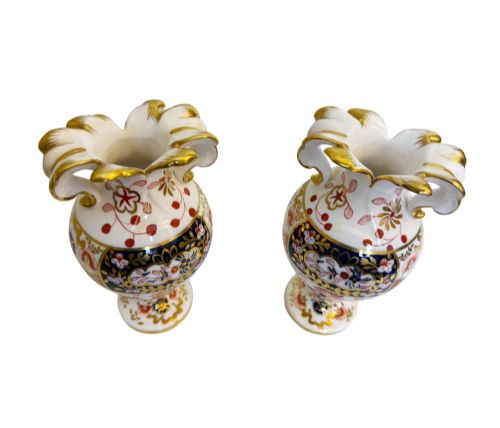
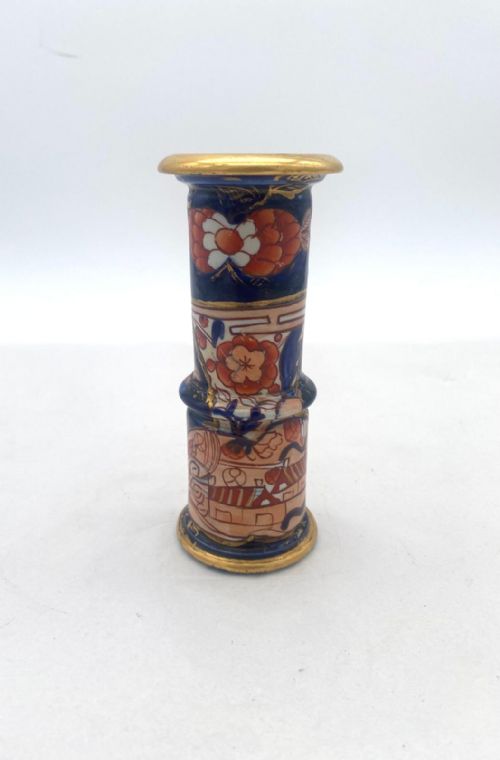
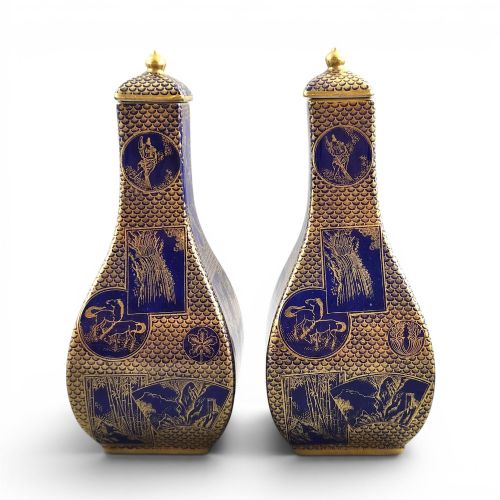
A blue gilded vase encompasses works created in porcelain, earthenware, ceramic, and glass from the nineteenth and early twentieth centuries. These pieces appear in forms ranging from small miniature scent bottles and bud vases to large floor-standing urns and garniture sets.
Materials and construction
Potters shaped these vessels using fine ceramic pastes, porcelain bodies, and earthenware before applying cobalt blue grounds and enamels. Artisans then added metallic embellishments through the application of gold leaf, gilt, and gilding over the glaze.
Many items received hand-painted details, transfer printing, or raised moriage work prior to a final kiln firing. Glass variants achieved their appearance through similar combinations of cobalt coloration and surface gilding techniques.
Listings span nineteenth and early twentieth-century periods, incorporating porcelain, earthenware, glass, and ironstone.
Evaluating craftsmanship
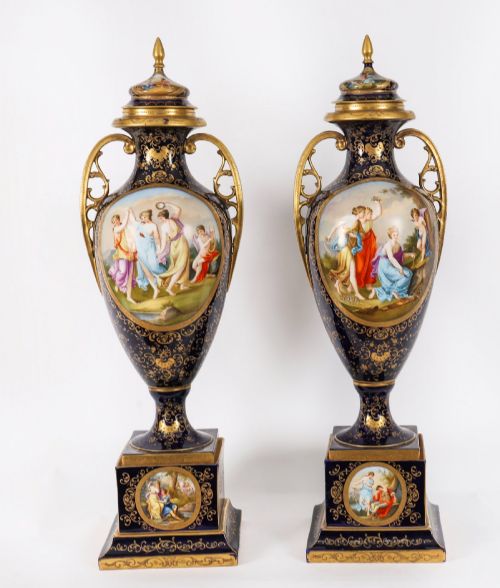
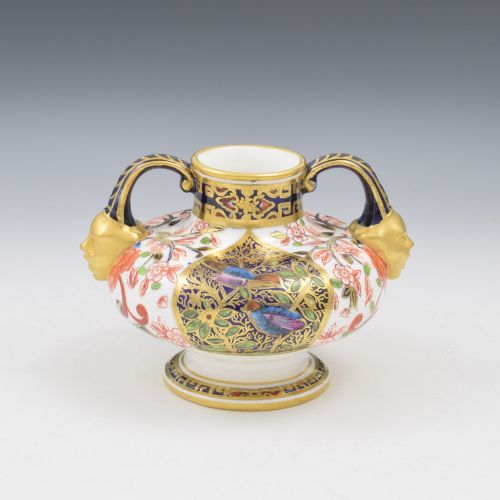
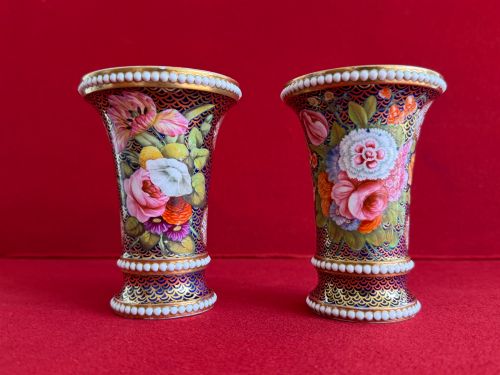
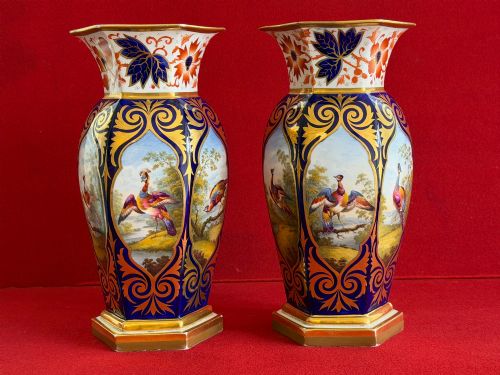
Quality rests upon the precision of the hand-painted decoration, the depth and consistency of the blue ground, and the crispness of the gilt work. Superior examples display careful brushwork and fine detailing on figures, birds, or floral panels rather than rushed application.
The weight and purity of the porcelain or ceramic body also distinguish finer items from simpler production pieces. Well-preserved gilding without excessive rubbing indicates careful historical handling.
Royal Crown Derby·Flight Barr And Barr·Spode·Coalport·Mason·Minton·Carlton Ware·William Moorcroft
The Blue Gilded Vase Glossary
- Imari
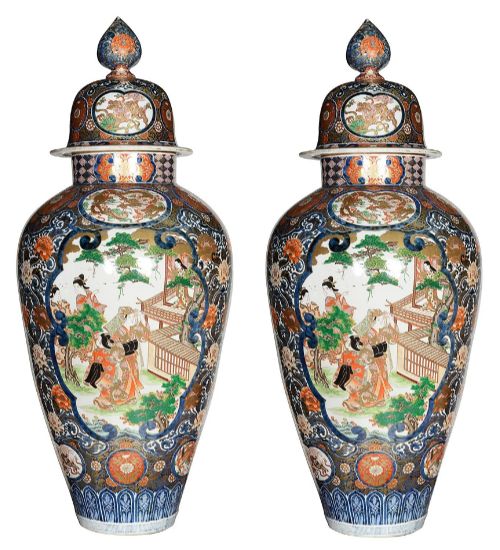
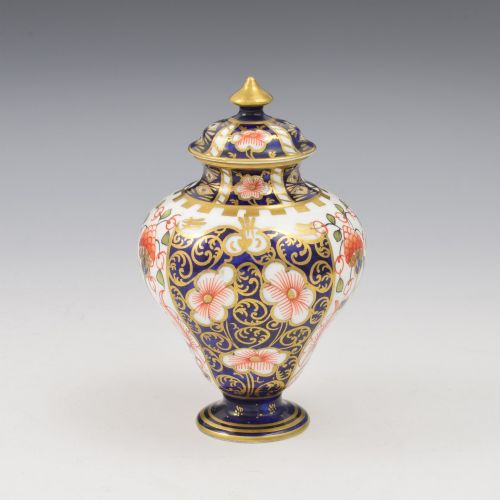
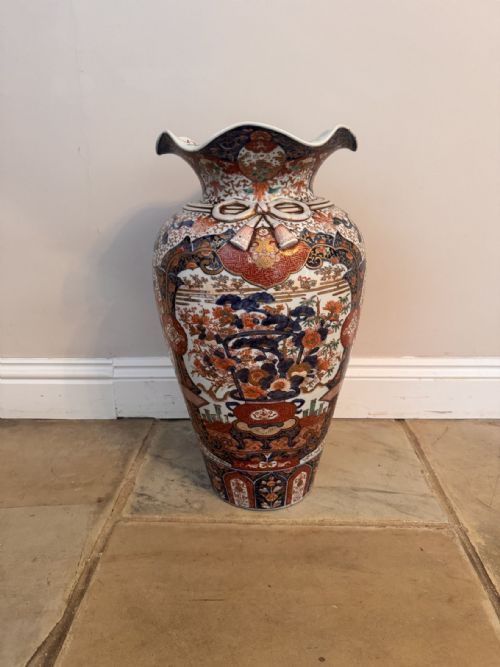
- A Japanese decorative style originating in Arita featuring cobalt blue, iron red, and abundant gold leaf. European factories frequently copied these distinct patterns during the nineteenth century.
- Gilding
- The application of gold leaf or powdered gold to the surface of ceramic or glass objects. This technique accentuates rims, handles, and painted motifs.
- Bleu Céleste
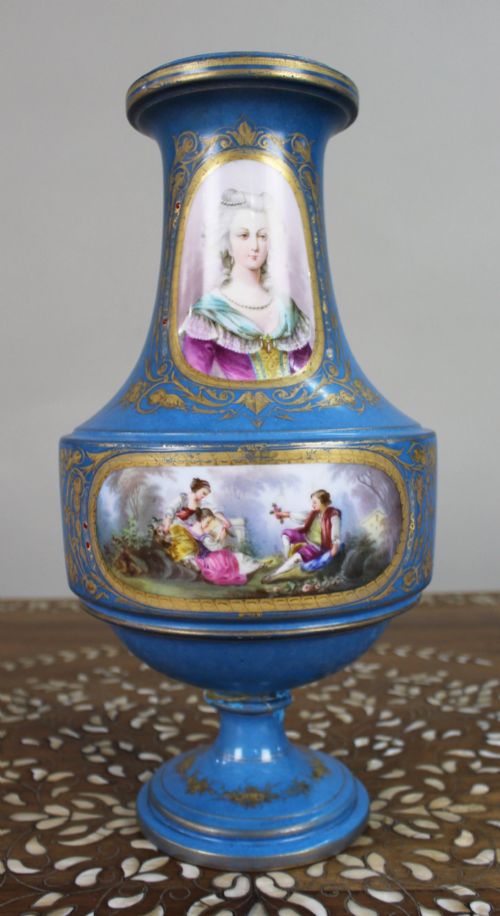
- A bright turquoise or sky-blue ceramic ground colour associated primarily with French Sèvres porcelain. It provides a striking contrast to metallic gold ornamentation.
- Garniture
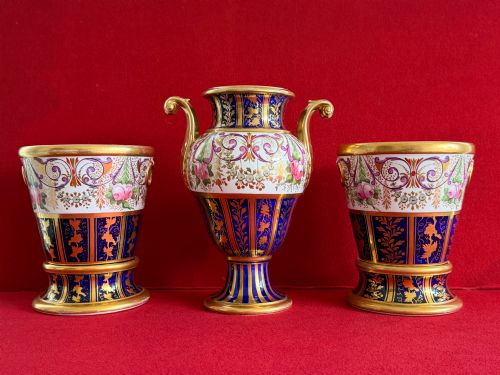
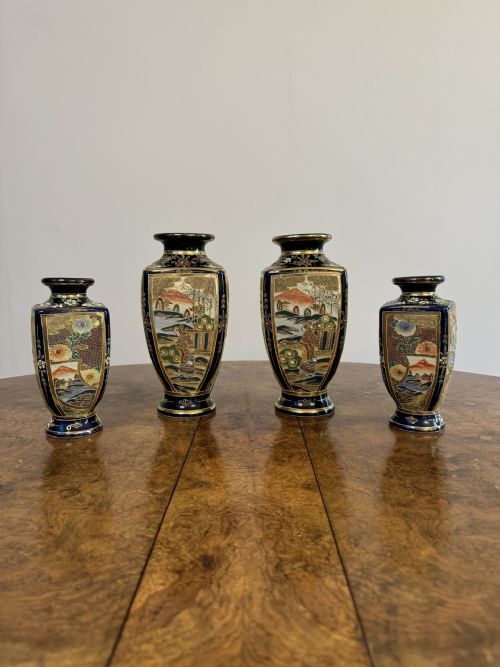
- A set of three or more matching vases or urns designed to be displayed together on a mantelpiece or sideboard. These sets often share identical decorative motifs and scale.
- Moriage
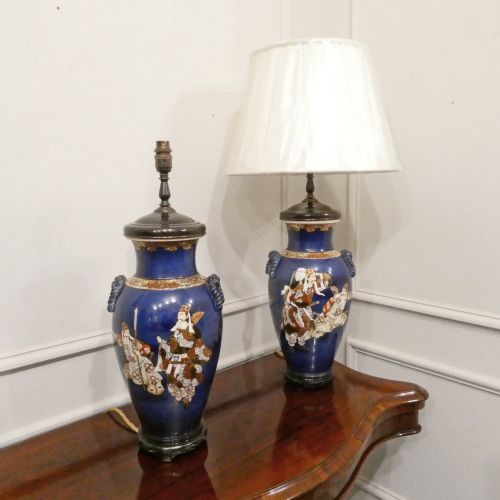
- A Japanese ceramic technique using piped slip to create raised, textured decorative patterns. This method frequently frames figures and floral designs on Satsuma earthenware.
Blue Gilded Vase: Frequently Asked Questions
How do I display a blue gilded vase?
These vessels suit prominent placement on mantelpieces, tables, or within cabinet displays where light catches the metallic surfaces. Pairing a single piece with neutral backgrounds allows the deep blue ground to stand out.
Larger floor-standing urns or garniture sets work well as focal points in entrance halls or principal reception rooms. Care should be taken to keep them away from direct heat sources and abrasive cleaning agents.
How are different periods identified?
Dating relies on factory marks, backstamps, stylistic traits, and the composition of the ceramic body. Regency and early nineteenth-century pieces often feature hand-painted botanical or classical scenes with neoclassical shapes.
Later Victorian and Edwardian items frequently display denser Imari palettes or transfer-printed elements alongside specific maker ciphers. Comparing mark references helps confirm the exact decade of manufacture.
What is Japanese Imari?
Japanese Imari refers to export porcelain made in the town of Arita featuring a palette of cobalt blue underglaze and iron red and gold overglaze. European makers admired these vibrant compositions and produced their own versions throughout the nineteenth century.
Authentic pieces show dense geometric and floral arrangements, often combined with panels depicting landscapes or domestic scenes.
Can these vases hold water?
While many historical ceramic and glass vessels are structurally sound, antique pieces with delicate hand-applied gilding or enamel are best kept dry. Using them for fresh flowers risks moisture seeping into older unglazed bases or hairline fractures.
Dried stems or artificial arrangements offer a safe alternative for displaying botanical elements inside antique urns.