
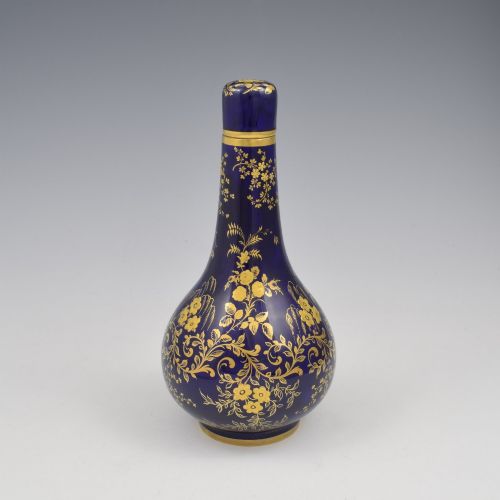
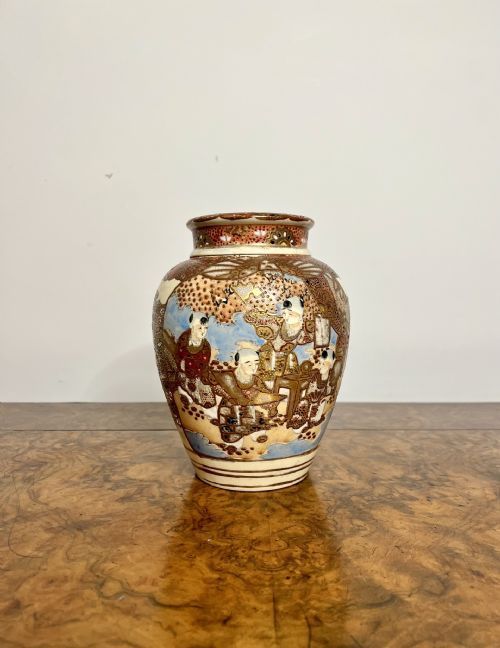


Ornamental Covered Vase
An ornamental covered vase brings classical proportion and focal weight to a room, offering covered vessel forms in porcelain, earthenware, and bronze.
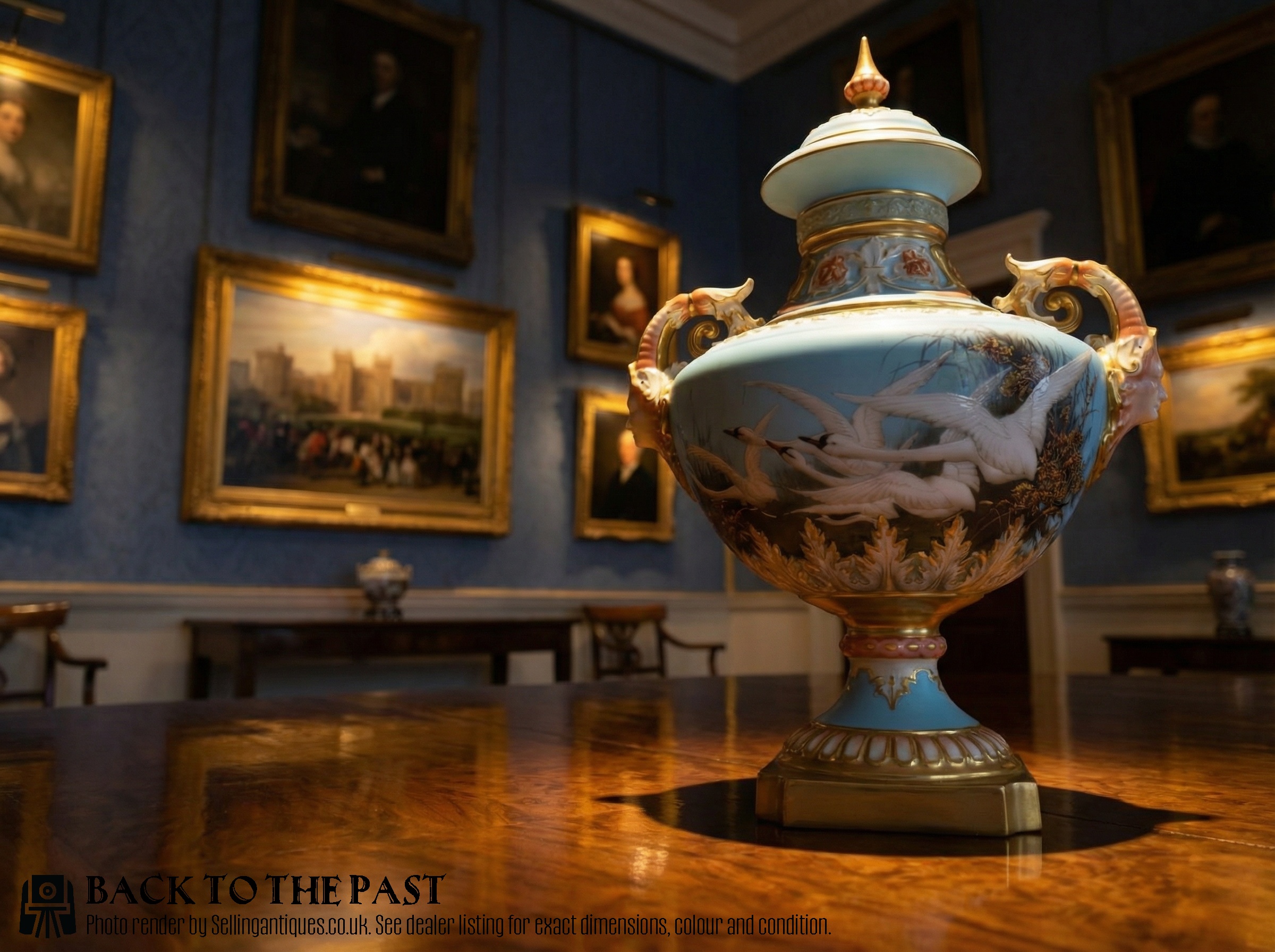
Ornamental Covered Vase
An ornamental covered vase is a decorative vessel complete with a matching lid, designed primarily for display rather than holding cut flowers or liquids. These pieces range from miniature scent bottles and ginger jars to substantial pedestal urns.
The selections available here span the nineteenth century through the Edwardian era, taking in English factories, continental works, and Japanese output. Forms draw heavily on classical antiquity, Neoclassical taste, and Victorian interpretation.
Buyers encounter diverse stylistic influences, including Sèvres-style decoration, Japanese Satsuma wares, and Vienna-style painting. Each example serves to anchor a mantelpiece, side table, or cabinet display with distinct historical character.
How they were made
Maker techniques rely upon formed porcelain, earthenware, and cast bronze, shaping bodies to receive elaborate surface treatments. Glazes provide a smooth ground for subsequent hand-painted decoration.
Artisans applied gold leaf, gilding, and enamel work to highlight raised details, figural scenes, and botanical motifs. Specialised artists painted specific subjects like swans and blackberries directly onto the porcelain body before firing.
What varies in quality
Quality rests principally on the precision of the hand-painted execution and the confidence of the gilding. Master painters working for established factories achieved finer detail in figures, feathers, and floral studies.
The crispness of cast bronze work or the purity of the porcelain paste dictates the overall distinction of the vessel. Heavier, more substantial potting and balanced proportions separate standard production from exceptional studio output.
Derby Porcelain·Crown Staffordshire·Royal Vienna·Royal Worcester·Hadley and Sons Worcester
The Ornamental Covered Vase Glossary
- Covered vase
- A hollow vessel for display, fitted with a matching lid that completes its sculptural silhouette. These items often feature decorative handles and pedestal feet.
- Gilding
- The application of gold leaf or powdered gold suspended in a medium to ceramic or metal surfaces. This technique adds reflective highlights and rich borders.
- Pedestal vase
- A vessel elevated on a distinct stem and footed base. This form increases the visual height and formal presence of the piece.
- Satsuma
- Japanese earthenware featuring a crackled creamy glaze decorated with polychrome enamels and gilt. These wares became widely popular in the West during the late nineteenth century.
Ornamental Covered Vase: Frequently Asked Questions
What is an ornamental covered vase used for?
These lidded vessels serve as decorative focal points on mantelpieces, sideboards, and architectural brackets. Their covers remain in place to complete the sculptural design rather than permitting practical everyday access.
Historically, elite households placed them in formal reception rooms to demonstrate taste and access to fine international craft. Today, collectors use them to anchor period room schemes or display cabinets.
How do I date an antique porcelain vase?
Dating relies upon examining factory marks, painter signatures, and stylistic shifts such as Neoclassical revival or Edwardian aesthetic preferences. Base marks often change by decade or indicate specific reigning periods.
Material composition, potting weight, and the chemical nature of the glaze provide further clues. Comparing painted motifs with documented artist portfolios helps narrow the decade of production.
Are bronze urns and porcelain vases cleaned differently?
Bronze urns accumulate dust within recessed casting details and require gentle brushing with a soft, dry bristle tool. Polishing should be avoided unless necessary, as patination forms an important part of the historic surface.
Porcelain and earthenware demand careful washing with warm water and mild soap only when un-gilded. Painted and gilt surfaces are easily damaged by abrasives and should be dusted dry.
Why do some vases have painted bird scenes?
Late nineteenth-century factories employed specialised bird and wildlife artists to paint natural history subjects directly onto porcelain blanks. These miniature paintings showcased the technical skill of the decorating studio.
Swans, game birds, and garden fowl were especially popular among British buyers who valued naturalistic detail. Signed pieces by named artists command particular attention from specialised ceramic collectors.