

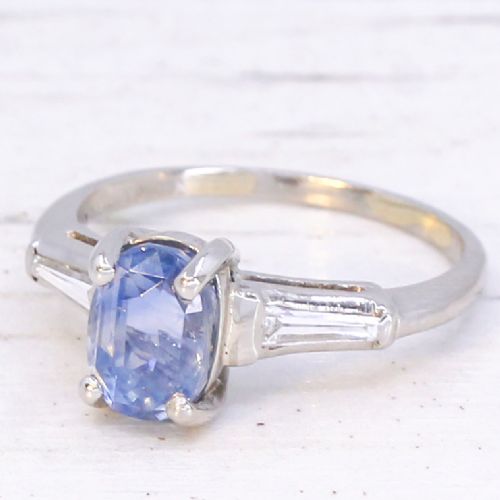


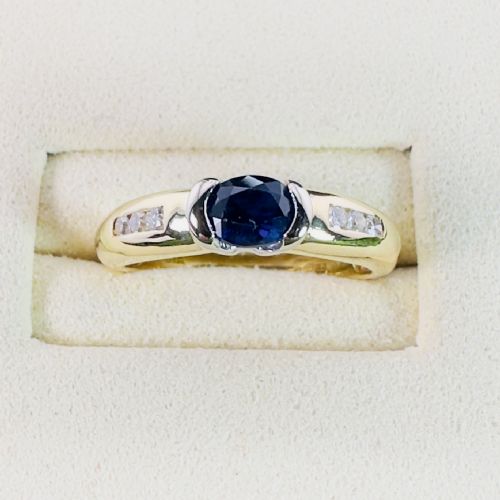


Blue Gemstone Solitaire Ring
A blue gemstone solitaire ring centres a single striking stone upon the finger, offering timeless elegance across decades of design.
Blue Gemstone Solitaire Ring
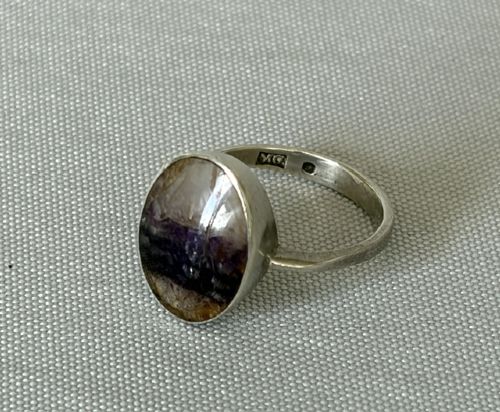
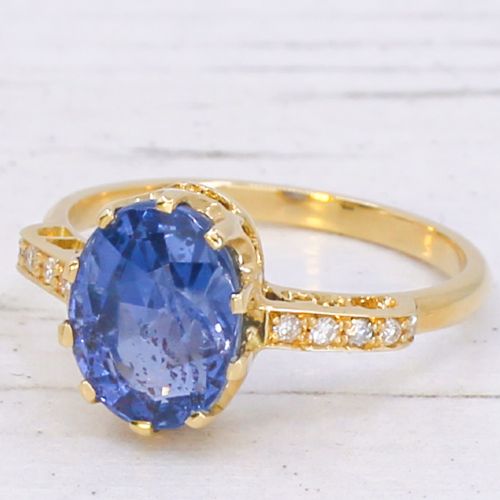
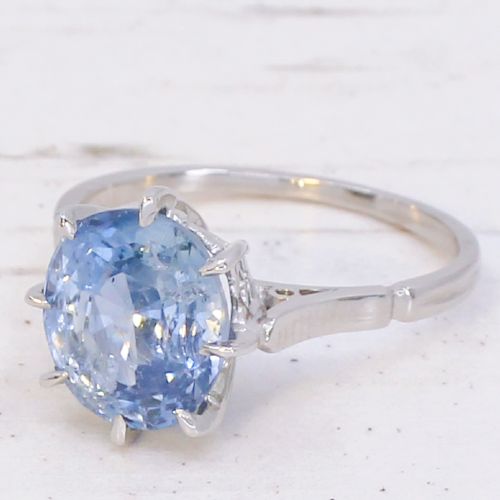
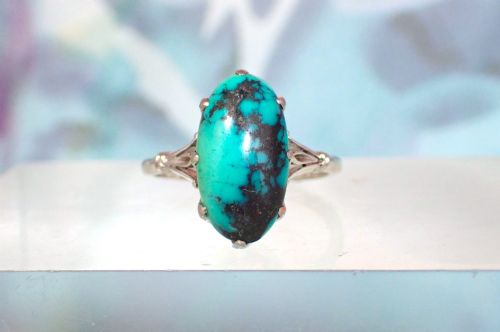
The sapphire remains the most frequent centrepiece among these selections, often accompanied by supporting diamonds or presented in a pure, unadorned setting. Alongside sapphires, buyers encounter striking aquamarines, vivid blue zircons, turquoise, and occasional rarer stones like Blue John.
Settings range from heavy yellow gold bands of the nineteenth century to crisp platinum mountings typical of the Art Deco and later twentieth-century phases. The focus rests entirely on the interplay between the central blue hue and the chosen metal.
Materials and construction methods
Master jewellers constructed these rings using durable precious metals such as platinum, 18ct gold, 9ct gold, and 14ct yellow or white gold. Platinum gained favour during the Edwardian and Art Deco periods for its strength in holding intricate millegrain edges and securing large stones with minimal visual interference.
Stones are shaped into oval cuts, round cuts, or smooth cabochons to maximise their internal fire and depth of colour. Claw settings, bezel settings, and flush mounts secure the gems, reflecting the technical standards of periods ranging from the nineteenth century through the mid-century decades.
Listings feature stones spanning from compact Victorian designs up to dramatic mid-century pieces exceeding thirty carats.
Distinguishing quality in craftsmanship and stones
Quality reveals itself in the origin and optical purity of the central stone, particularly with unheated sapphires or high-carat aquamarines possessing deep saturation. The absence of heavy treatment and the clarity of the crystal distinguish exceptional stones from standard commercial examples.
Metalwork precision dictates the longevity and refinement of the piece, visible in the crispness of claw work, the symmetry of geometric shoulders, and the security of the setting. Heavier mountings and balanced proportions separate superior goldsmithing from simpler production.
The Blue Gemstone Solitaire Ring Glossary
- Solitaire
- A ring design featuring a single gemstone mounted on its own, drawing full attention to the main stone without competing side stones.
- Cabochon
- A gemstone shaped and polished with a smooth, rounded top rather than faceted edges, commonly seen on turquoise and moonstone.
- Millegrain
- A decorative technique involving a row of tiny metal beads along the edge of a setting, characteristic of Edwardian and Art Deco jewellery.
- Unheated
- A term indicating a gemstone has undergone no thermal enhancement to improve its natural colour or clarity.
Blue Gemstone Solitaire Ring: Frequently Asked Questions
How do I care for my ring?
Clean your piece gently using warm soapy water and a soft brush, avoiding harsh chemical dips that might harm softer stones like turquoise.
Store the ring separately in a fabric-lined box to prevent harder gems from scratching the metal band or softer centre stones.
Are these stones natural?
Many listings specify unheated or natural origins for sapphires, zircons, and aquamarines, reflecting their authentic geological formation.
Examine individual descriptions for specific certifications or notes regarding thermal treatment and origin details.
Which metal is best for daily wear?
Platinum and 18ct gold offer exceptional durability for everyday use, resisting bends and securely holding larger centre stones over decades.
Lower carat golds or silver provide distinct historical character but may require more frequent maintenance of the prongs and band.
How can I tell the period?
Stylistic markers such as geometric platinum filigree indicate Art Deco origins, while heavy yellow gold mounts typically point to Victorian eras.
Examining the shank, setting style, and accompanying hallmarks helps narrow down the decade of manufacture.