



Blue French Porcelain Clock
These nineteenth-century pieces combine vibrant ceramics with gilded mounts, offering the classic desktop or mantel ornament collectors seek.
Blue French Porcelain Clock
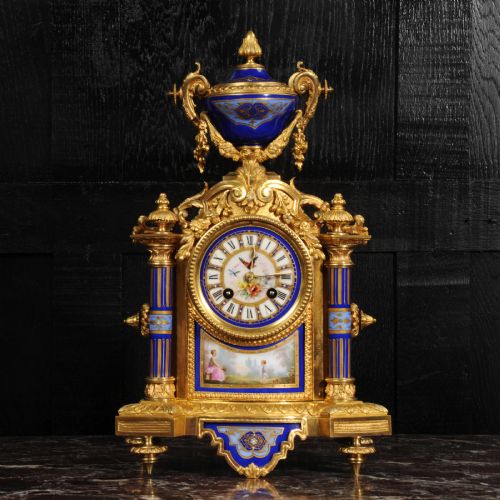
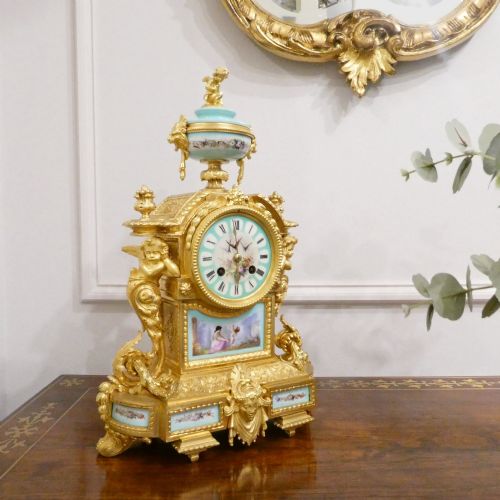
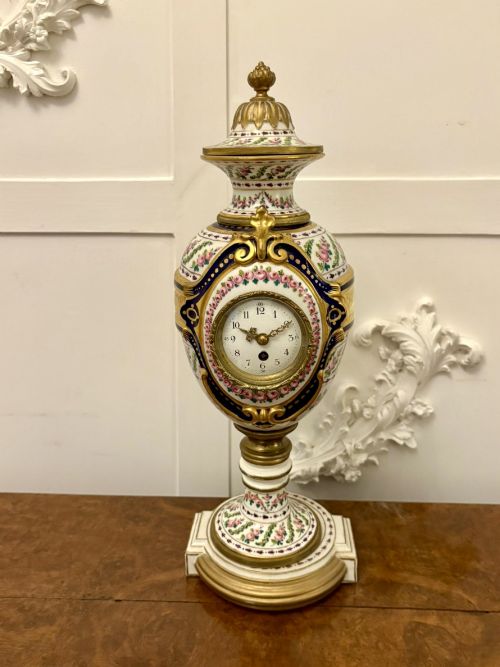
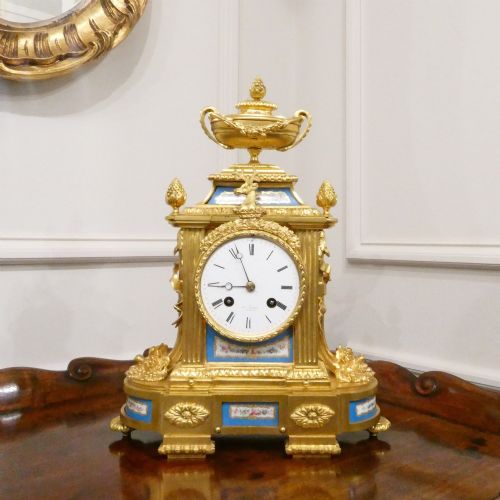
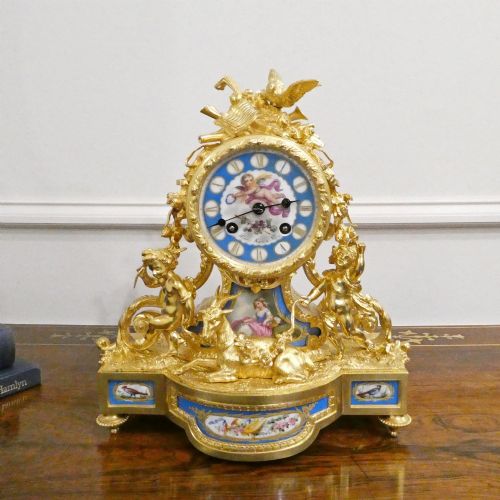
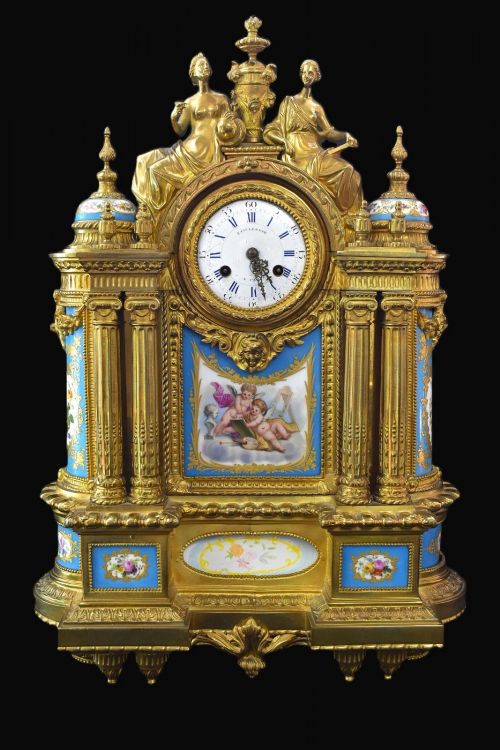
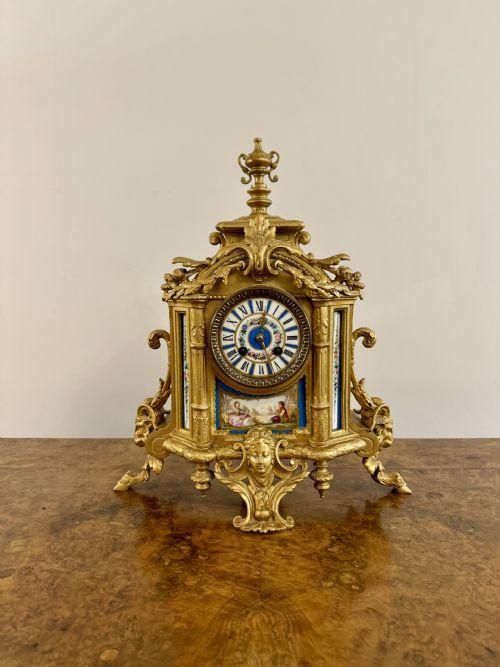
A blue french porcelain clock combines glazed ceramic bodies with metallic mounts, appearing primarily as mantel clocks and larger garniture sets from the nineteenth century. The periods represented span from the mid-nineteenth century through the Edwardian era, incorporating styles such as Louis XVI Revival, Rococo Revival, and Napoleon III. Collectors encounter urn shapes, drum heads, and lyre forms alongside matching side vases.
The ceramic elements often display rich blue grounds, including bleu de roi and blue celeste tones, frequently decorated with hand-painted scenes or enamel details. Ormolu, gilt bronze, and gilt metal mounts frame the porcelain panels and dials, creating symmetrical and ornamental silhouettes. These objects served both practical timekeeping and decorative roles in nineteenth-century interiors.
How They Were Made
Makers utilised fired porcelain bodies, shaping them into urns, vases, and clock cases before applying cobalt glazes and enamel painting. Metalworkers cast bronze, brass, and other metals into elaborate scrollwork, cherubs, and floral motifs, then gilded the surfaces with ormolu or gold finishes to complement the blue ceramics.
Clockmakers fitted mechanical movements into these ceramic and bronze housings, often incorporating enamel chapter rings with roman numerals. Assembly required securing heavy metal mounts to brittle porcelain without damaging the glazed surfaces, joining diverse materials into stable decorative objects.
Materials recorded across the inventory include porcelain, gilt bronze, ormolu, enamel, and glass.
What Varies in Quality
The precision of the metal casting and the artistry of the hand-painted porcelain panels distinguish finer examples from standard production. Crisp chasing on the ormolu mounts and delicate brushwork on the ceramic plaques indicate higher workshop standards during the nineteenth century.
The integration between the ceramic body and the metal chassis dictates overall solidity and visual harmony. Pieces signed by known makers or retailers often demonstrate superior mechanical refinement alongside more ambitious sculptural forms.
Japy Freres·Henry Marc·Etienne Lenoir·PH Mourey·Achille Brocot·Finnigan Manchester·Japy Fils·Vincenti of Paris·Miroy Freres·Jean Baptiste Delettrez
The Blue French Porcelain Clock Glossary
- Ormolu
- Gilded bronze produced by applying a mercury and gold amalgam to a bronze base and heating it. This technique creates a durable golden finish characteristic of nineteenth-century decorative metalwork.
- Garniture
- A set of matching ornamental objects consisting of a central clock flanked by two side vases or urns. These matched groupings were designed to decorate mantelpieces symmetrically.
- Bleu de Roi
- A deep, rich royal blue ceramic glaze developed at the Sevres pottery. It provides a dark backdrop for gilt metal mounts and hand-painted panels.
- Clock Set
- A grouping comprising a mantel clock accompanied by matching side pieces such as candelabra or urns. Such sets share identical decorative motifs and materials.
- Enamel
- A glassy substance fused to metal dials or ceramic surfaces through firing. It provides a smooth white or coloured background for clock numerals and painted decoration.
Blue French Porcelain Clock: Frequently Asked Questions
Where were these clocks placed?
Nineteenth-century households positioned these clocks on mantelpieces above fireplaces, often flanked by matching side urns or vases to create a balanced display.
They also served as centrepieces on large sideboards, drawing the eye toward the central dial and gilded mounts.
How do garniture sets function?
A garniture set uses a central clock accompanied by two matching side pieces, such as urns or vases, to create a unified decorative arrangement on a mantel or shelf.
The matching items repeat the ceramic glaze and metal mounts of the clock body, ensuring a symmetrical aesthetic across the furniture piece.
What styles do these clocks follow?
These pieces predominantly follow nineteenth-century revival aesthetics, drawing heavily on Louis XVI and Rococo design motifs from earlier French periods.
Makers incorporated classical symmetry, floral garlands, and scrollwork into the gilt bronze mounts surrounding the blue ceramic bodies.
How do I identify the period?
Period identification relies on examining the casting style of the gilt metal mounts, the form of the porcelain body, and any signatures on the clock movement.
Dates typically range from the mid-nineteenth-century Victorian era through the turn of the twentieth century, reflecting prevailing revival tastes.