

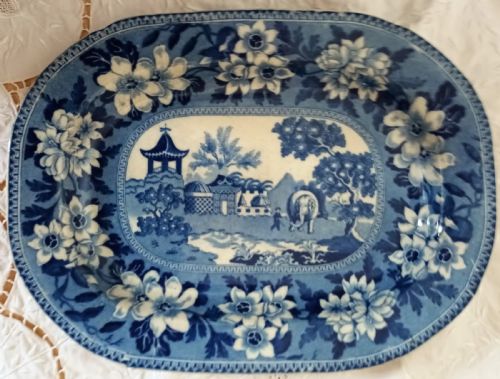
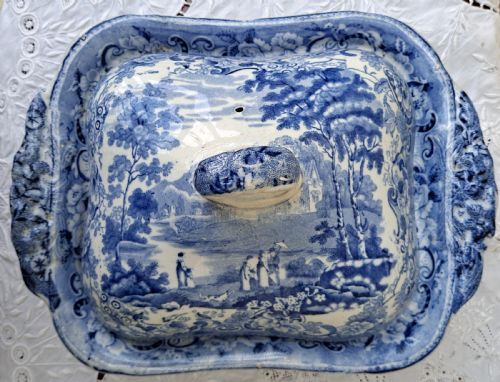
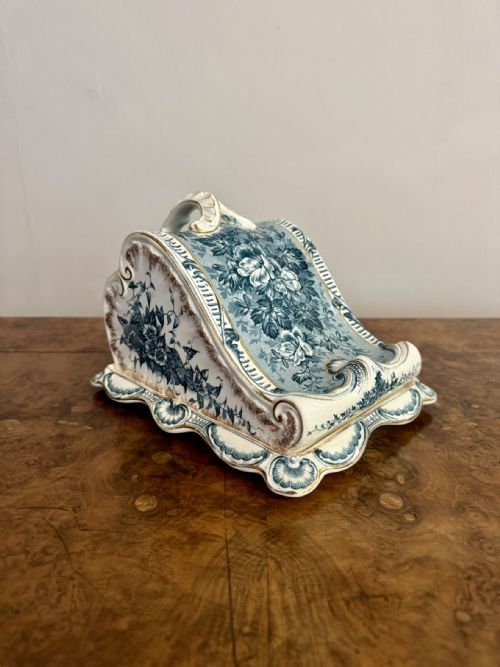


Blue Floral Transferware Dish
A blue floral transferware dish brings crisp cobalt patterns and sturdy earthenware into everyday rooms, offering a practical piece of nineteenth-century history.
Blue Floral Transferware Dish
A blue floral transferware dish comprises nineteenth-century ceramics decorated with printed cobalt scenes, ranging from serving platters and meat plates to fruit bowls and tureens. These items span the Georgian, Regency, and Victorian periods, capturing popular botanical and topographical motifs of the era.
The version most commonly met on this page is the earthenware serving plate or meat platter, often stamped with named patterns such as Elephant, Penang, or Lovick's. They range from large dining platters down to individual plates and vegetable covers.
Makers represented include firms such as John Rogers & Son, James Wallace & Co., and Minton, alongside Staffordshire potteries. Collectors encounter both utilitarian dining pieces and decorative display items produced across English kilns.
How they were made
Potters used earthenware, pearlware, and stoneware bodies shaped into plates, platters, and tureens before applying an engraved transfer print. The design was pulled from a copper plate onto tissue paper and rubbed onto the ceramic surface.
A transparent glaze was applied over the transfer before firing in the kiln, sealing the cobalt pigment beneath a glossy finish. Certain pieces received secondary embellishments such as gilt or gold leaf applied over the glaze.
Listings on this site feature nineteenth-century materials including earthenware, pearlware, stoneware, and gold leaf.
What varies in quality
The clarity of the transfer print defines the visual success of the piece, with finer lines and even tone separating superior items from blurred impressions. Early nineteenth-century examples often display deep cobalt shades against refined pearlware bodies.
Substantial forms like meat platters and tureens depend on the crispness of the moulded edges and the intactness of any accompanying covers. Potteries such as Minton and John Rogers achieved a sharper definition in both body and print.
John Rogers & Son·James Wallace & Co·Minton·John Ridgway·Doulton Burslem·Elkin Knight & Bridgwood
The Blue Floral Transferware Dish Glossary
- Transferware
- Earthenware or porcelain decorated by transferring a printed design from an engraved copper plate to the ceramic surface. This technique allowed intricate patterns to be produced in volume during the nineteenth century.
- Pearlware
- A refined type of earthenware developed in the late eighteenth century featuring a subtle bluish glaze that pooled in recesses. It served as a precursor to standard white Victorian bodies.
- Tureen
- A deep covered vessel used for serving soups, vegetables, or meats at the dining table. They frequently appear in blue and white ceramic sets with matching stands.
- Stoneware
- A hard, dense pottery fired at high temperatures until vitrified and impermeable to liquids. It provides a durable body for nineteenth-century plates and serving vessels.
- Staffordshire pottery
- Earthenware and stoneware produced by the numerous manufacturers operating in the industrial region of Staffordshire. Many unmarked nineteenth-century blue and white dishes originate from these kilns.
Blue Floral Transferware Dish: Frequently Asked Questions
How do I date a blue floral transferware dish?
Dating relies on the ceramic body, backstamps, and the style of the transfer border. Pearlware bodies and specific named patterns usually point to the earlier nineteenth century.
Later Victorian pieces often feature impressed registry marks or factory names on the underside. Comparing the shade of cobalt and the glaze texture helps narrow the decade of production.
Can I use these antique dishes for serving food?
Most nineteenth-century earthenware and stoneware platters remain structurally sound for serving dry foods at the table. Hand washing protects the historical glaze and any surface gilt from modern detergents.
Avoid thermal shock such as placing cold ceramic items into a hot oven. Gentle care preserves the transfer print for daily enjoyment.
What is the difference between pearlware and earthenware?
Pearlware is an early refined earthenware containing a small amount of cobalt in the glaze to create a whiter appearance. It sits chronologically between creamware and standard nineteenth-century white bodies.
Standard earthenware used later in the Victorian period presents a warmer or whiter tone without the characteristic blue pooling in the glaze.
How should I display a collection of meat platters?
Large platters and serving trays mount securely on walls using specialist plate hangers designed for heavier ceramics. Alternatively, standing them in plate grooves on sideboards showcases the depth of the blue and white patterns.
Grouping different nineteenth-century patterns together highlights variations in transfer styles and border designs.