

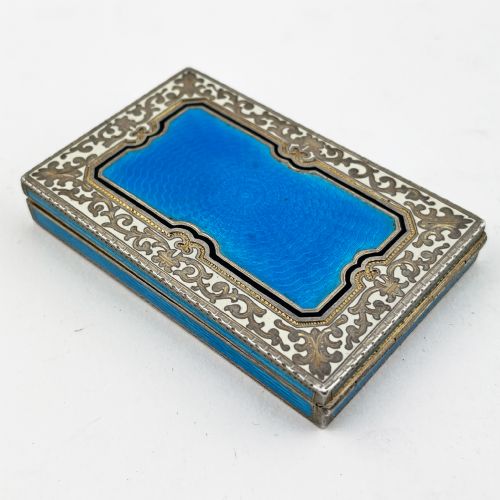


Blue Enamel Snuff Box
A blue enamel snuff box holds miniature portraits or fragrant powders within lustrous vitreous coatings over copper or silver.
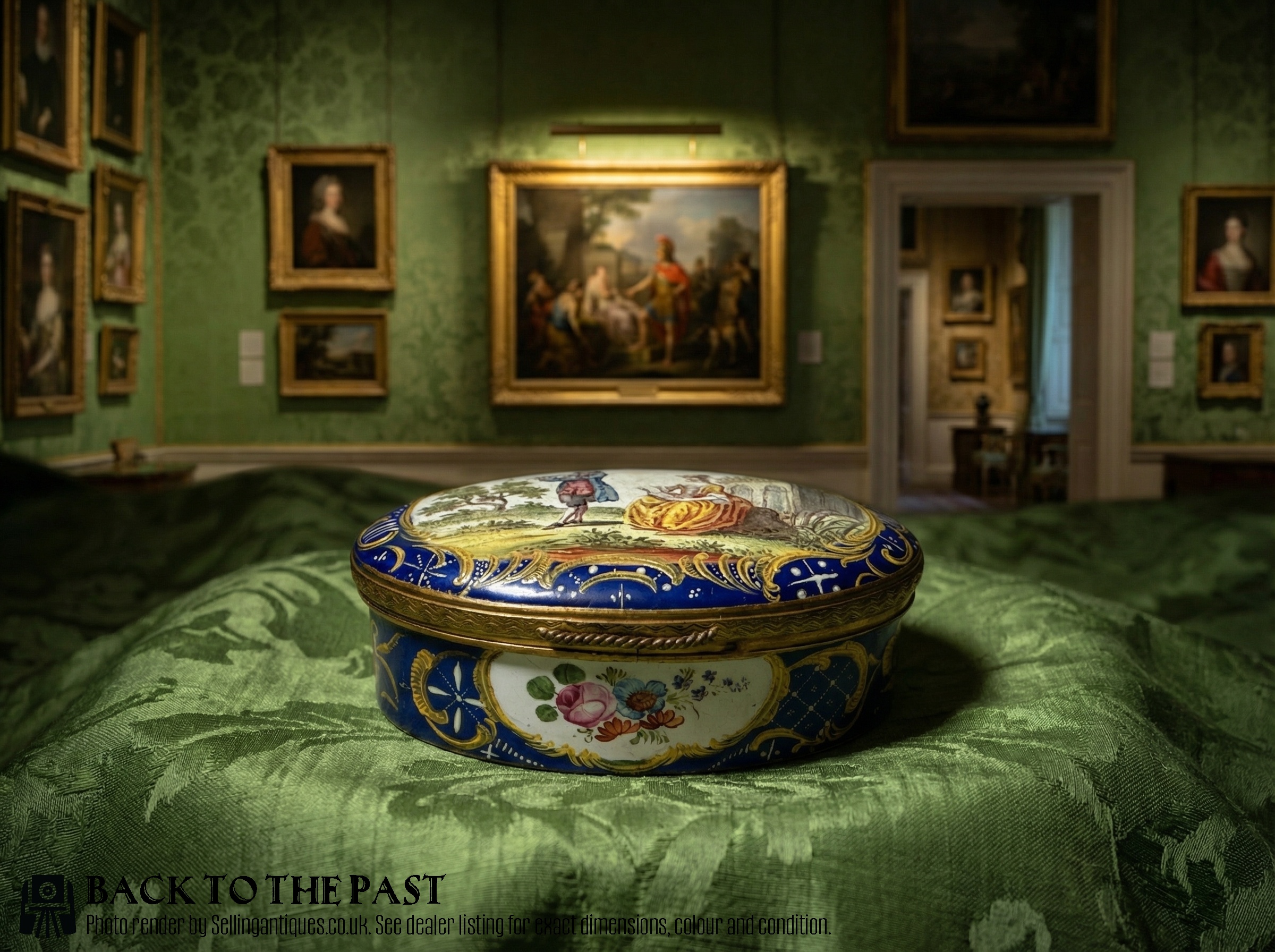
Blue Enamel Snuff Box
A blue enamel snuff box is a small pocket receptacle designed for personal use, appearing across Georgian, Edwardian, and later periods. These miniature containers serve multiple small functions, acting as patch boxes, card cases, and vinaigrettes alongside traditional snuff containers.
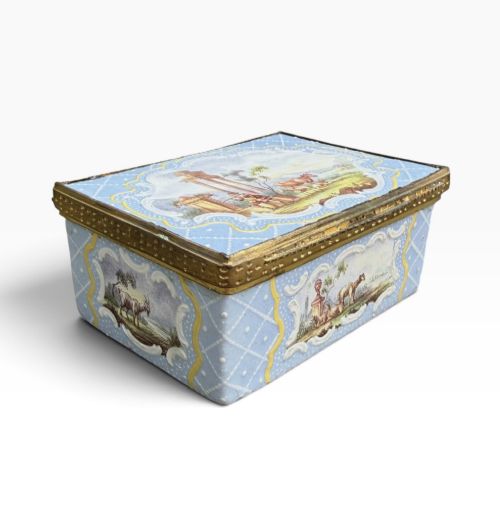
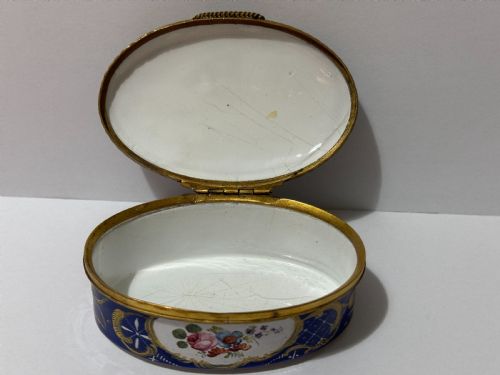
The versions most commonly met on this page date from the eighteenth century, particularly associated with Staffordshire and Bilston workshops. These eighteenth-century examples often feature oval or rectangular forms with hinged lids and polished copper or silver mounts.
How they were made
Craftsmen fused powdered glass onto copper, sterling silver, or gilded metal bases through intense kiln firing to create the durable vitreous enamel surface. This technique produced a smooth, glossy blue coating capable of retaining vibrant colour and fine painted detail.
Makers integrated precious metals such as silver and gold into hinges, bezels, and structural mounts, frequently employing cloisonne or delicate chased work to frame the enamel panels.
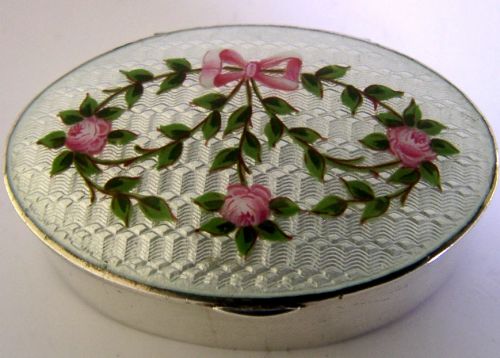
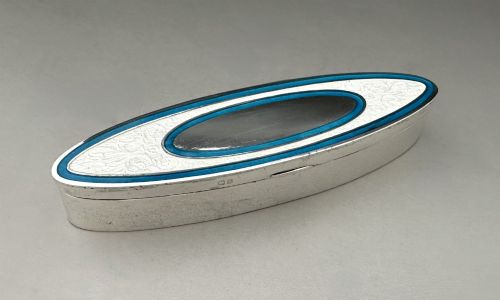
Listings feature eighteenth-century Bilston and Staffordshire pieces alongside Edwardian silver designs and twentieth-century continental work.
What varies in quality
The finesse of the painted decoration and the crispness of the metallic mounts distinguish superior examples from ordinary production. Finely detailed topographical scenes or portraits reflect a higher tier of artisan skill than plain or repetitive geometric patterns.
The weight and purity of the metal housing, whether sterling silver, gold, or gilded brass, contribute significantly to the overall substance and integrity of the piece. Well-fitted hinges and secure closures indicate careful assembly by skilled makers.
Bilston·Staffordshire
The Blue Enamel Snuff Box Glossary
- Vitreous enamel
- A material made by fusing powdered glass to a metallic substrate at high temperature. This creates a hard, glossy, and chemically resistant surface.
- Bilston enamel
- A term applied to eighteenth-century enamels produced in the Staffordshire town of Bilston. These pieces typically feature copper bases decorated with opaque white or coloured enamel grounds.
- Patch box
- A small pocket container used to hold cosmetic beauty patches made of velvet or silk. Georgian ladies wore these artificial marks on the face.
- Vinaigrette
- A small hinged box containing a perforated internal grille soaked in aromatic vinegar. People carried these to mask unpleasant odours in public spaces.
- Cloisonne
- An enamelling technique where metal wires form small compartments on a metal base to hold different colours of glass paste. Subsequent firing fuses the design into a solid layer.
Blue Enamel Snuff Box: Frequently Asked Questions
What is a blue enamel snuff box?
A blue enamel snuff box is a small pocket container created by fusing powdered glass onto a copper or silver base. These vessels were historically used to hold powdered tobacco, cosmetics, or aromatic vinegars.
Craftsmen produced them across various eras, with eighteenth-century Staffordshire examples being particularly prominent among surviving pieces. Their compact size made them essential personal accessories for fashionable individuals.
How were snuff boxes used?
Owners carried these small containers in pockets or handbags for quick access during social gatherings. They served practical purposes while also functioning as status symbols displaying fine craftsmanship.
Different variants accommodated specific items like dried herbs, beauty patches, or visiting cards. The hinged lids allowed for discreet opening and secure closure while on the move.
How do you date a Georgian enamel box?
Dating relies on examining the construction methods, the shape of the metal mounts, and the style of the painted decoration. Eighteenth-century pieces often feature characteristic copper frames and hand-painted motifs specific to Staffordshire workshops.
Changes in metal alloys and hallmark regulations on the silver components also provide reliable clues for establishing the period. Comparing the hinge construction to known examples helps narrow down the decade of manufacture.
How do I care for antique enamel?
Antique enamel requires gentle handling to prevent chipping the fragile glass surface against hard objects. Cleaning should involve only a soft, dry cloth without harsh chemical solvents or abrasive polishes.
Storage in a stable environment away from extreme temperature fluctuations protects both the metal mounts and the fused glass coating. Proper care preserves the original brilliance of the blue colour and the integrity of the hinges.