


Blue Enamel Gold Locket
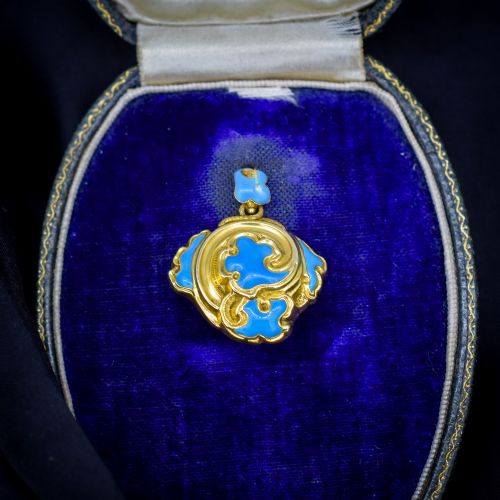
A blue enamel gold locket is a precious hinged pendant designed to hold miniatures or hair, combining deep cobalt colour with high-carat gold.
Blue Enamel Gold Locket
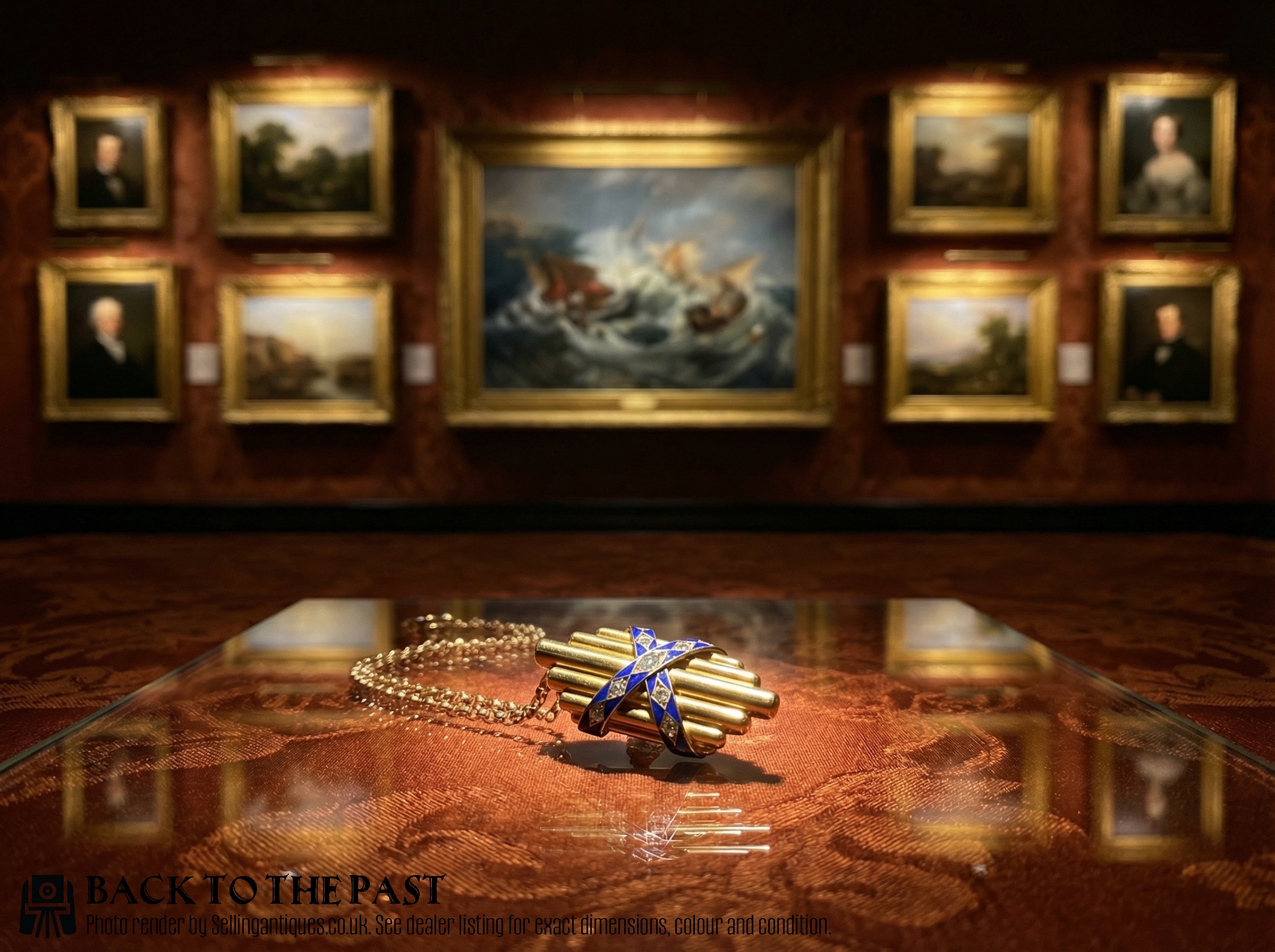
A blue enamel gold locket represents a personal keepsake container, frequently designed as a heart, cross, or circular pendant intended to be worn near the heart on a chain. When searching for a blue enamel gold locket, buyers encounter pieces primarily originating from the Victorian era, the late nineteenth century, and the early twentieth century.
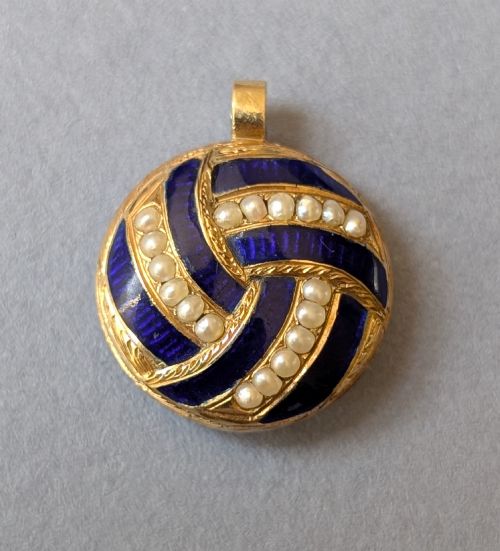
The most common examples on this page are Victorian gold lockets adorned with vitreous blue enamel, often centred with seed pearls, rose cut diamonds, or star motifs. These pieces bridge the boundary between jewellery and intimate memorial art, housing hair work or portrait miniatures within their hinged compartments.
Later nineteenth-century and early twentieth-century variations extend into French Belle Epoque and Art Nouveau styles, including plique-à-jour enamel and pansy remembrance motifs. These items range from mourning pieces containing hair work to sentimental love tokens shaped as puffy hearts.
Materials and construction
Construction relies on high-carat yellow gold, typically spanning 9ct, 15ct, 18ct, and rolled gold, shaped into hinged pendants and lockets. Artisans fused vitreous enamel to the metal surface through high-temperature firing, creating a glossy, durable blue ground.
Surface ornamentation integrates natural seed pearls, diamonds, paste, and turquoise, either grain-set directly into the enamel or mounted on raised gold star and foliate motifs. Internal compartments frequently retain glass frames designed to protect hair work or portrait miniatures.
Materials documented across the inventory include 9ct, 15ct, and 18ct gold, vitreous enamel, seed pearls, diamonds, turquoise, and paste.
Factors separating fine examples
Quality rests upon the depth and purity of the gold standard, ranging from 9ct up to 18ct, alongside the intricacy of the applied enamel work. Superior examples display flawless vitreous enamel without chipping, combined with finely detailed hand-engraved foliate borders or precise star motifs.
The Blue Enamel Gold Locket Glossary
- Vitreous Enamel
- Glass powder fused to metal under high heat. This technique creates a permanent, glossy coloured surface that resists fading.
- Seed Pearl
- A very small, natural or saltwater pearl. These tiny pearls frequently accent star and floral motifs on Victorian pieces.
- Rose Cut Diamond
- An antique diamond cut with a flat base and a domed, faceted crown. This traditional form produces a soft, candlelit gleam rather than modern brilliance.
- Plique A Jour
- An enamelling technique resembling miniature stained glass without a backing. Light passes directly through the translucent blue enamel cells.
- Hair Work
- Human hair arranged decoratively behind glass inside a mourning compartment. This Victorian craft commemorated departed loved ones with intricate woven designs.
Blue Enamel Gold Locket: Frequently Asked Questions
How do I open a locket?
Most antique lockets feature a small thumbnail notch on the side opposite the hinge. Gently easing a fingernail or a thin tool into this seam releases the snap closure.
Inside, glass bezels may be held in place by tiny gold lips or tiny screws. These frames lift out to allow the insertion of photographs or hair work.
Can I wear my locket daily?
While these pieces were built for regular wear, vitreous enamel remains glass and can fracture under sharp impacts. Removing the pendant before swimming, sleeping, or heavy manual labour protects the fragile surface.
Checking the hinge and clasp periodically ensures the secure closure of the pendant body. Gentle cleaning with a soft, dry cloth preserves the gold polish without scratching the enamel.
What is a mourning locket?
A mourning locket served as a remembrance piece following the death of a family member or sovereign. These items frequently incorporated dark blue enamel, black accents, and hidden compartments for hair.
They allowed the bereaved to keep a physical trace of the deceased close throughout the day. Over time, the style evolved from strict mourning into general sentimental and romantic jewellery.
How are different periods identified?
Georgian and early Victorian pieces often display hand-cut stones and closed-back settings where gems sit over foiled metal. Late Victorian and Edwardian examples show machine stamping, brighter enamels, and standardised carat marks like 15ct or 9ct.
French pieces from the same eras frequently carry distinct eagle or boar head hallmarks on the jump rings or outer rims. Motif choices, such as Art Nouveau pansies or French Belle Epoque drops, also point towards specific decades.