


Antique Diamond Enamel Pendant
These antique diamond enamel pendant pieces bring together rich coloured glass and bright stones, offering a glimpse into nineteenth-century symbolism and craftsmanship.
Antique Diamond Enamel Pendant
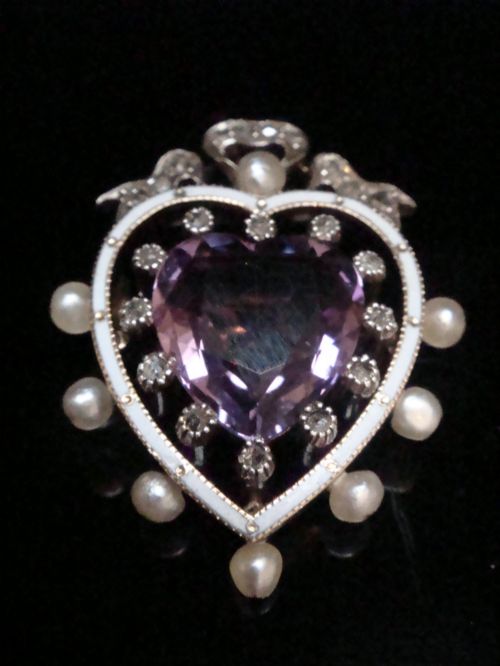
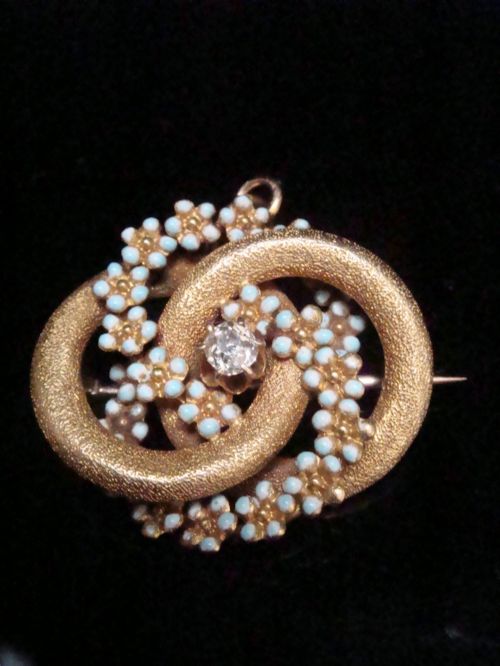
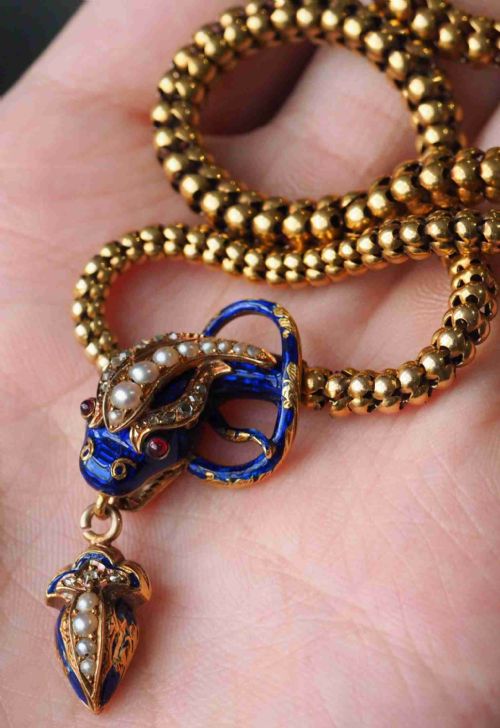
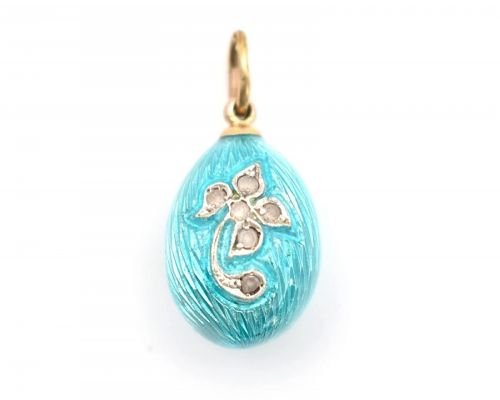
The selections on this page span several distinct forms, from romantic heart puff pendants and lovers' knots to serpentine motifs and Russian eggs. Victorian and Edwardian makers predominated, often incorporating seed pearls alongside blue or turquoise enamel and rose cut diamonds.
How they were made
Goldsmiths utilised 15ct and 18ct yellow gold alongside silver settings to mount rose cut diamonds and natural pearls securely. Metalwork often involved heavy casting and hand engraving to shape intricate serpent bodies, floral knots, and ornate locket frames.
Vitreous enamel was fused to metal surfaces, sometimes utilising guilloche techniques to create patterned, translucent backdrops beneath coloured glass. Jewellers then set small diamonds by hand into silver topped gold to maximise the brilliance of the stones against dark enamel.
Periods represented span from Victorian and Edwardian eras to mid-twentieth-century Imperial Russian items.
What varies in quality
The refinement of the vitreous enamel surface distinguishes superior pieces, noting smooth application free from chips or extensive restoration. Finer examples display meticulous engine turned guilloche patterns beneath translucent cobalt or turquoise layers.
Gemstone selection and setting work further define the hierarchy, particularly the clarity and cut of the rose cut diamonds and the matching uniformity of natural pearls. High carat gold construction and articulated multi-part hinges indicate superior workshop execution.
The Antique Diamond Enamel Pendant Glossary
- Guilloche enamel
- Enamel applied over engine turned metal engraving. This technique creates repeating geometric patterns that shine through translucent coloured glass.
- Rose cut diamond
- A traditional diamond cut featuring a flat base and a domed crown with triangular facets. These stones offer a soft, antique sparkle.
- Pendant brooch
- A convertible jewellery item fitted with both a suspension loop and a pin back. This dual function allowed the wearer to pin it to clothing or hang it from a chain.
- Mourning locket
- A commemorative jewel designed to hold hair, photographs, or miniature portraits. These pieces frequently combined black or dark blue enamel with pearls and diamonds.
Antique Diamond Enamel Pendant: Frequently Asked Questions
How do I wear a pendant brooch?
You can thread a chain through the integrated loop to suspend it from your neck, or utilise the pin fastening on the reverse to secure it directly to garments.
Many Victorian designs incorporated both mechanisms, allowing you to alternate between a necklace and a brooch depending on your attire.
What is guilloche enamel?
Guilloche is a decorative technique where mechanical lathe work engraves precise geometric patterns into a metal substrate before translucent enamel is applied on top.
This method allows light to reflect through the coloured glass, creating depth and movement across the surface of the pendant.
Are these lockets meant to hold photos?
Yes, many of these pieces contain internal compartments originally intended for miniature portraits, locks of hair, or sentimental paper mementoes.
Opening them often reveals glass covered frames or small gold rims designed to hold these personal keepsakes securely in place.
How can I tell Victorian from Edwardian pieces?
Victorian items often display heavier, ornate goldwork with symbolic motifs like snakes, knots, and deep blue or black enamel. They frequently date from the mid to late nineteenth century.
Edwardian pieces tend to introduce lighter framing, platinum elements, and delicate guilloche patterns, reflecting the transition into the twentieth century.