




Victorian Pearl Enamel Pendant
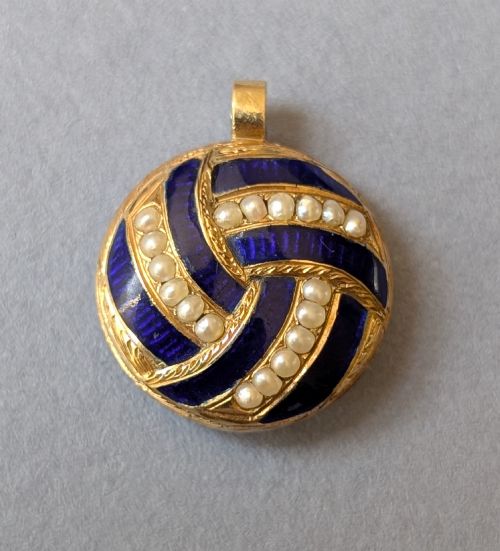
A victorian pearl enamel pendant brings together lustrous pearls, coloured vitreous enamel and high-carat gold into a miniature work of wearable art.
Victorian Pearl Enamel Pendant
A victorian pearl enamel pendant combines the rich symbolism of the nineteenth century with intricate metalwork and vitreous colour. These jewels take various forms, appearing frequently as lockets, hearts, crosses and multi-gem necklaces across the selection.
The materials span silver, silver gilt and multiple gold standards alongside seed pearls, diamonds and garnet accents. Many items function as versatile pendant brooches, designed to pin to garments or suspend from a chain around the neck.
Origins stretch from English workshops to French ateliers and Austro-Hungarian centres of production. Pieces date principally from the Victorian era and the broader nineteenth century, with occasional Edwardian and Belle Epoque examples.
How they were made
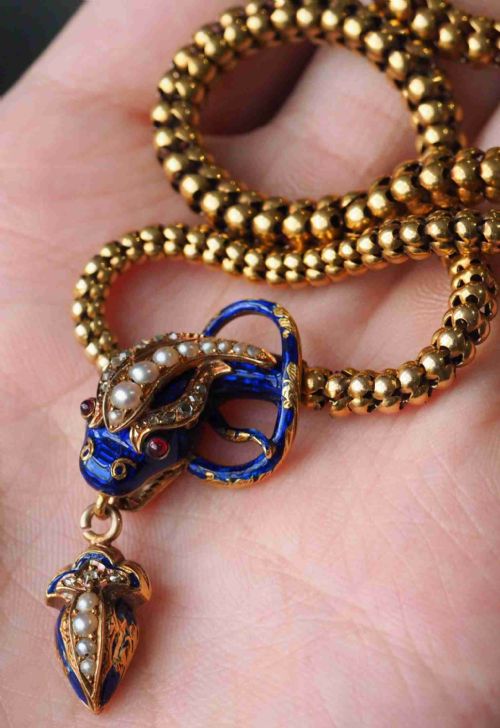
Goldsmiths shaped high-carat yellow and rose gold, alongside silver and silver gilt, into elaborate frames for lockets, hearts and serpent motifs. Enamel was fused to the metal surface through intense heat, creating deep blue, red, green and black backdrops for set stones.
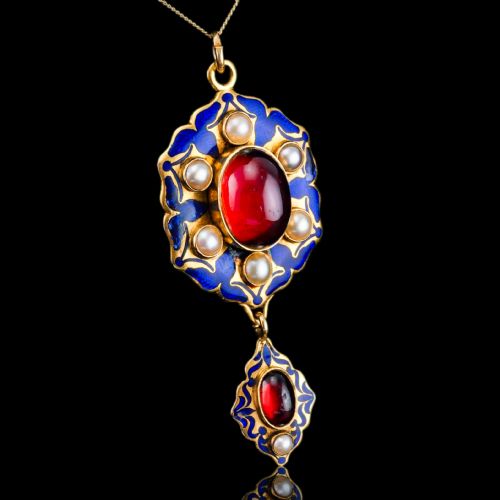
Pearls, seed pearls, diamonds and garnets were meticulously set into the enamel and metal fields, often forming star patterns, floral motifs or delicate borders. Artisans also incorporated glass backs into hinged locket compartments designed to hold miniature portraits or locks of hair.
Listings feature yellow gold, rose gold, silver and silver gilt alongside enamel, pearls, diamonds and garnets across Victorian and Edwardian periods.
What varies in quality
The sophistication of the enamel work dictates much of the distinction between pieces, with smooth, flawlessly fired coloured glass surfaces representing superior craftsmanship. The depth and purity of the gold standards, ranging from nine carat up to eighteen carat and high-carat yellow gold, also separate standard production from finer creations.
Gemstone selection and the precision of the stone setting influence overall refinement. Pieces featuring well-matched natural pearls, rose-cut diamonds and intricate hand-painted miniatures or hairwork behind glass display a higher tier of period artistry.
The Victorian Pearl Enamel Pendant Glossary
- Enamel
- A glassy substance fused to metal through high-temperature firing. This technique provides durable colour backgrounds in shades of blue, red, green and black.
- Seed pearl
- A very small natural or saltwater pearl, often un-drilled or half-drilled. These tiny pearls form delicate floral clusters, stars and borders on nineteenth-century jewels.
- Locket
- A hinged pendant designed to open and enclose a keepsake. These compartments frequently house glass-backed frames for miniature portraits or hair mementos.
- Pendant brooch
- A dual-purpose jewel fitted with both a suspension loop and a pin finding. This allows the piece to be worn interchangeably on a chain or fastened to clothing.
- Holbeinesque
- A revival style of nineteenth-century jewellery inspired by sixteenth-century designs. These pieces typically feature heavy gold settings, enamel work and hanging pearl drops.
Victorian Pearl Enamel Pendant: Frequently Asked Questions
What is a locket pendant?
A locket pendant is a hollow piece of jewellery featuring a hinged cover that opens to reveal a small interior space. These compartments were traditionally used to store miniature portraits or locks of hair.
In this selection, many examples combine this functional compartment with decorative enamel work, seed pearls and high-carat gold settings.
How do you wear a pendant brooch?
A pendant brooch includes both a secure pin mechanism on the reverse and a loop at the top for a chain. This dual design allows you to pin the jewel directly to a lapel or fabric.
Alternatively, you can thread a chain through the suspension loop to wear the piece conventionally around the neck.
What is Victorian enamel?
Victorian enamel consists of powdered glass applied to a metal base and heated until it melts into a smooth, glossy coating. Jewellers utilised colours like deep blue, rich red, vivid green and solemn black.
This technique created durable, vibrant backdrops that highlighted the lustre of set pearls and diamonds.
How can you identify an Austro-Hungarian piece?
Austro-Hungarian pieces frequently display exuberant multi-gem settings using silver gilt and elaborate wirework. They often incorporate colourful enamel alongside various stones like garnets and pearls.
These elaborate necklaces and brooches reflect the distinctive Central European revival aesthetics of the nineteenth century.