
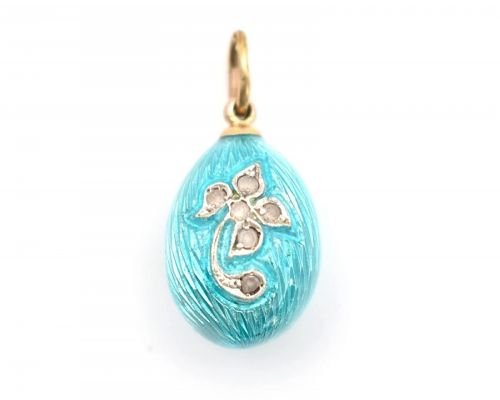
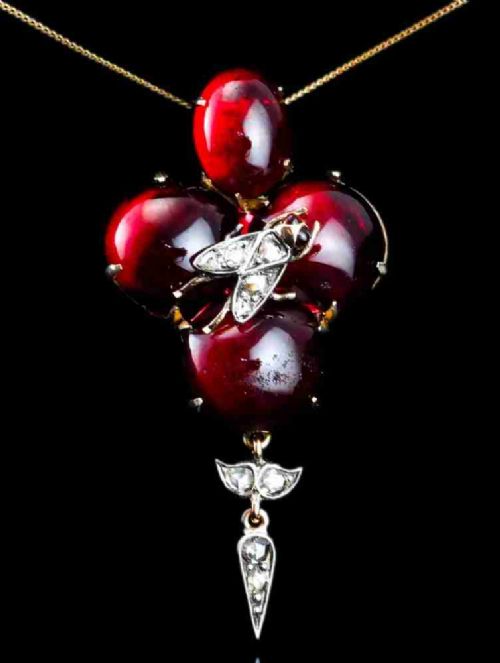


Rose Cut Diamond Necklace
A rose cut diamond necklace brings together historic gemstones and precious metals, offering a distinctive sparkle that appeals to collectors of fine period jewellery.
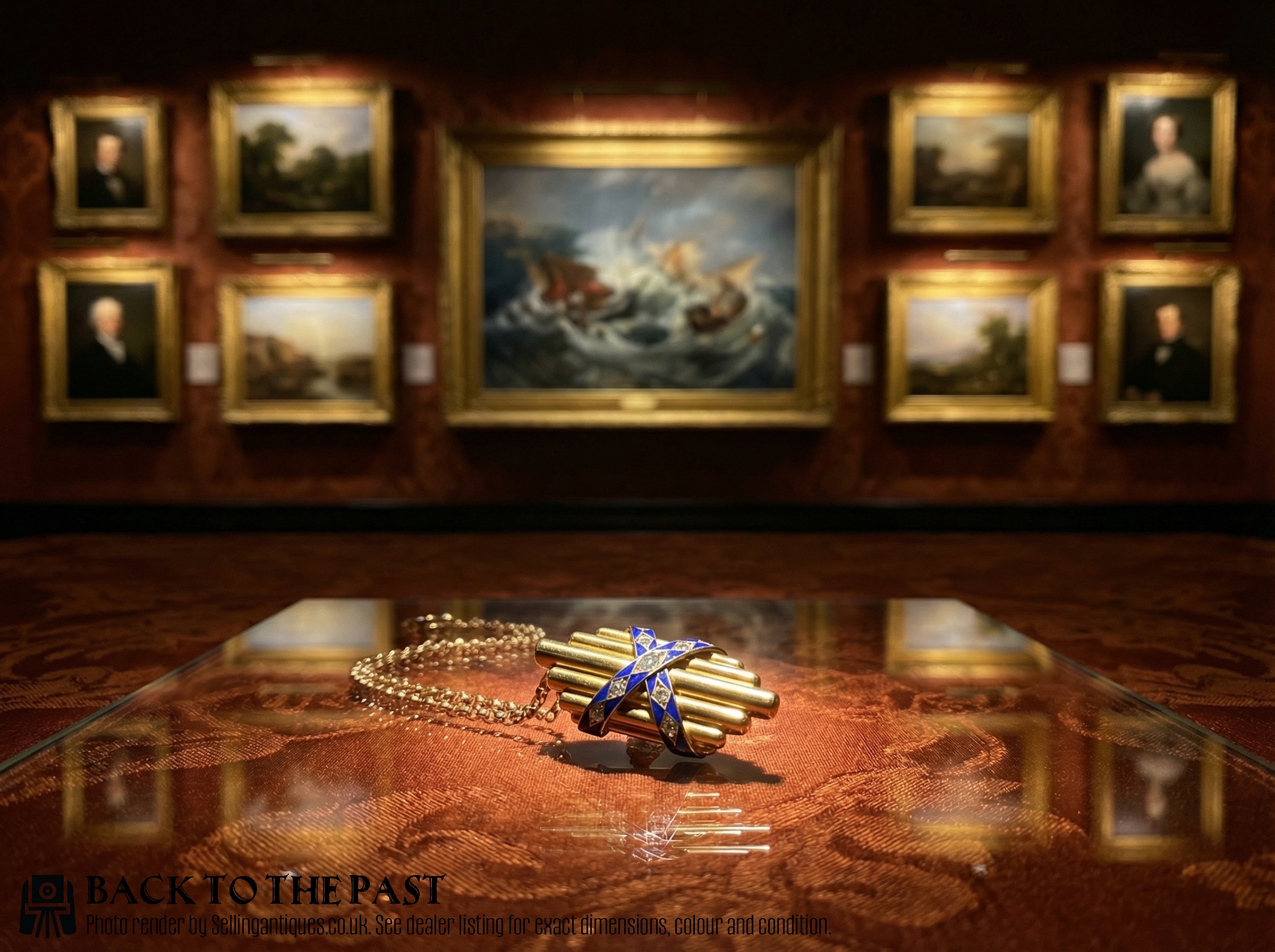
Rose Cut Diamond Necklace
The selection ranges from elaborate starburst brooches adapted as pendants to delicate gold and silver drops set with rubies, sapphires, or turquoise enamel. These jewels reflect changing aesthetic preferences across the nineteenth and twentieth centuries, spanning periods from the 1850s through to mid century designs.
Makers utilised various gold standards alongside silver settings to support the stones, frequently pairing the diamonds with natural pearls or coloured gems. The resulting items demonstrate how historical jewellers adapted rose cut stones into versatile neckwear and pendant arrangements.
Materials and construction methods
Jews working in the Victorian and Edwardian periods set rose cut diamonds into combinations of silver and gold, frequently mounting the stones over foil or within closed backs to enhance their reflection. Silver was often deployed on the upper face to keep the metal colour bright against the diamond, while gold formed the structural reverse.
Pearls, rubies, sapphires, and enamel frequently accompany the diamonds, integrated into crosses, double heart motifs, and pearl clasps. Craftsmanship relied on hand fabrication techniques, shaping 15ct and 18ct yellow gold into intricate bezels and wirework to secure each gem.
Swallow motifs fluttered into Edwardian hearts, proving that Victorian sentimentality simply traded its mourning black for a pair of diamond wings.
Assessing quality in historical pieces
Quality rests upon the proportion and symmetry of the rose cut diamonds and the harmony of their arrangement with accompanying materials such as natural pearls and enamel. Superior examples maintain original settings without modern alterations, preserving the integrity of the silver and gold work.
The sophistication of the design, whether an Imperial Russian enamel egg pendant or a French pearl necklace with a diamond clasp, dictates the standing of the piece. Craftsmanship is visible in the precision of the metal settings and the matching of coloured stones like rubies and sapphires.
The Rose Cut Diamond Necklace Glossary
- Rose cut
- A historic diamond cut featuring a flat base and a domed top covered in triangular facets. This style produces a soft, translucent lustre quite distinct from modern brilliant cuts.
- Old cut
- An early precursor to the modern brilliant diamond, characterised by a high crown, small table, and deep pavilion. These stones appear frequently in pieces alongside rose cut gems.
- Enamel
- Vitreous material fused to metal through firing, providing vibrant blue or turquoise decoration on pendants and crosses. It adds colourful contrast to the surrounding diamonds and gold.
- Silver and gold
- A dual metal technique common in antique jewellery where silver fronts the stones to maintain a bright white appearance while gold supports the rear structure.
- Cabochon
- A gemstone polished to a smooth, convex shape rather than faceted. Garnets and other stones are frequently shaped this way in Victorian designs.
Rose Cut Diamond Necklace: Frequently Asked Questions
How do I date a rose cut diamond necklace?
Dating relies on stylistic clues, mounting techniques, and hallmarks stamped on the gold or silver components. Periods range from mid Victorian designs through to Edwardian and mid century creations.
Examining the type of gold, such as 15ct or 18ct, alongside accompanying gems like natural pearls or enamel helps narrow the decade of manufacture.
What is a rose cut diamond?
A rose cut diamond has a flat bottom and a faceted dome top that resembles an unopened rose bud. This historic cutting style lets light pass through in a gentle, understated manner.
These stones were widely used before modern brilliant cutting techniques became standard in the twentieth century.
Are these necklaces made with real pearls?
Many period pieces incorporate natural pearls or cultured pearls, particularly in multi strand necklaces featuring diamond clasps. Natural pearls were standard in Victorian and Edwardian items.
Certification or specialist examination often confirms the origin of the pearls used alongside the diamonds.
Can these pendants be worn as brooches?
Certain items in this category were constructed with dual fittings allowing them to function as both pendants and brooches. Victorian jewellers frequently designed versatile mounts for high status wearers.
Converting between these formats involved hidden loops and pin mechanisms integrated securely into the reverse of the piece.