


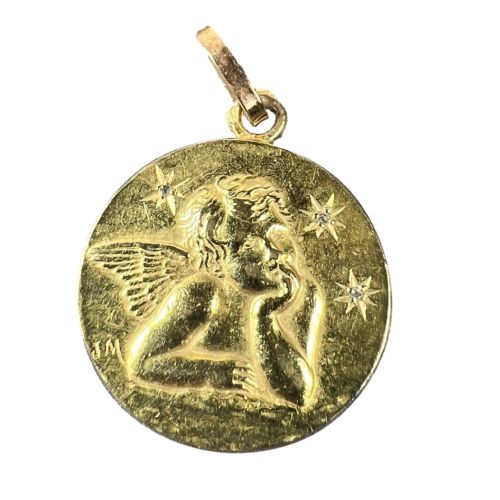


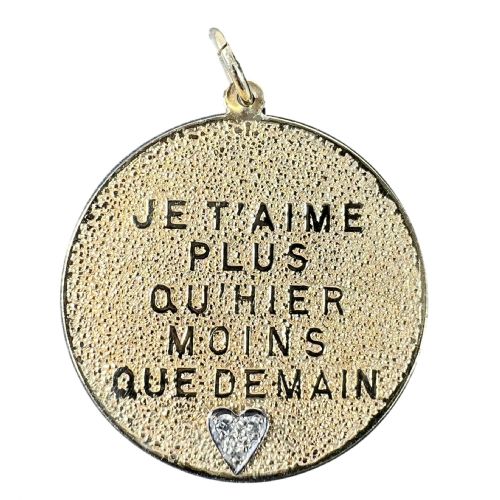


French Diamond Pendant
A french diamond pendant brings together centuries of European craftsmanship, offering an enduring piece of wearable history for any serious collector.
French Diamond Pendant
When you search for a french diamond pendant, you examine pieces spanning the Victorian, Edwardian, and mid-century periods. These jewels take many forms, including lockets, charms, and convertible brooch pendants.
You are most likely to meet Edwardian and Victorian examples on this page, often cast in yellow gold and silver. They incorporate natural pearls, sapphires, and rubies alongside old-cut diamonds.
Distinctions in quality
The upper tier of these pieces demonstrates superior stone matching and refined hand-cut diamond work, such as precise old cuts and rose cuts. Lesser examples show simpler metalwork with less attention to stone proportion and symmetry.
Makers who incorporated convertible mechanisms or intricate floral and acanthus designs achieved a higher level of execution. The integration of signed elements or scarce carved stones elevates the stature of the piece.
Several charming pieces feature carved horse heads and buzzing flies, proving that Victorian jewellers had a wonderful sense of humour.
Chaumet·Augis·Merrin
The French Diamond Pendant Glossary
- Rose cut
- A diamond cut featuring a flat base and a domed crown with triangular facets. This historic style produces a soft, shimmering lustre rather than modern brilliant sparkle.
- Old cut
- An early precursor to the modern brilliant cut, characterised by a smaller table, higher crown, and hand-faceted symmetry. These stones catch candlelight beautifully.
- Convertible pendant
- A piece engineered to function as both a pendant and a brooch. This versatility was highly prized in the nineteenth century.
- Target charm
- A concentric circular pendant design often featuring a central diamond surrounded by calibrated rubies or sapphires. The geometric layout echoes mid-century aesthetics.
French Diamond Pendant: Frequently Asked Questions
How do I date a french diamond pendant?
Dating relies on identifying the combination of precious metals, stone cuts, and stylistic motifs present in the mount. Edwardian pieces often utilise platinum and delicate pierced work, while Victorian examples lean towards silver-topped gold and heavier floral designs.
Examining the back of the piece and the suspension loop also reveals construction clues specific to nineteenth or mid-century workshops.
Were these pendants worn daily?
In their original eras, fine jewels like these served as daily adornments for the affluent classes, worn suspended from chains or pinned directly to garments. Many pieces were designed with dual purpose as brooches to accommodate changing fashions.
Today, modern wearers continue this tradition by pairing antique pendants with simple gold chains for everyday elegance.
What is silver-topped gold?
Silver-topped gold is a historic technique where a thin layer of silver is soldered over a gold backing. Jewellers preferred silver for the front because its bright white surface enhanced the appearance of old-cut diamonds.
The gold underneath provided the necessary structural strength and prevented the silver from tarnishing against clothing.
How should I care for my pendant?
Antique jewellery requires gentle handling due to closed-back settings and delicate materials like natural pearls. Professional cleaning by a specialist familiar with historic pieces ensures the settings remain secure.
Avoid exposing antique gold and silver to harsh chemical dips or ultrasonic cleaners.