




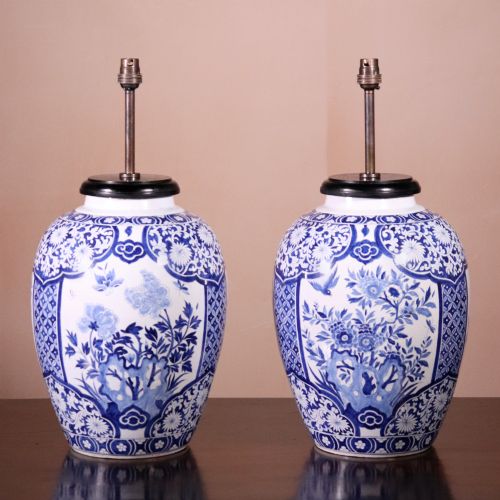


Blue Chinese Ginger Jar
A blue chinese ginger jar brings centuries of ceramic artistry into a room, offering both traditional form and striking cobalt pattern.
Blue Chinese Ginger Jar
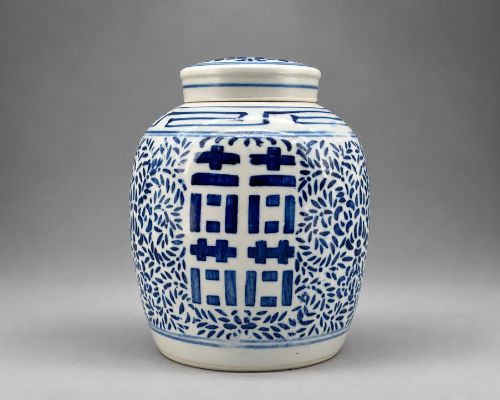
A blue chinese ginger jar is a sturdy ceramic vessel originally designed to store spices, herbs, or salt, though today collectors value them purely for their decorative presence. When searching for a blue chinese ginger jar, buyers will most frequently encounter nineteenth-century porcelain examples, alongside earlier seventeenth-century vessels and mid-twentieth-century adaptations.
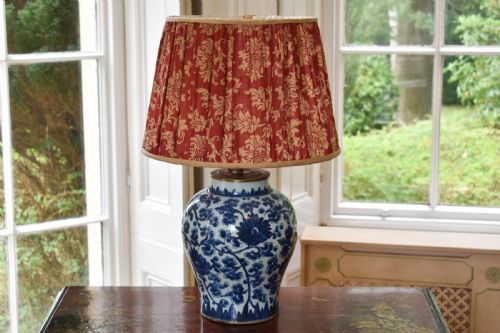
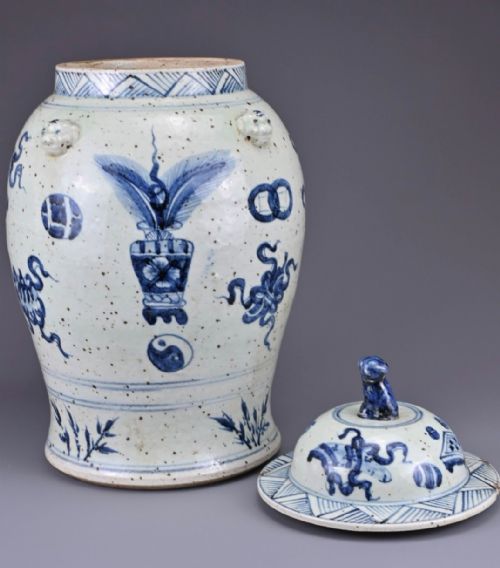
The forms range from classic rounded ovid bodies with matching covers to altered lamp conversions mounted on brass or ormolu. Alongside traditional jars, the selection encompasses related vessels such as tea caddies, kamcheng jars, and snuff bottles displaying similar blue and white decoration.
These pieces cross various stylistic movements, spanning Ming and Qing dynasty designs as well as later Chinoiserie and Chinese Export interpretations. Their enduring appeal lies in the contrast between the crisp white porcelain body and the vibrant cobalt pigment applied beneath the glaze.
How they were made
Potters shaped these vessels from fine porcelain clay before applying cobalt pigment by hand to create the intricate blue motifs. Artisans then sealed the pigment beneath a clear glaze and fired the ceramic at high temperatures to achieve a durable, glossy finish.
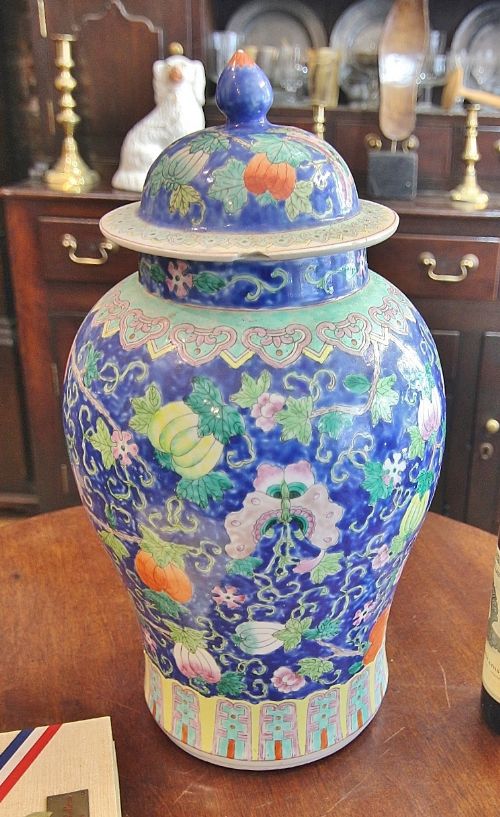
Certain specialised pieces incorporate additional decorative techniques, such as contrasting iron-red and green enamel overglazes, or crackle glazes that produce a fine web of decorative fissures across the surface. Metal mounts in brass or ormolu occasionally supplement the porcelain bodies, particularly on examples adapted into lamps.
Blue Chinese Ginger Jar Retail Price Guide 2026
Typical asking prices for blue chinese ginger jar among the pieces listed under this phrase on Sellingantiques today, from the lower quarter to the upper quarter. They describe what is for sale here now, not the wider market.
The documented periods span from the sixteenth-century Ming dynasty through Qing wares and into twentieth-century adaptations.
What varies in quality
The distinction between ordinary and exceptional pieces rests upon the clarity and fluidity of the painted cobalt decoration. Master painters achieved deep tonal gradations and precise brushwork that set finer jars apart from repetitive, stiffer factory output.
The condition of the porcelain body and the presence of a matching original cover significantly influence the standing of a jar. Additionally, the depth of historical age, evident in period potting characteristics and authentic reign marks, distinguishes standard decorative vessels from museum-grade works.
The Blue Chinese Ginger Jar Glossary
- Cobalt pigment
- The metallic colourant used to paint blue designs beneath the glaze. It reacts to high kiln temperatures by turning a rich, deep blue.
- Ovid
- A rounded, egg-like vessel shape characteristic of traditional storage jars. This contour provides a balanced canvas for wrapping pictorial scenes.
- Underglaze
- A decoration method applied directly to the unbaked or biscuit-fired clay before the transparent glaze layer goes on. This protects the pigment from wear over centuries of handling.
- Kamcheng
- A traditional covered jar often featuring polychrome or blue and white decoration. These vessels typically include lug handles and served functional storage roles in domestic settings.
- Ormolu
- Gilt bronze mounts attached to ceramic pieces. They frequently appear on jars converted into nineteenth-century decorative lamps.
Blue Chinese Ginger Jar: Frequently Asked Questions
How were ginger jars originally used?
Merchants originally utilised these ceramic vessels to pack, transport, and store preserved spices, ginger, and other valuable commodities across ancient trade routes.
Over time, European appreciation shifted their purpose entirely towards interior decoration, where empty jars became prized mantelpiece ornaments.
Can I use these jars as table lamps?
Many historical jars have been carefully fitted with electrical hardware and brass or ormolu bases to function as domestic lighting.
These conversions allow collectors to integrate antique ceramics directly into contemporary living spaces without altering the main body of the vessel.
How do I identify a Kangxi period jar?
Seventeenth-century Kangxi pieces typically exhibit brilliant cobalt blue tones under a luminous glaze, often accompanied by distinct cyclical dates or reign marks.
The potting tends to feel substantial yet balanced, featuring finely painted landscapes, prunus blossoms, or scholarly motifs.
What is the difference between a vase and a jar?
Traditional ginger jars feature a wide mouth designed to accommodate a tightly fitted lid for secure storage.
Vases generally feature open necks intended to display standing floral arrangements rather than enclosed contents.