


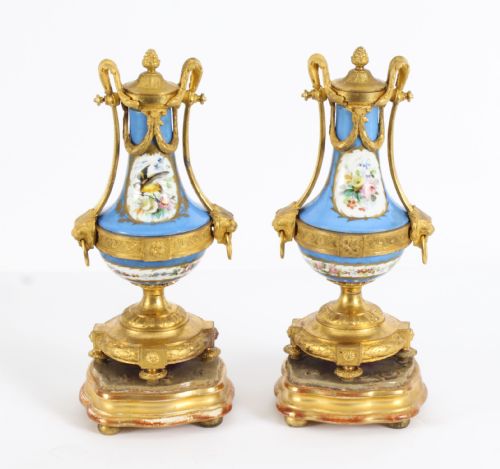
Blue Ceramic Garniture Urns
These blue ceramic garniture urns bring symmetry and rich colour to a mantelpiece, offering classic decorative presence from several centuries.
Blue Ceramic Garniture Urns
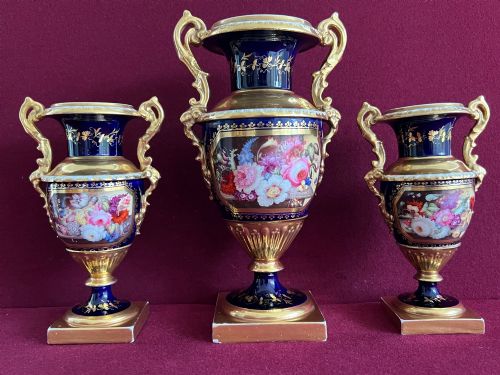
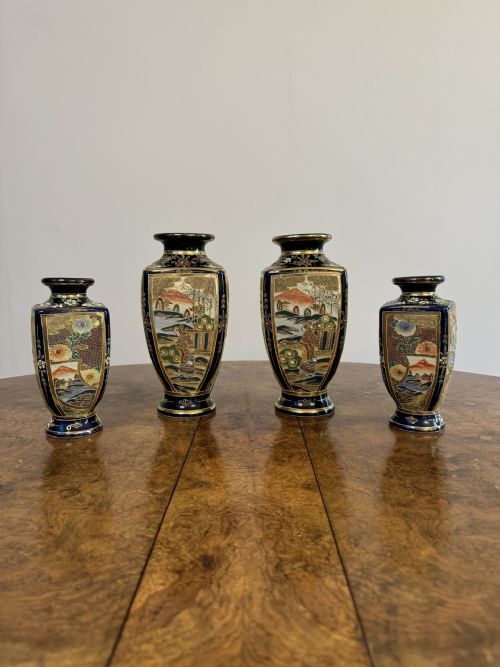
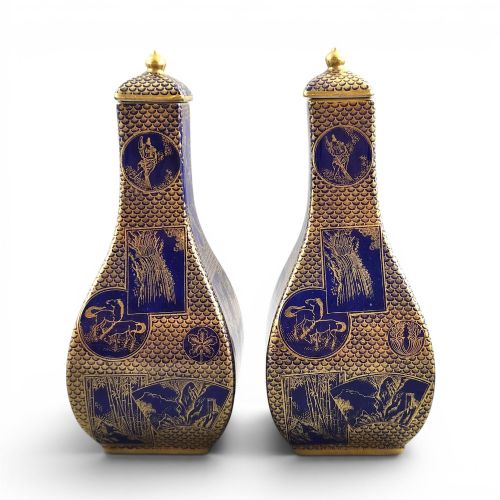
Blue ceramic garniture urns are matched sets of ornamental vases and urns designed to sit together on mantelpieces, consoles and cabinets. The pieces on this page span the 18th century, 19th century and early 20th century, drawing on periods such as Georgian, Victorian, Meiji and Edo.
The most common forms you will encounter here include pairs, trios and sets of four vases or lidded urns. Alongside traditional porcelain and earthenware, the listings feature specialised styles like Japanese Imari, Satsuma, French Sevres style, Vienna porcelain and Mason's ironstone.
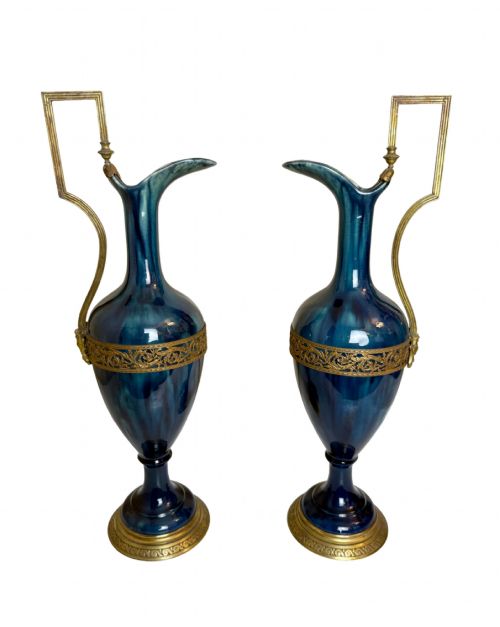
Makers and regional traditions range from French continental workshops utilising ormolu mounts and gilt bronze trim to Japanese kilns producing intricate hand-painted palettes. Collectors find both symmetrical three-piece garnitures and larger multi-piece displays originating from European and Asian traditions.
How they were made
Potters shaped these vessels using fine porcelain, earthenware or ironstone before applying rich blue glazes, enamel pigments and underglaze painting. Japanese Imari and Satsuma pieces demonstrate meticulous brushwork in traditional palettes, while European factories like Sevres and Vienna achieved deep mazarine blue and bleu celeste grounds.
Many 19th-century European garnitures incorporate cast metal elements such as ormolu, gilt bronze and gold leaf trim. These metal mounts secure handles, bases and lids, requiring precise smithing to fit the ceramic bodies established during the Georgian and Victorian eras.
Napoleon Bonaparte inspired enough enduring devotion that porcelain factories were still churning out commemorative lidded vases decades after his campaigns ended.
What varies in quality
Quality rests in the crispness of the hand-painted detail, the depth of the blue glaze and the refinement of any metal mounts. Pieces displaying meticulous brushwork and rich gilding stand apart from standard decorative output.
The completeness of a garniture set heavily influences its standing. Matched sets of three or four retain greater historical integrity than individual surviving vessels plucked from larger groupings.
Mason's Patent Ironstone·Royal Vienna·Sevres
The Blue Ceramic Garniture Urns Glossary
- Garniture
- A matched set of ornamental vases, jars or urns designed to be displayed together on a mantelpiece or furniture top. These sets typically comprise three or more pieces sharing a unified decorative theme.
- Ormolu
- Finely ground high-carat gold applied to a bronze base using a mercury amalgamation process, or simply gilt bronze used for mounts. 19th-century French makers frequently employed this technique on porcelain urns.
- Imari palette
- A traditional Japanese style of ceramic decoration featuring dark underglaze blue, iron red and gilt highlights. Pieces decorated in this palette date from the Edo period onwards.
- Bleu celeste
- A bright sky-blue ceramic ground colour associated with French porcelain production, particularly Sevres. It provides a striking backdrop for gilded and hand-painted panels.
- Ironstone
- A type of durable earthenware patented in the 19th century by makers such as Mason's. It combined the strength of stoneware with the refined appearance of porcelain.
Blue Ceramic Garniture Urns: Frequently Asked Questions
How were garniture urns displayed?
Garniture sets were traditionally arranged symmetrically on mantelpieces or large pieces of furniture. A central larger urn would often be flanked by matching smaller vases or ewers.
This balanced display format originated in European and Asian interiors to draw the eye toward the architectural centre of a room.
Are these urns waterproof?
Most antique garniture urns were created purely for visual display rather than practical use as flower vases. The inclusion of delicate hand-painted gilding and metal ormolu mounts means they are best kept dry.
Filling them with water can damage the historic glazes and internal ceramic bodies of 18th and 19th-century pieces.
How do I identify Sevres style pieces?
Sevres style pieces usually feature rich coloured ground fields, such as mazarine blue or bleu celeste, combined with elaborate gilt bronze or ormolu mounts. They often draw on 18th-century French neoclassical and Rococo revival designs.
Many of these decorative urns date from the 19th century and pay homage to earlier royal French porcelain production.