
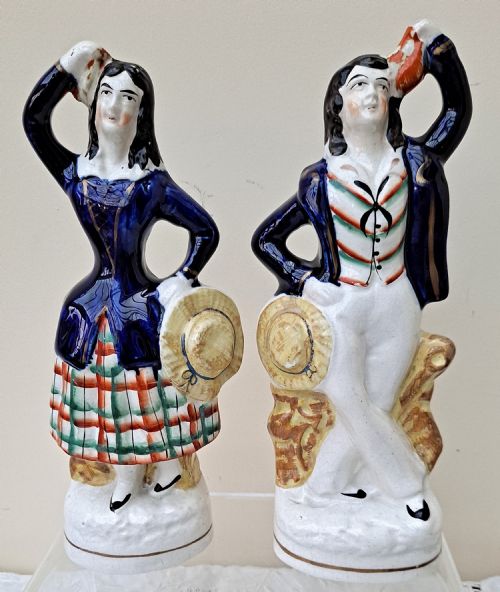


Blue Ceramic Flatback Figure
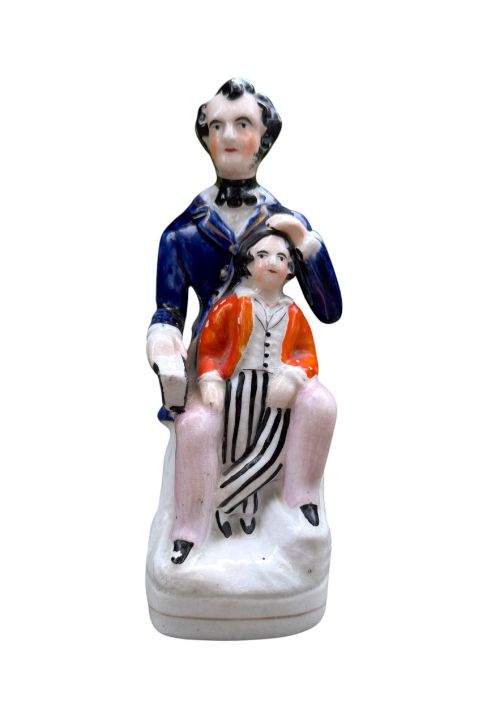
A blue ceramic flatback figure brings mid-nineteenth-century British history and portraiture straight onto the mantelpiece with colourful earthenware presence.
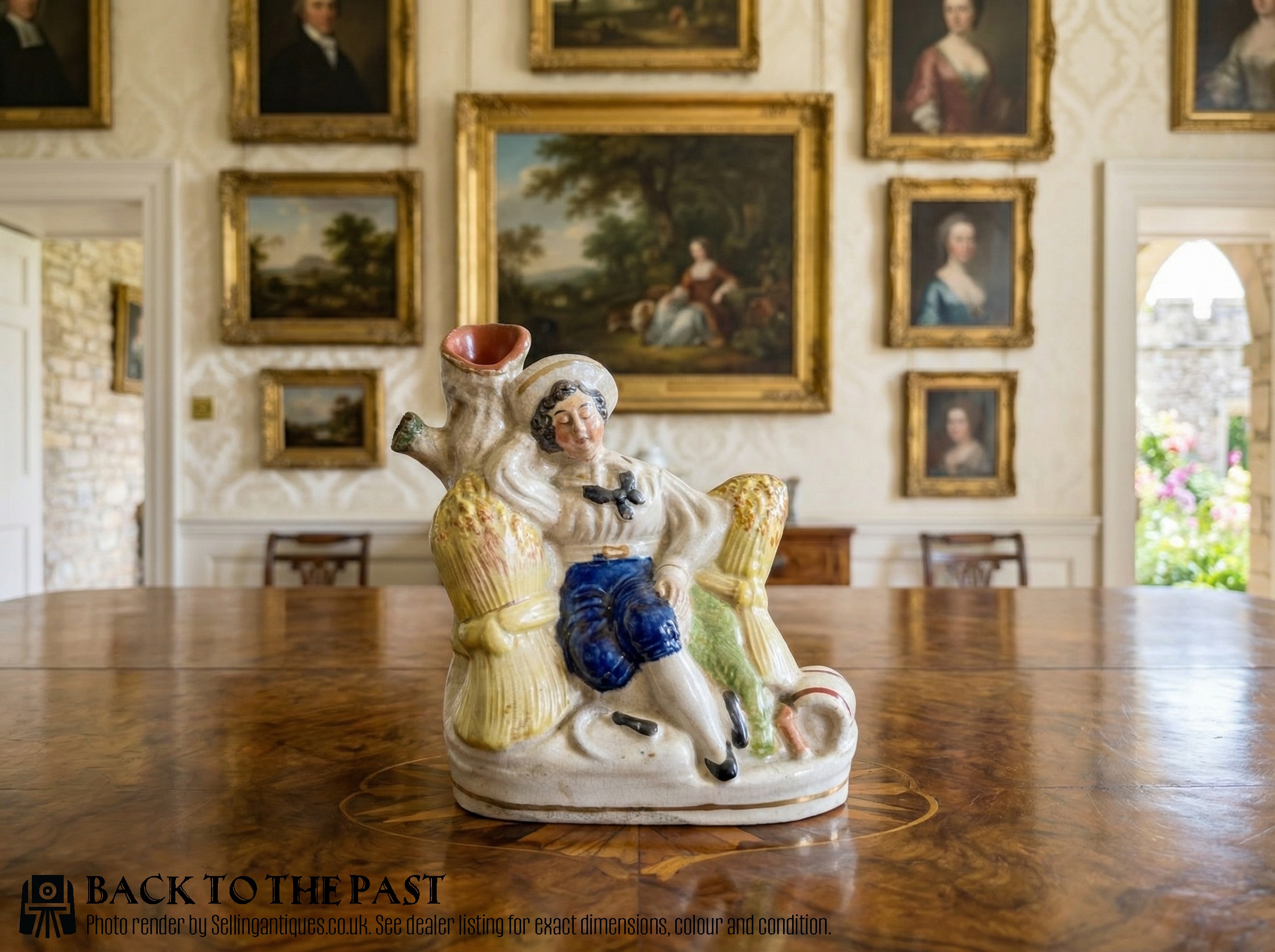
Blue Ceramic Flatback Figure
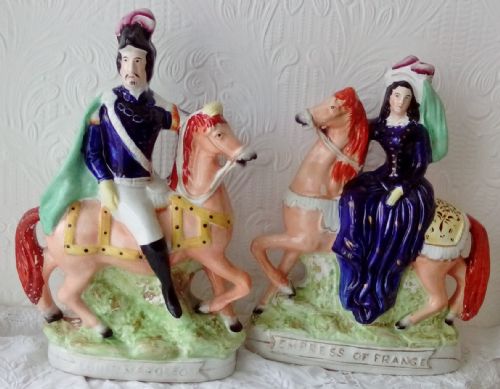
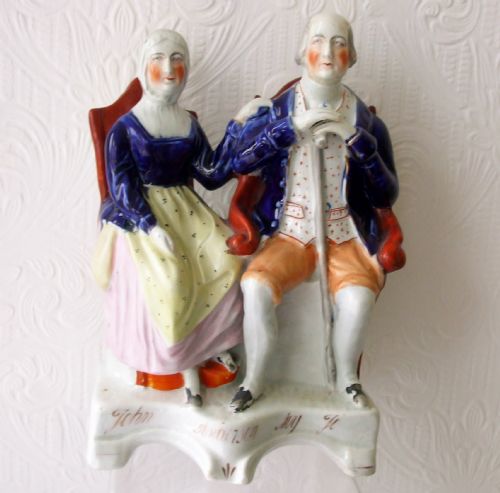
A blue ceramic flatback figure represents the prominent sculptural output of nineteenth-century Staffordshire potteries, designed specifically to stand flush against a wall. The pieces depict royalty, military heroes, literary characters, and theatrical personalities in standing, seated, or equestrian forms.
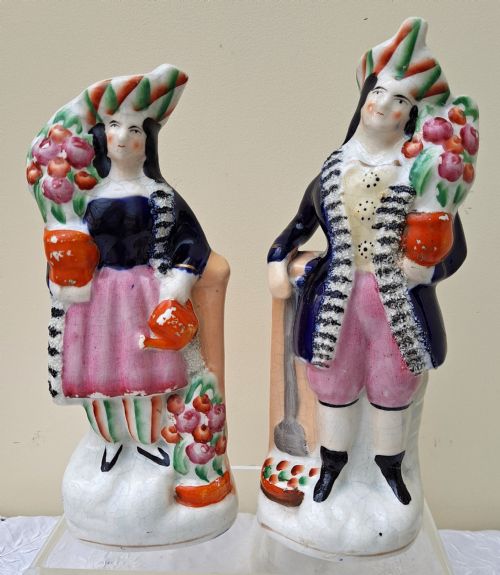
Most examples originate from the Victorian period, spanning decades from the mid-nineteenth century up to nineteen hundred. Collectors encounter portrait groups, spill vases, and pairs of figures embellished with cobalt blue details on their bases, clothing, or backdrops.
Materials and construction
Potters shaped these objects using earthenware clay, forming the hollow bodies in press moulds and leaving the reverse unglazed and flat. Artisans applied lead glaze over the surfaces to impart a glossy finish.
Listings show earthenware ceramics spanning the nineteenth century, featuring Victorian portrait subjects and equestrian pairs.
Judging quality and execution
The sophistication of the modelling and the clarity of the facial painting set superior pieces apart from simpler workshop output. Stronger examples display crisp facial expressions and neatly applied cobalt blue highlights rather than rushed brushwork.
Preservation of the original enamel colours and lead glaze gloss defines the desirability of the piece. Crisp retention of the moulded details around the base and clothing indicates a sharp primary mould.
The Blue Ceramic Flatback Figure Glossary
- Flatback
- A figure moulded with a finished front and sides while the reverse remains flat and typically unglazed because the object was intended to stand against a wall.
- Earthenware
- Porous pottery fired at lower temperatures, serving as the standard ceramic body for nineteenth-century Staffordshire figures.
- Lead glaze
- A glassy coating containing lead oxide applied to earthenware to give the piece a waterproof surface and a glossy sheen.
- Spill vase
- A hollow cylindrical tube incorporated into the figure's design, intended to hold wooden spills used for lighting pipes or candles.
- Enamel paint
- Coloured decoration applied over the fired glaze and fixed with a subsequent low-temperature heat treatment.
Blue Ceramic Flatback Figure: Frequently Asked Questions
What is a flatback figure?
A flatback figure is a Staffordshire ceramic ornament moulded primarily for display on mantelshelves where only the front and sides are visible.
The unglazed flat reverse allowed potters to save materials while ensuring the piece sat flush against a wall.
Who do these figures depict?
The subjects include British royalty, military commanders, political figures, and characters from literature and theatre.
Makers captured contemporary news and popular culture through portrait groups of monarchs, statesmen, and regional folk heroes.
How do I date a figure?
Dating relies on historical subjects, costume details, and stylistic traits associated with mid-nineteenth-century Victorian production.
Potters frequently commemorated specific historical events, reigns, or public figures whose dates provide a baseline for the manufacture.
Where were they made?
These ceramic pieces originate from the Staffordshire potteries in England during the nineteenth century.
Numerous regional workshops and factories produced these earthenware portrait figures and pairs for domestic decoration.
How should I display them?
Display these figures on stable surfaces away from direct foot traffic where their painted details remain protected.
Placing them on mantelpieces or shelves recreates their historical setting against a wall.