



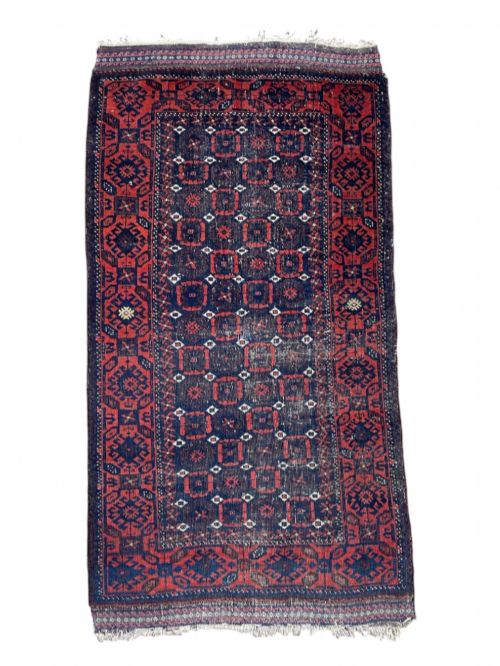


Blue Baluch Rug
When you search for a blue baluch rug, you look for hand-woven nomadic textiles bearing deep indigo fields and intricate tribal motifs from the borderlands of Persia and Afghanistan.
Blue Baluch Rug
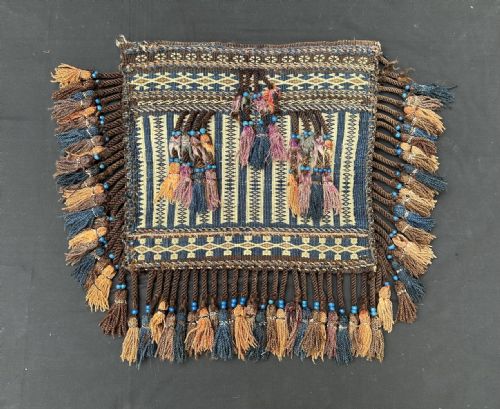
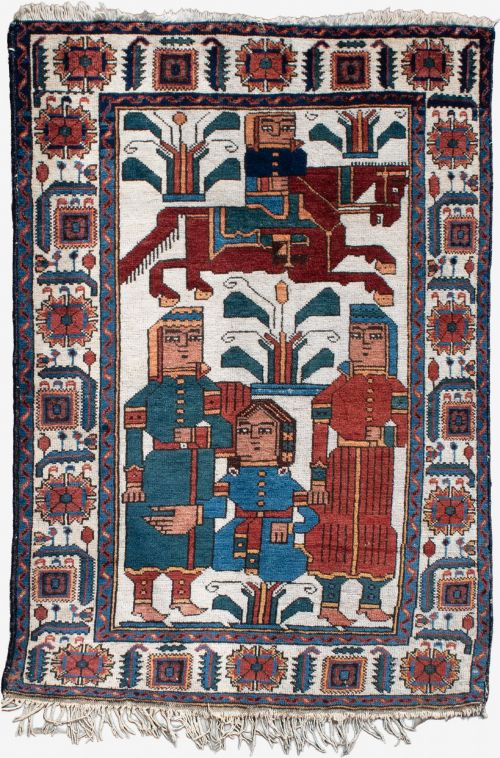
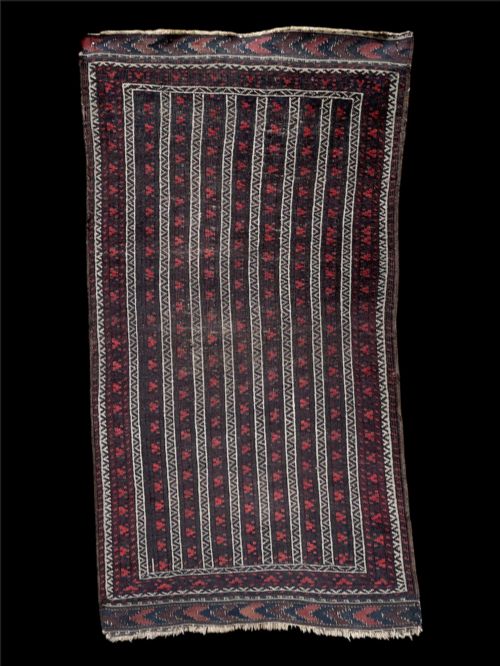
A blue baluch rug represents the traditional weaving of nomadic and semi-nomadic tribes inhabiting the regions between Persia and Afghanistan, dating primarily from the late nineteenth and early twentieth centuries. These textiles include standard floor rugs, small prayer rugs featuring mihrab arches, flatweave kilims, and utilitarian pieces such as storage bags and sofreh dining cloths.
The visual vocabulary relies heavily on specific regional patterns, including Mina Khani lattice designs, lotus leaves, bird motifs, and repeating octagons set against deep indigo or blue grounds. Pieces often originate from specific tribal groups such as the Timuri, Taimani, Salar Khani, and Mahdad Khani, reflecting the distinct heritage of each weaving community.
How They Were Made
Weavers constructed these textiles using locally sourced materials, predominantly hand-spun wool for the pile and foundation, supplemented by cotton and goat hair in structural elements. Natural dyes provided the deep blue grounds and contrasting hues, occasionally enhanced by details like glass beads or silk highlights.
The manufacturing process involved upright or horizontal loom techniques native to tribal groups, producing durable pile carpets, flatwoven kilims, and specialised storage items. Artisans tied symmetrical or asymmetrical knots depending on the tribal tradition, resulting in dense structures meant to withstand nomadic daily life.
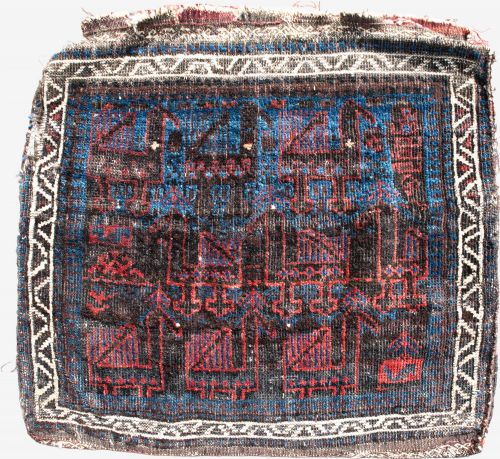
Several antique bags retain their original bird motifs, capturing winged visitors preserved forever in indigo wool.
What Varies in Quality
The handling of natural blue dyes distinguishes superior examples, where depth of colour and subtle tonal variations indicate skilled dyeing with indigo. Variations in wool quality also dictate durability and handle, with dense hand-spun fleece offering a softer touch and greater resilience than coarse alternatives.
Clarity and complexity of design separate standard production from finer weaving, visible in the precision of motifs like the Mina Khani lattice or tree of life. The integrity of the foundation weave and the completeness of original borders further indicate the relative standing of individual pieces.
The Blue Baluch Rug Glossary
- Sofreh
- A flatwoven or piled cloth utilised historically for dining or food preparation among nomadic tribes. These textiles often feature geometric field patterns suited to their communal purpose.
- Mihrab
- An arched design element incorporated into prayer rugs to symbolise the direction of Mecca. Weavers often render this architectural motif in single, double, or triple formats.
- Kilim
- A tapestry-woven carpet or flatweave textile produced without a pile. These pieces rely on interlocking warp and weft threads to form crisp geometric patterns.
- Mina Khani
- A traditional repeating lattice design composed of floral heads linked by curved vines. This pattern appears frequently across Khorasan and related tribal weaving.
- Timuri
- A tribal group associated with nomadic weaving traditions in the borderlands of western Afghanistan and eastern Persia. Their output frequently overlaps stylistically with broader baluch production.
Blue Baluch Rug: Frequently Asked Questions
What is a blue baluch rug?
A blue baluch rug is a hand-knotted textile created by nomadic and semi-nomadic tribes from the border regions of Persia and Afghanistan, distinguished by its indigo or blue colour field.
These pieces typically date from the late nineteenth and early twentieth centuries, featuring geometric patterns, prayer arches, or floral lattice designs rooted in tribal tradition.
How were these rugs used originally?
Nomadic weavers utilised these textiles for daily domestic purposes, including floor coverings inside tents, portable prayer mats, and utilitarian items like storage bags or eating cloths.
Because they were made for practical camp life rather than export, their construction prioritised durability alongside traditional tribal symbolism.
How do I care for an antique rug?
Living with antique textiles involves gentle maintenance, such as regular vacuuming without a rotating beater bar and keeping pieces out of direct sunlight to protect natural dyes.
Professional cleaning tailored to antique wool and vegetable dyes ensures the structural integrity of the weave remains undisturbed over time.
How can I tell different tribal designs apart?
Distinguishing between groups relies on observing specific structural markers, border arrangements, and motif variations such as the box medallion or the recurrent bird design.
Regional traits specific to areas like Khorassan, Sistan, or western Afghanistan provide clues to the exact tribal sub-group responsible for the weaving.