


Blue and Gold Platter
A blue and gold platter brings rich colour and gleaming metallic detail to a table, combining cobalt pigments with bright gilding.
Blue and Gold Platter
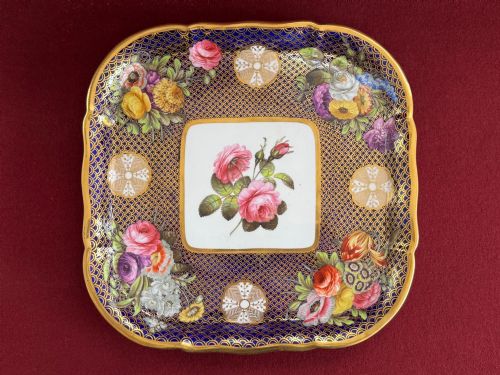
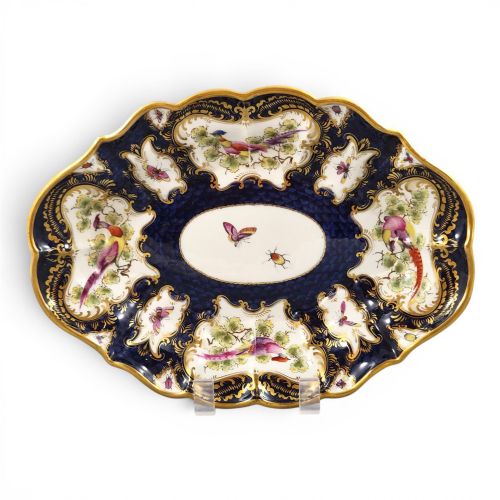
When you search for a blue and gold platter, you encounter serving dishes, dessert dishes, and decorative chargers from the eighteenth and nineteenth centuries.
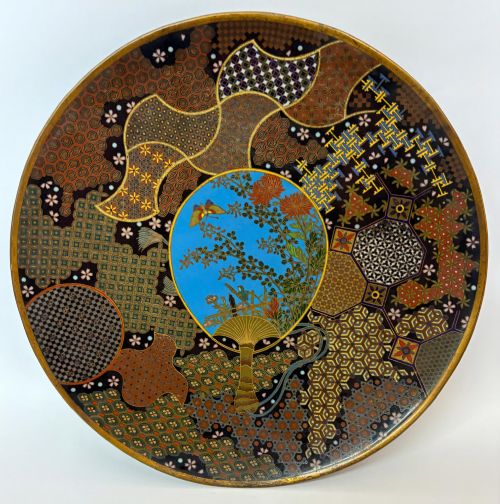
The selections on this page span English factories like Royal Worcester and Coalport, continental porcelain from Sevres and Vienna, and Japanese Meiji period cloisonne and porcelain.
You find both domestic serving wares intended for the table and cabinet plates made purely for display.
How they were made
Potters shaped soft-paste porcelain and hard-paste bodies before applying underglaze blue pigments and hand-painted enamel details.
Gilding and gold leaf were added over the glaze and fired again to fix the metallic lustre permanently to the surface.
Japanese pieces utilised copper or brass foundations for intricate cloisonne work, wiring the design cells before filling them with enamel.
Listings feature porcelain, enamel, and gold leaf across the Georgian, Victorian, and Edwardian periods.
What varies in quality
The precision of the hand-painted enamels and the crispness of the moulded relief work distinguish finer production from simpler wares.
The purity of the cobalt blue ground and the weight and burnishing of the gold leaf dictate the visual depth of the piece.
Signatures, pattern numbers, and factory marks from established makers indicate higher standards of artistic execution.
Royal Worcester·Coalport·Pucher Deroche·Ridgway·Royal Vienna·Sevres
The Blue and Gold Platter Glossary
- Cobalt blue
- A deep blue pigment derived from cobalt oxide, used extensively under the glaze on porcelain to create rich background scales and borders.
- Gilding
- The application of gold leaf or gold paint to the surface of porcelain or metal to highlight borders and motifs.
- Soft-paste porcelain
- An artificial ceramic body composed of clay and glass frit, fired at lower temperatures than hard-paste porcelain.
- Cloisonne
- A metalworking technique where enamel is applied to compartments created by soldering flat metal wires to a copper or brass base.
- Charger
- A large decorative plate or serving dish used primarily for display or at the centre of a formal table setting.
Blue and Gold Platter: Frequently Asked Questions
Were these platters used for food?
Many serving dishes and dessert dishes were made for dining tables, holding fruit or sweetmeats during formal nineteenth-century meals.
Larger chargers and cabinet plates were often intended solely for display on sideboards or walls rather than practical service.
How do I identify the period?
Periods are identified through factory marks, stylistic influences such as Rococo Revival or Neoclassical, and the composition of the ceramic body.
English and continental porcelain pieces often carry impressed or painted ciphers that date their manufacture to specific decades.
How should I clean them?
These decorative pieces require gentle dusting with a soft, dry cloth to protect fragile enamels and delicate gold leaf.
Water and chemical detergents should be avoided entirely to preserve the historic surfaces and metallic details.
What is the difference between porcelain and cloisonne?
Porcelain pieces are ceramic bodies fired from clay and minerals, featuring painted blue designs and gold leaf under or over the glaze.
Cloisonne works are constructed from metal bases with wired compartments holding coloured glass pastes.