


Gilded Porcelain Dessert Dish
A gilded porcelain dessert dish brings the refined elegance of eighteenth and nineteenth-century dining tables directly into modern interiors.
Gilded Porcelain Dessert Dish
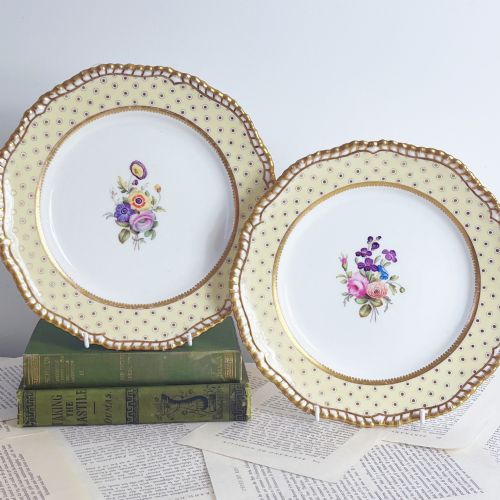
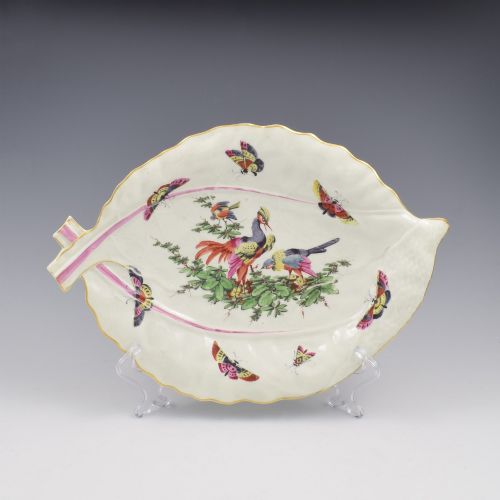
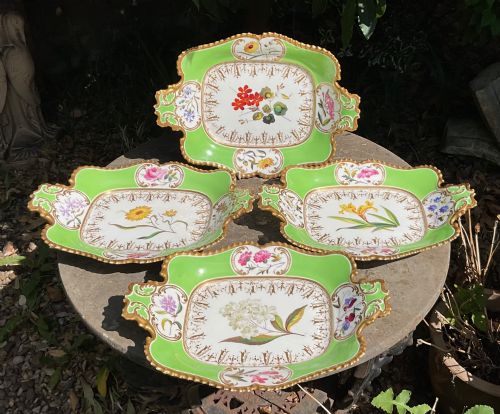
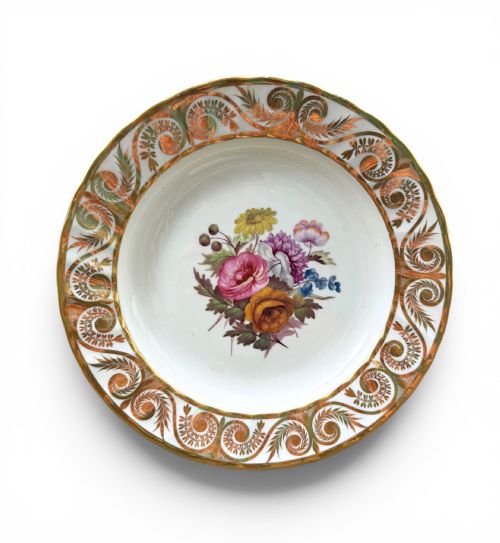
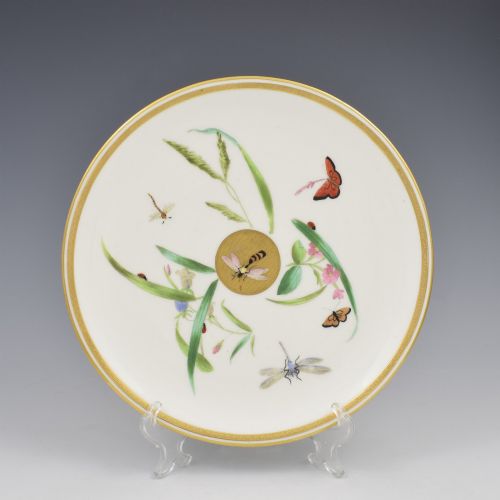
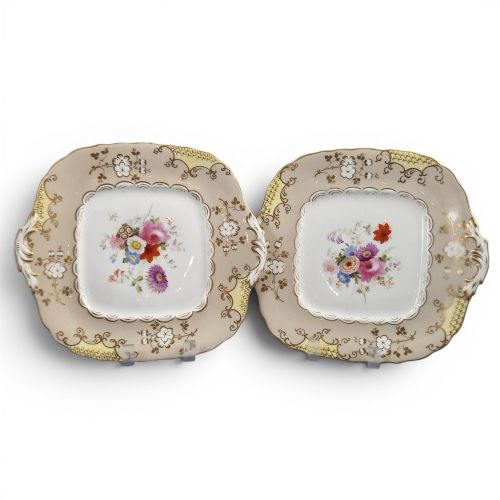
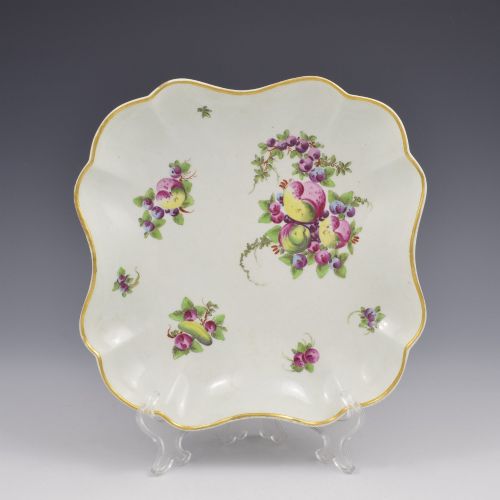
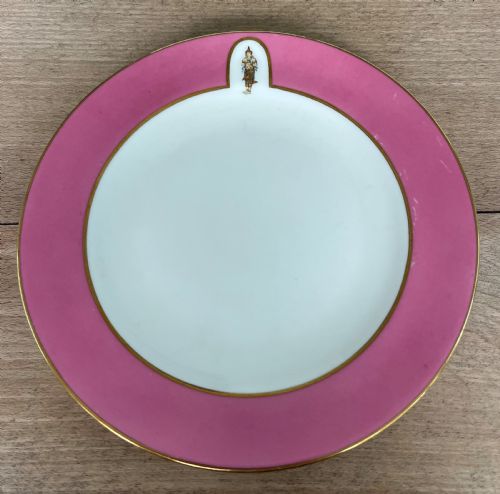
A gilded porcelain dessert dish is a ceramic piece designed specifically for serving sweets at the conclusion of a formal meal. These items appear primarily as decorative plates, serving dishes, and cabinet plates originating from the eighteenth, nineteenth, and early twentieth centuries.
The selection here encompasses wares from prominent factories such as Worcester, Derby, Minton, and Coalport. Pieces range from Georgian botanical plates to Victorian aesthetic designs and later twentieth-century productions.
How they were made
Potters utilised fine ceramic bodies including soft-paste porcelain, bone china, and ironstone, shaped into lobed, square, or basketweave forms. Artisans then applied enamel paints by hand to render floral motifs, topographical scenes, and armorial crests.
Gilding was meticulously added using gold leaf or liquid gold highlights along the rims and moulded borders. Firing in kilns set the metallic lustre and fixed the vibrant enamel colours onto the porcelain base.
Gilded Porcelain Dessert Dish Retail Price Guide 2026
Typical asking prices for gilded porcelain dessert dish among the pieces listed under this phrase on Sellingantiques today, from the lower quarter to the upper quarter. They describe what is for sale here now, not the wider market.
Materials recorded across the inventory include traditional soft-paste porcelain, bone china, ironstone, and applied gold leaf.
What varies in quality
The level of artistic execution in the hand-painted decoration separates standard production from superior examples. Skilled brushwork depicting fruit, birds, or topographical views commands greater recognition.
The crispness of the porcelain moulding and the preservation of the applied gilding define the overall standard. Early periods show distinct potting characteristics and intricate hand-applied details that distinguish finer factory outputs.
Chamberlains Worcester·Derby Porcelain·Minton Porcelain·Coalport·Flight Barr and Barr·Rockingham Pottery·Bloor Derby·Wedgwood·Royal Worcester
The Gilded Porcelain Dessert Dish Glossary
- Soft-paste porcelain
- A ceramic composition fired at lower temperatures than hard-paste, producing a warm, slightly translucent body popular in eighteenth-century factories.
- Armorial
- A design featuring a coat of arms or family crest hand-painted onto the centre or border of the ceramic surface.
- Gilding
- The application of gold leaf or gold paint to accentuate the rims, handles, and moulded details of a dish.
- Bone china
- A type of porcelain incorporating bone ash, yielding a durable and highly white ceramic body common in nineteenth-century British wares.
- Enamel
- Opaque glass-based pigments fused to the glazed porcelain surface through firing to create colourful painted motifs.
Gilded Porcelain Dessert Dish: Frequently Asked Questions
How were these dishes used originally?
These dishes formed part of larger dessert services deployed at the end of elite meals for serving fruit, sweetmeats, and confections. Guests selected items from these plates as the dining table was cleared and reset.
Over time, many surviving pieces transitioned from functional dining implements to decorative cabinet displays mounted on walls or showcased in glazed display furniture.
How do I identify a period piece?
Examination of the paste, glaze, and factory marks on the reverse provides the primary clues for dating. Eighteenth-century pieces often display hand-pencilled factory ciphers, while nineteenth-century items frequently utilise impressed or printed factory marks.
Stylistic shifts, such as the transition from Rococo floral sprays to Regency armorials and Victorian aesthetic motifs, further assist in determining the era of manufacture.
Can I use them for serving food today?
While structurally sound, antique porcelain requires careful handling due to its age and the delicate nature of hand-applied enamel and gilding. Hand washing with mild soap is essential to preserve the metallic lustre.
Most collectors prefer to exhibit these pieces as decorative items rather than exposing them to the rigours of modern dishwasher cycles and daily dining use.
What is the difference between soft-paste and bone china?
Soft-paste porcelain was developed earlier in the eighteenth century, featuring a softer, warmer glaze texture that readily absorbs enamel colours. It requires careful firing and exhibits a distinct translucency.
Bone china, introduced later, includes bone ash in the mixture, resulting in a harder, whiter, and more durable body that allowed British factories to produce refined white surfaces.