




Blond Wood Vanity
These pieces known as blond wood vanity designs offer pale, figured surfaces that brighten a bedroom.
Blond Wood Vanity
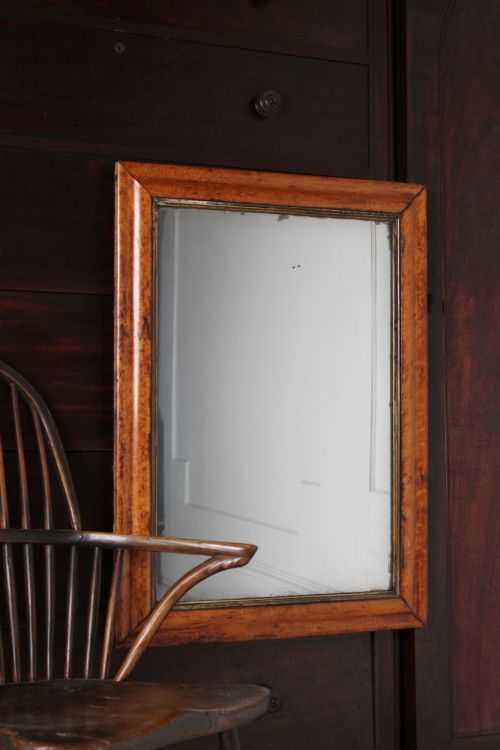
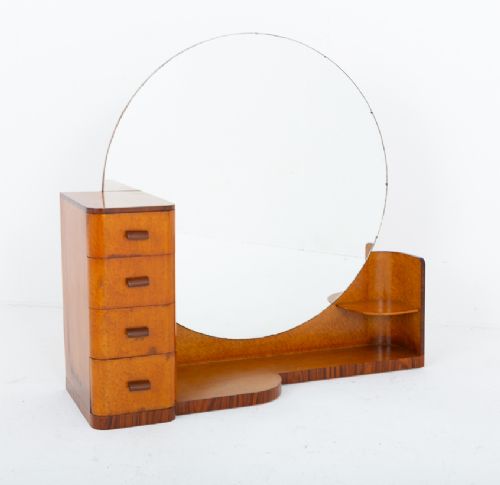
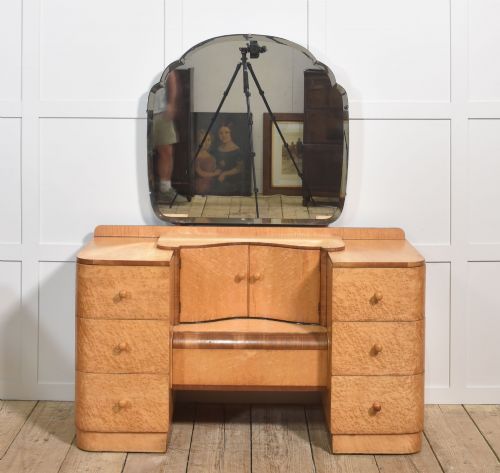
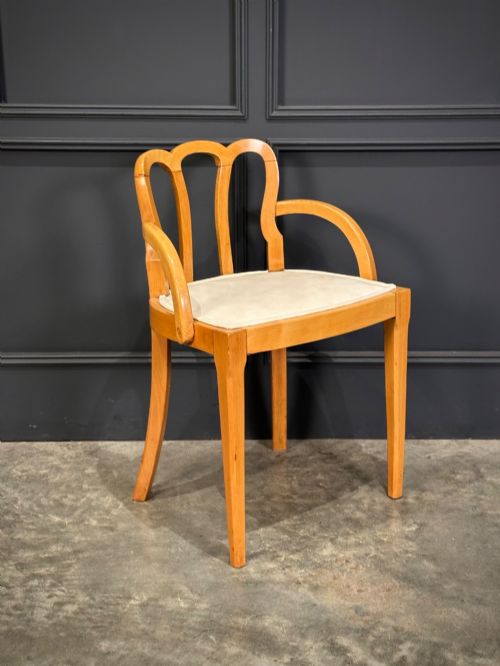
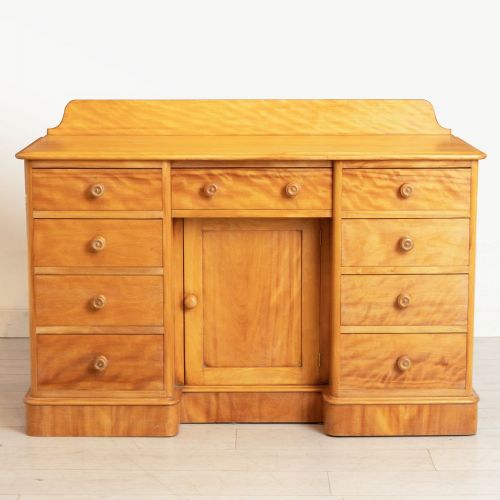
When you search for a blond wood vanity, you are looking at pale timber dressing tables, mirrors, and stools designed for personal grooming and writing. The most common versions on this page date from the Art Deco period, rendered in light woods with clean geometric lines and integral mirrors.
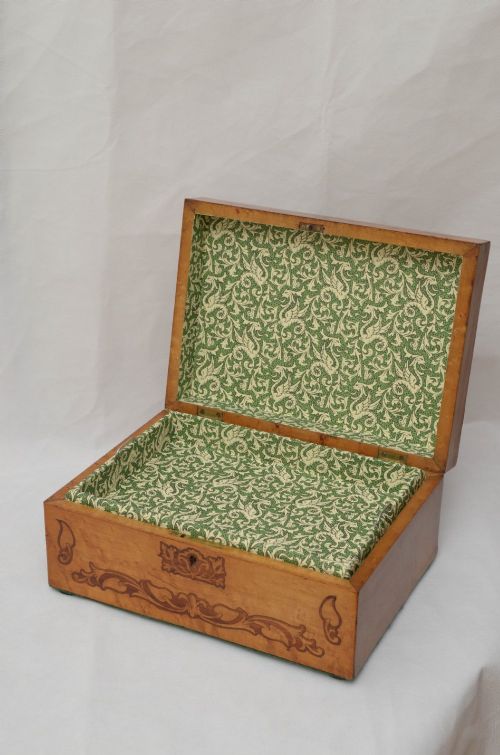
Beyond the dressing tables themselves, the selection encompasses matching bedroom chairs, stools, and small chests like jewellery boxes. These items span from the Georgian era through the Victorian period and into the twentieth century, with Swedish Biedermeier and English Art Deco styles dominating the forms.
How they were made
Cabinetmakers utilised striking light veneers such as birds eye maple, satin birch, satinwood, and burr maple over denser carcass timbers. These pale veneers were selected for their intricate natural patterns, often laid symmetrically across large drawer fronts and table tops.
Construction frequently incorporated contrasting inlay work, such as tulipwood, alongside functional glass components like tilting dressing mirrors. Metal elements like brass appeared on handles and mounts, while stools featured upholstered fabric top covers.
Blond Wood Vanity Retail Price Guide 2026
Typical asking prices for blond wood vanity among the pieces listed under this phrase on Sellingantiques today, from the lower quarter to the upper quarter. They describe what is for sale here now, not the wider market.
What varies in quality
The standard of a blond wood vanity rests primarily on the choice of timber and the symmetry of the veneer work. Master craftsmen arranged the natural eyes and swirls of birds eye maple or satin birch to create harmonious patterns across the whole facade.
Attribution to documented workshops or known makers elevates a piece, as does the survival of original matching components like mirrors and stools. The crispness of the joinery and the subtlety of secondary timbers further distinguish standard production items from exceptional commissions.
Harry and Lou Epstein·John Taylor of Edinburgh·Betty Joel·Heals
The Blond Wood Vanity Glossary
- Birds Eye Maple
- A figure in maple wood where the grain resembles tiny swirling eyes. This decorative effect occurs naturally in the timber and is prized for cabinet fronts.
- Satin Birch
- A pale, lustrous hardwood with a silky sheen. It was frequently utilised by Scandinavian and British makers during the nineteenth and early twentieth centuries.
- Biedermeier
- A Central European style spanning the nineteenth century characterised by utilitarian comfort and clean lines. It favoured blond veneers that highlighted the natural grain of the wood without heavy ornamentation.
- Dressing Mirror
- A table-top glass mounted on pivots within a frame. These pieces allowed users to adjust the angle during grooming.
Blond Wood Vanity: Frequently Asked Questions
What woods count as blond wood?
Light-toned timbers such as maple, satin birch, sycamore, and satinwood define this category. These woods exhibit pale yellow, cream, or golden hues.
Cabinetmakers valued them for their ability to reflect light in domestic interiors.
How do I date a dressing table?
Stylistic details and construction methods indicate the period. Art Deco examples feature geometric shapes from the nineteen-thirties, while Victorian pieces show heavier proportions and turned legs.
Secondary woods inside drawers also help determine the age.
Are mirrors usually original?
Many dressing tables retain their original glass, often showing slight age spots or foxing. Replacement mirrors do occur when older glass has suffered damage.
Examining the backing boards and mounting brackets reveals whether the glass remains contemporary to the frame.
How do I care for satin birch?
Keep pale veneered furniture away from direct sunlight to prevent the blond finish from darkening unevenly. Regular dusting with a dry cloth maintains the surface.
Avoid excessive moisture and wax polish containing harsh solvents.