

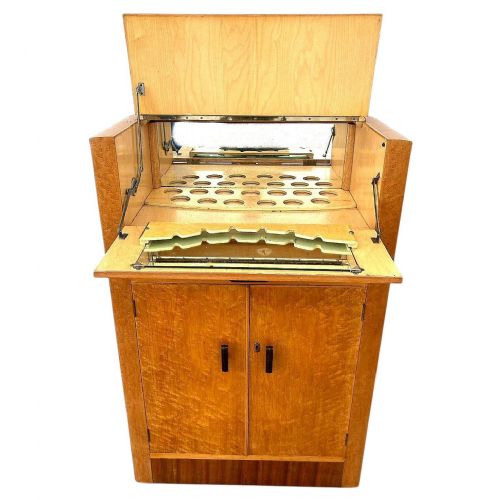


Blond Wood Mirror
A blond wood mirror brings pale timber grain and reflective light into a room, offering warm tones that suit both period and modern interiors.
Blond Wood Mirror
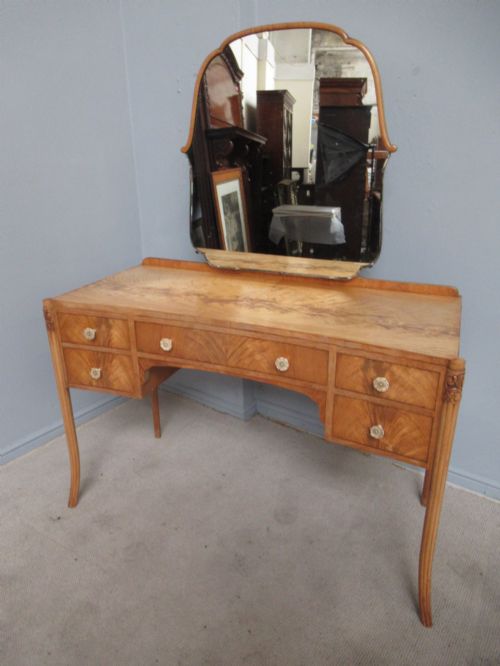
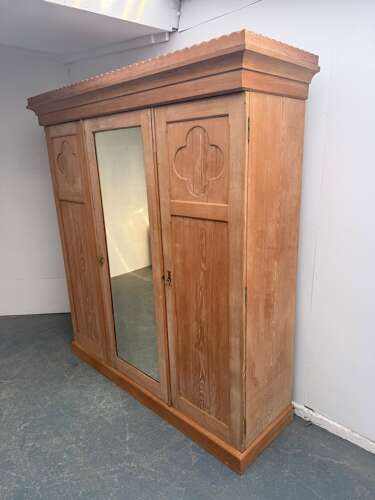
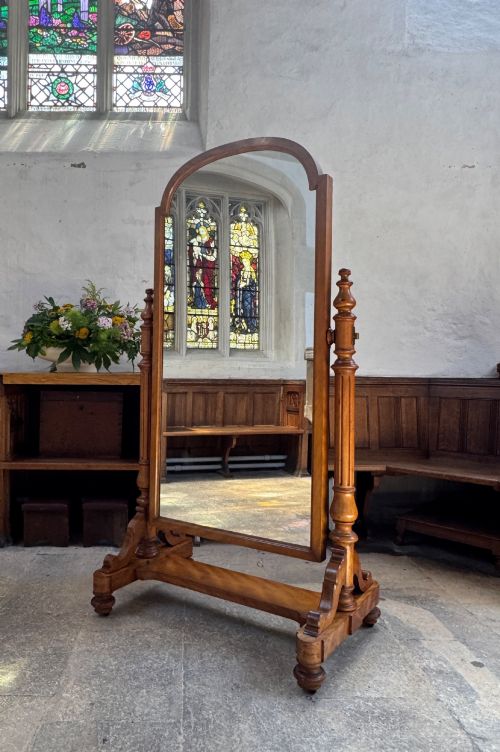
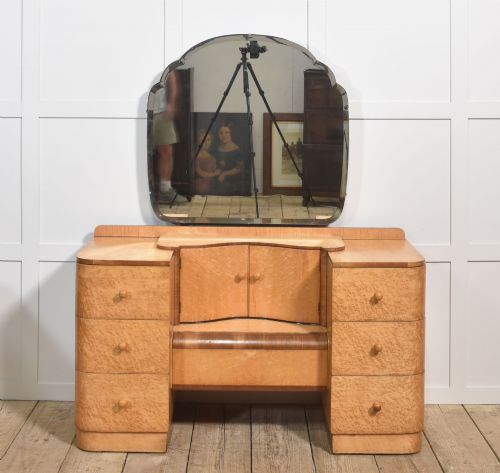
The wall mirrors and cheval mirrors on this page show how pale woods were selected to brighten domestic spaces. Dressing tables and overmantel mirrors also feature these light timber frames, often paired with clear mirror glass.
You will most commonly encounter maple and birds-eye maple frames originating from the nineteenth and twentieth centuries. These varieties provide the characteristic pale, figured surface that defines the blond wood mirror aesthetic.
Materials and construction
Frames are constructed using solid or veneered light timbers such as maple, satin birch, and ash over secondary woods. Cabinetmakers selected these pale species for their distinct grain patterns, which range from straight figuring to the dense spots of birds-eye maple.
Glass plates are set within rebated wooden frames, sometimes secured with traditional wooden backing boards or brass fixings. Surface finishes typically rely on clear wax or polish to protect the timber while preserving its natural blond colour.
Birds-eye maple gets its speckled pattern from tiny knots that tried to grow into branches but gave up.
Assessing quality and craftsmanship
The distinction between standard and superior pieces rests on the choice of timber veneer and the skill of the grain matching across the frame. Highly figured birds-eye maple or carefully selected satin birch elevated the status of a mirror from utilitarian to decorative.
Joinery standards also mark the difference, with tight mitres at the corners and robust structural framing behind the glass. Original mirror plates exhibiting gentle age speckling alongside well-preserved timber frames indicate careful stewardship over time.
Maurice Adams·Harry and Lou Epstein·John Taylor of Edinburgh·Betty Joel
The Blond Wood Mirror Glossary
- Birds-Eye Maple
- A figure in maple wood resembling tiny swirling eyes caused by local disruptions in the grain growth. It was frequently utilised during the Victorian and Art Deco periods.
- Satin Birch
- A pale, lustrous hardwood sourced from birch trees, possessing a natural golden sheen that reflects light. Makers favoured it for wardrobes and dressing mirrors in the nineteenth century.
- Cheval Mirror
- A full-length mirror hung in a freestanding frame that tilts on vertical pivots. They allowed a person to view their entire outfit.
- Overmantel Mirror
- A large mirror designed to sit directly upon the mantelpiece above a fireplace. These pieces often anchor the decorative scheme of a reception room.
- Mitre Joint
- A joint formed by cutting two pieces at an angle, typically forty-five degrees, to form a corner. High quality frames display seamless meeting points.
Blond Wood Mirror: Frequently Asked Questions
How do I clean a blond wood frame?
Dust the timber gently with a soft, dry cloth to prevent accumulation of grit in the grain. Avoid using wet cloths or harsh chemical sprays that can strip the traditional polish.
Apply a microcrystalline wax sparingly once or twice a year if the timber appears dry. Buff lightly with a clean cloth to maintain the natural lustre of the maple or birch.
How do I date a maple frame?
Examine the construction methods, backing boards, and screw types visible on the reverse of the mirror. Hand-cut fixings and older secondary woods suggest nineteenth-century origins.
Stylistic cues also help narrow the period, such as clean geometric lines pointing towards Art Deco or elaborate carved details indicating Victorian manufacture.
Can I place these mirrors in bathrooms?
High humidity and fluctuating moisture levels can damage antique wood veneers and silvered mirror glass. It is best to keep these pieces in dry living areas, bedrooms, or hallways.
Steam from showers may cause the glue behind the mirror plate to fail or the wooden frame to warp. Position them away from direct sources of water.