




Blanc De Chine Porcelain
Blanc de chine porcelain brings creamy white ceramics to your rooms, offering sculpted figures, censers and candlesticks shaped by centuries of kiln traditions.
Blanc De Chine Porcelain
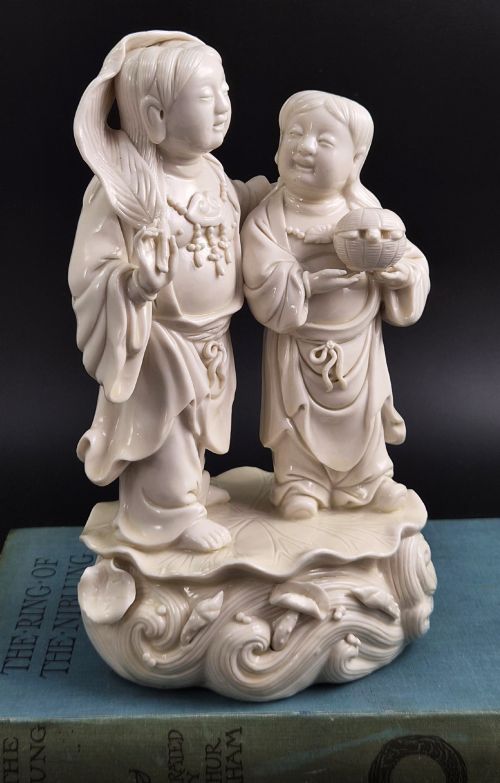
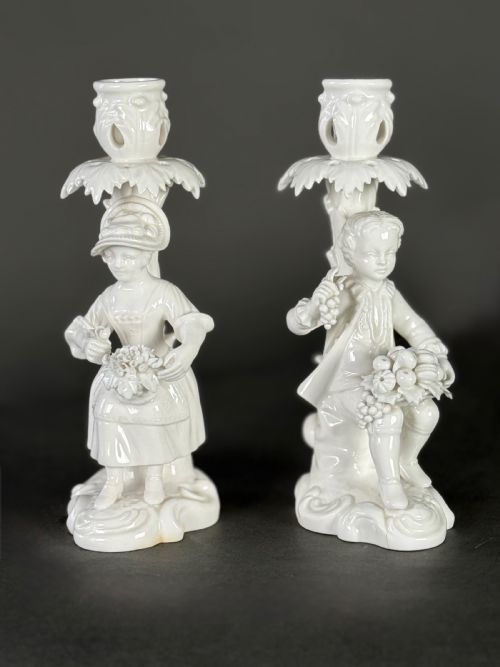
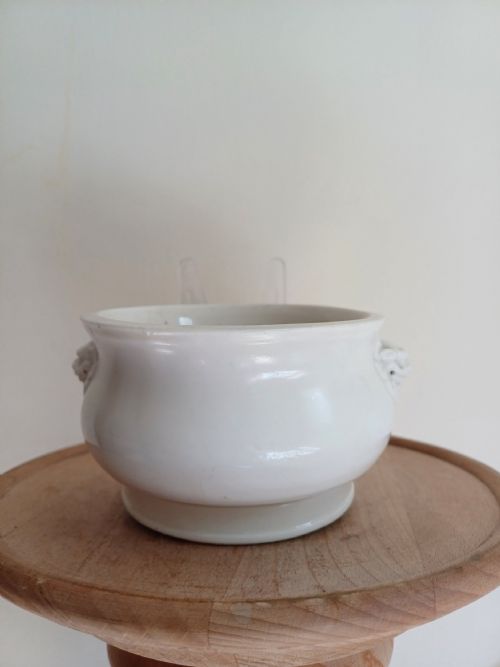
When you search for blanc de chine porcelain, you encounter luminous white ceramics spanning Chinese export wares and European interpretations. The pieces you meet most often on this page range from nineteenth-century figures and candlesticks to seventeenth-century censers.
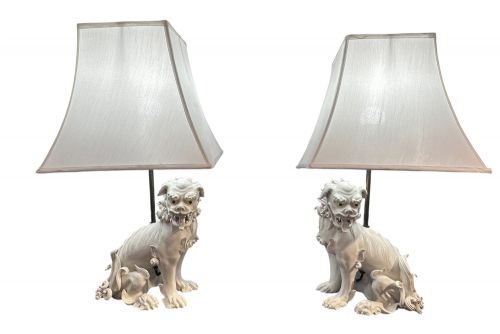
The selection includes traditional Dehua figures like Guanyin and Hehe Erxian alongside European works from factories such as Meissen, Derby, Minton, and Sitzendorf. Forms extend from tripod incense burners and foo dog lamps to animal sculptures and musical cherubs.
How they were made
These items are shaped from hard-paste porcelain and glazed ceramic, often finished with a uniform white glaze that pools in the recesses of the modelling. Certain pieces integrate additional materials like brass mountings, fabric shades, and traces of gilding or cobalt blue glaze.
Potters relied on detailed moulding and hand-carving to create complex forms such as bamboo-ribbed censers, layered drapery on figures, and textured animal coats. Kiln temperatures and porcelain composition determined the translucency and exact tone of the white surface.
Materials span hard-paste porcelain, glazed ceramic, brass fittings, and occasional cobalt blue glaze accents.
What varies in quality
Quality rests upon the crispness of the modelling and the purity of the white glaze, which should accentuate rather than obscure fine details. Superior examples display confident facial expressions on figures and precise symmetry on functional items like candlesticks and censers.
The reputation of the maker and the fidelity of the period style further distinguish the pieces, whether through the organic fluidity of Chinese Qing Dynasty sculpting or the technical precision of European porcelain houses.
Paul Scheurich·Jean Gille·Sitzendorf
The Blanc De Chine Porcelain Glossary
- Dehua
- A region in Fujian province, China, famous for producing creamy white porcelain wares since the Ming dynasty. Dehua pieces form the foundation of traditional blanc de chine collections.
- Censer
- A vessel designed for burning incense, frequently taking a tripod form with ritual handles. Historic examples often feature archaic bronze-inspired motifs adapted into porcelain.
- Foo Dog
- A traditional guardian lion sculpture placed to ward off malevolent spirits. These mythical beasts appear frequently as figurines or converted lamp bases.
- Hard-Paste Porcelain
- A dense ceramic composition fired at high temperatures using kaolin and petuntse. This material provides the durability and smooth surface characteristic of European and Asian fine wares.
- Guanyin
- A revered bodhisattva depicted frequently in Chinese ceramics as a figure of compassion. Sculptures capture flowing robes and serene facial expressions in white glaze.
Blanc De Chine Porcelain: Frequently Asked Questions
How do I date blanc de chine porcelain?
Dating relies upon stylistic markers, kiln characteristics, and factory marks where present. Seventeenth-century Chinese pieces often show distinct potting traits, while nineteenth-century European factories use specific stamps and modelling styles.
Comparing glaze opacity and the crispness of secondary details helps separate early periods from later revival pieces.
Where were these pieces made?
Production spans historic kilns in Dehua, China, alongside European porcelain manufactories in Germany, France, and England. Each region developed distinct interpretations of the white ceramic tradition.
Chinese pieces emphasise ritual forms and Buddhist figures, while European makers adapted the glaze for candlesticks, animals, and decorative figurines.
How do I care for antique porcelain?
Keep pieces away from direct sunlight and dust them gently with a soft, dry brush. Avoid harsh cleaning agents that can damage unglazed areas or delicate gilding.
Handle figures and candlesticks by their main body rather than protruding elements like fingers, branches, or handles to prevent accidental breakage.
What is the difference between Chinese and European blanc de chine?
Chinese pieces from Dehua typically feature a warm, ivory-toned glaze fused directly to the porcelain body without added colours. European versions, produced from the eighteenth century onward, often incorporate hard-paste porcelain formulas developed locally.
European works frequently include painted highlights, gilding, or mountings in brass that distinguish them from traditional Asian export wares.