
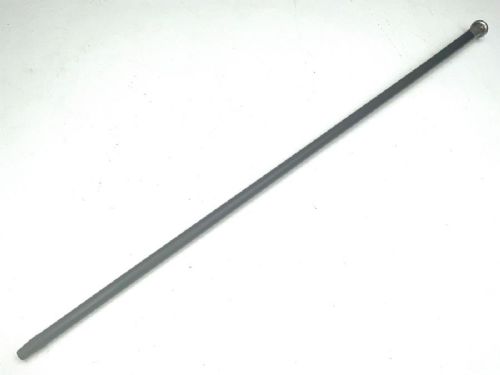


Black Wooden Walking Stick
These black wooden walking stick pieces offer functional support and gentlemanly display, spanning Victorian and Edwardian periods.
Black Wooden Walking Stick
When you search for a black wooden walking stick, you encounter functional supports and gentlemanly accessories from the nineteenth century and early twentieth century. The selection includes ebonised oak, Irish blackthorn, and specialised items incorporating hidden blades or musical instruments.
You meet various utilitarian and novelty forms on this page, ranging from standard gentleman's sticks to sword sticks, timber flute walking sticks, and golf club shapes. Several examples feature carved animal handles such as bears, boars, and German shepherds.
The origins stretch across Victorian and Edwardian periods, alongside specific dates from eighteen ninety to nineteen ten. Alongside the sticks themselves, the evidence includes a Black Forest bear stick stand designed to hold these items.
How they were made
Maker construction relies on natural timbers including hardwood, linden wood, blackthorn, and oak, often ebonised to achieve a deep dark finish. These materials provide the structural rigidity required for daily support.
Handles and mounts incorporate contrasting materials such as silver, metal, steel, bone, horn, and carved wood. Artisans shaped these elements into animal heads, hammer head grips, and embossed metal caps.
Listings span the nineteenth century, Victorian, and Edwardian periods, utilising silver, wood, metal, blackthorn, steel, linden wood, hardwood, and bone.
What varies in quality
Quality differences lie in the fidelity of the carving and the integration of specialised mechanisms. Hand-carved animal heads and concealed sword blades demand higher levels of craftsmanship than plain shafts.
The choice of handle material and metal mounting also dictates distinction. Embossed silver mounts and carved horn or bone handles elevate standard timber supports into decorative statements.
The Black Wooden Walking Stick Glossary
- Ebonised
- Wood treated to mimic ebony through staining or painting. This finish gives the timber a uniform black appearance.
- Sword stick
- A cane with a concealed blade hidden inside the shaft. These dual-purpose items served as defensive weapons.
- Stick stand
- A piece of furniture designed to hold walking sticks and canes upright. Examples include carved Black Forest wooden items.
Black Wooden Walking Stick: Frequently Asked Questions
What materials are used in these sticks?
These items combine natural timbers like oak, linden wood, and blackthorn with metal, steel, and silver.
Additional handle details incorporate bone, horn, and carved wood depicting animals.
How old are these walking sticks?
The pieces date from the nineteenth century through the Edwardian era, spanning the Victorian period up to nineteen ten.
Specific dated items reference eighteen ninety, nineteen hundred, and nineteen ten.
Are all the sticks plain wood?
Many examples feature plain or ebonised wooden shafts, but others incorporate functional surprises.
Specialised versions conceal swords, function as timber flutes, or take the shape of golf clubs.
What handle styles exist?
Handles range from embossed silver and metal grips to hammer head designs.
Carved animal heads include bears, boars, and German shepherds.