




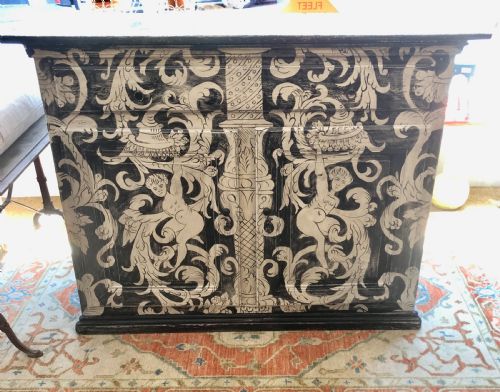


Black Wooden Credenza
These black wooden credenza pieces bring dark elegance to a room, spanning periods from the eighteenth century through the Victorian era and into Art Deco.

Black Wooden Credenza
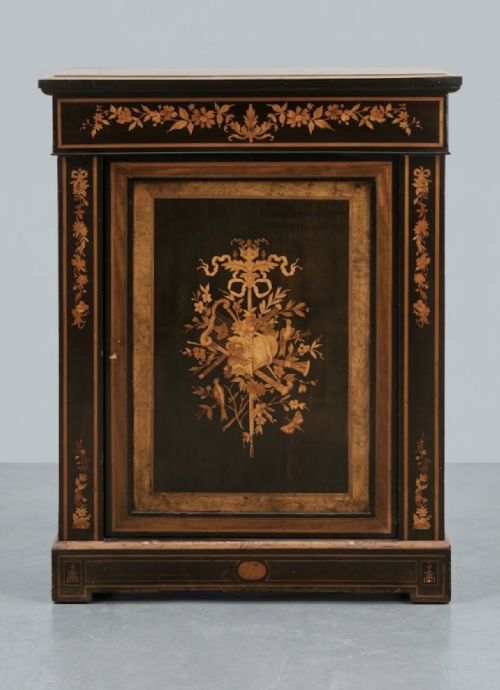
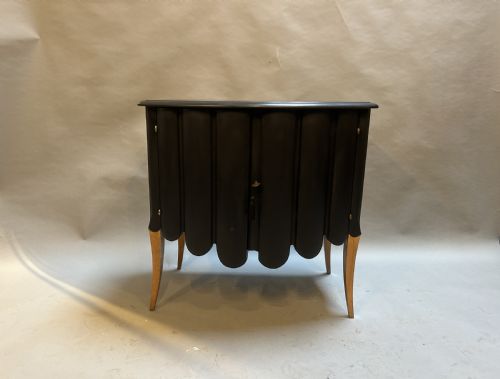
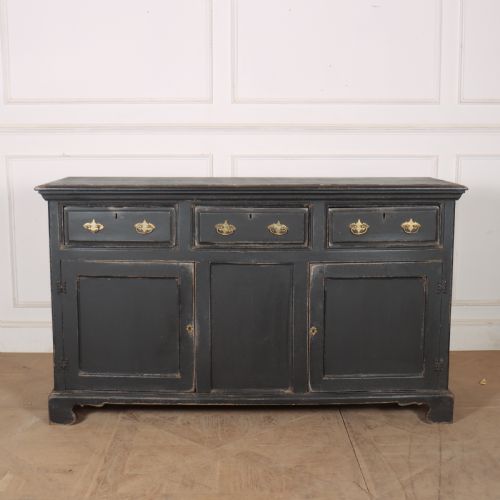
A black wooden credenza encompasses sideboards, cabinets, and dresser bases executed in ebonised, painted, or lacquered dark finishes. You will most frequently encounter Victorian ebonised examples alongside eighteenth-century painted country pieces and nineteenth-century French cabinetwork.
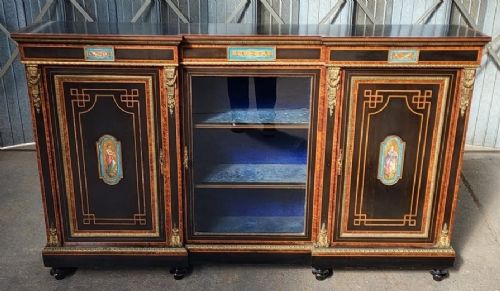
The form functions primarily for storage and display, appearing as breakfront credenzas, three-door cabinets, and chiffoniers. These pieces draw on diverse stylistic influences ranging from Regency Chinoiserie and Napoleon III to Hungarian folk art and the Victorian Aesthetic Movement.
Makers and workshops utilised these dark surfaces to contrast with rich decorative mounts, inlay, and painted details. The resulting forms serve utility while anchoring a room with substantial dark timber presence.
Materials and construction methods
Construction relies heavily on timber finished with ebonised treatments, black paint, or dark lacquer to achieve the signature sombre surface. Craftsmen frequently built upon structural woods like amboyna or standard timber before applying these dark finishes.
Decoration involves a variety of applied elements including brass, ormolu, gilt bronze, and glass panels. More elaborate examples incorporate specialist techniques such as pietra dura or hand-painted grotesque ornamentation.
Listings feature pieces spanning the eighteenth century, the Regency period, the Victorian era, and Art Deco, utilising ebonised wood, brass, glass, and paint.
Assessing quality and craftsmanship
Quality rests in the execution of the surface finish and the precision of the cabinetry, whether dealing with a vernacular eighteenth-century dresser base or a refined nineteenth-century breakfront credenza. Finer examples display meticulous joinery and stable timber substrates beneath the ebonising or paint.
The sophistication of the mounts and decorative details also separates standard utility pieces from exceptional works. Superior items integrate bronze, ormolu, inlay, or hand-painted panels harmoniously into the overall architectural design of the cabinet.
The Black Wooden Credenza Glossary
- Ebonised
- Wood finished to resemble ebony through staining, painting, or chemical treatment. This technique gained immense popularity during the nineteenth century to achieve a sleek black surface.
- Ormolu
- Gilt-bronze decorative mounts applied to furniture. The technique involves treating bronze with a gold amalgam to produce a rich metallic embellishment.
- Pietra dura
- Inlay work utilising polished, cut coloured stones to create decorative patterns. This painstaking technique often appears on high-status nineteenth-century cabinet tops and doors.
- Chiffonier
- A compact sideboard or tall low cabinet equipped with drawers and doors. The form evolved during the nineteenth century for convenient drawing-room storage.
Black Wooden Credenza: Frequently Asked Questions
What is a black wooden credenza?
A black wooden credenza is a low storage cabinet finished in dark paint, lacquer, or ebonised wood. These pieces function as sideboards, chiffoniers, or display cabinets.
They originate from various periods including the eighteenth and nineteenth centuries, exhibiting styles from vernacular country pieces to ornate Victorian designs.
How do I date a black wooden credenza?
Dating relies on examining the underlying construction timber, hardware, and decorative motifs. Eighteenth-century examples often present as painted country dresser bases, while Victorian pieces frequently feature ebonised surfaces with ormolu mounts.
Stiles, carcass assembly, and stylistic traits like Regency Chinoiserie or Art Deco lines further clarify the exact period of manufacture.
Where should I place a credenza?
These cabinets suit dining rooms, living spaces, or hallways where they provide substantial surface display and enclosed storage. Their dark finishes allow them to anchor a room visually against lighter walls.
Consider the clearance needed for doors and drawers when positioning larger breakfront or three-door variations.
How do I care for ebonised wood?
Maintain ebonised and painted wooden surfaces by dusting gently with a soft, dry cloth. Avoid harsh chemical cleaners and excessive moisture that might degrade the dark finish.
Keep the cabinet away from direct sunlight and severe temperature fluctuations to protect the timber substrate and decorative mounts.