






Black Silk Embroidery
Black silk embroidery brings together intricate needlework and dark grounds from the nineteenth and early twentieth centuries, offering striking contrasts for collectors.
Black Silk Embroidery
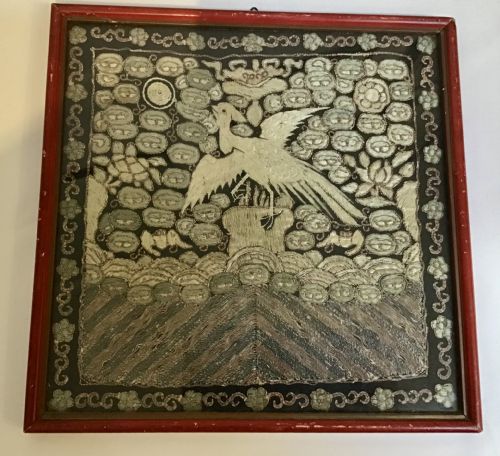
When you search for black silk embroidery, you encounter a varied collection of textiles, wall hangings, and framed art originating from diverse cultures and periods. The selections span from Central Asian tribal pieces to Georgian and Regency framed pictures, alongside Chinese rank badges and Japanese textile screens.
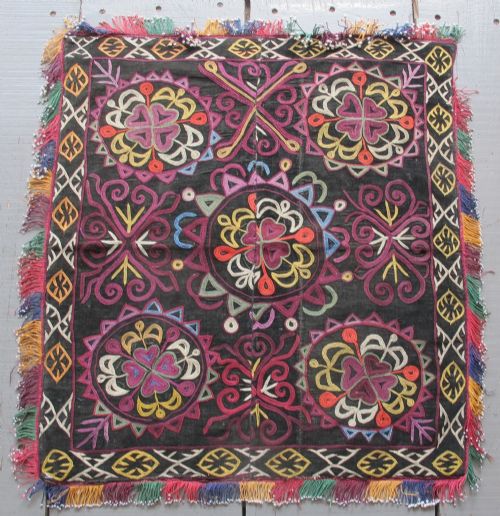
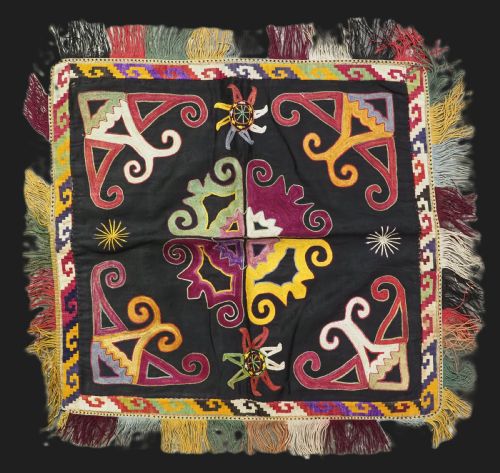
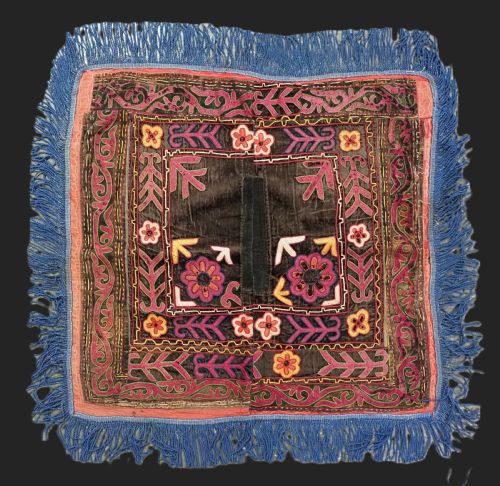
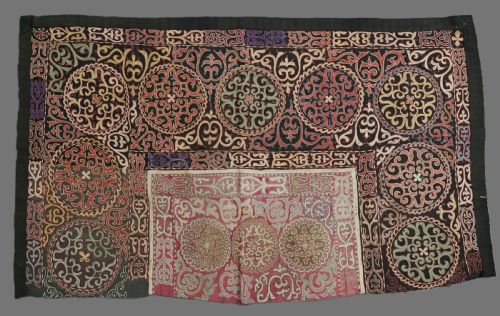
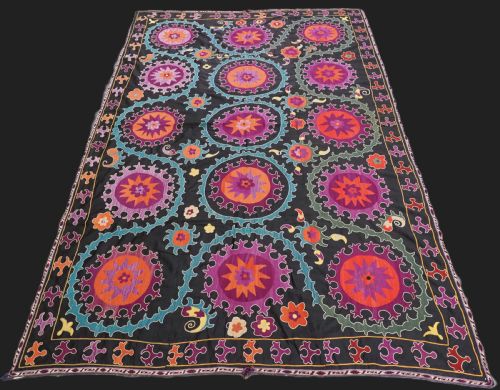
You are most likely to meet Central Asian works such as Uzbek Lakai ilgich dowry embroideries, Kyrgyz tush kyiz wall hangings, and Persian Rasht panels on black felt or cotton grounds. These items served ceremonial and domestic roles, functioning as wall hangings, bed decorations, or horse covers.
European examples also appear, taking the form of framed silkwork pictures, samplers, and woolwork panels set within period frames. These diverse forms reflect global textile traditions that utilise dark fabrics to highlight coloured threads.
Assessing quality and execution
Quality rests in the precision of the needlework, the complexity of the design, and the survival of the original ground material. Finer pieces demonstrate tight, even stitching and well-preserved metallic threads that retain their lustre against the dark background.
The integrity of the mounting also plays a role, particularly in framed works retaining original giltwood or verre églomisé glass. Tribal and ceremonial items derive distinction from the complexity of their motifs and the richness of their dye palettes.
Several embroidered pieces served as ceremonial horse and saddle covers, proving that tribal livestock enjoyed superior interior design.
Iida Takashimaya Company
The Black Silk Embroidery Glossary
- Ilgich
- A Central Asian dowry embroidery created by the Lakai tribe. These pieces often feature energetic geometric motifs worked in vibrant silks.
- Tush kyiz
- A large embroidered wall hanging traditionally made by Kyrgyz women to celebrate a marriage in the yurt. They are distinguished by symbolic flora and fauna designs.
- Verre églomisé
- A process of applying gold or silver leaf to glass combined with engraving and painting. It frequently appears as a decorative mat on Regency and nineteenth-century framed pictures.
- Rasht embroidery
- A traditional Persian textile craft involving inlaid felt pieces worked with chain stitch embroidery. Black felt frequently serves as the base for colourful scrolling patterns.
- Rank badge
- A square insignia worn on Chinese robes to denote the official status of the wearer. These panels utilise fine silk and metallic threads on dark foundations.
Black Silk Embroidery: Frequently Asked Questions
How do I care for antique black silk embroidery?
Keep textile pieces away from direct sunlight to prevent the silk threads and dark background fabrics from fading. Stable indoor humidity and gentle framing protect the fibres from deterioration.
Avoid hanging heavy embroidered panels by a single point to prevent strain on the antique ground fabric.
What is a tush kyiz?
A tush kyiz is a large embroidered wall hanging traditionally made by Kyrgyz nomads for a newly married couple's yurt. They represent wishes for prosperity and family lineage.
These elaborate textiles feature dense stitching that covers the majority of the foundation cloth.
How are Persian Rasht embroideries constructed?
Persian Rasht embroideries are made by applying coloured silk pieces onto a heavy felt ground, usually black or dark brown. Artisans then secure and embellish the design using fine chain stitch embroidery.
This technique creates a durable textile with a tactile, layered surface.
What is verre églomisé?
Verre églomisé is a technique where metal leaf is applied to glass and decorated through etching and painting. It was utilised in framing Regency and nineteenth-century silkwork pictures.
This framing method adds a reflective border that complements the dark silk embroidery within.