



Black Patinated Bronze Sculpture
A black patinated bronze sculpture brings weight and dark finish to a room, capturing nineteenth-century craft and twentieth-century animalier forms.
Black Patinated Bronze Sculpture
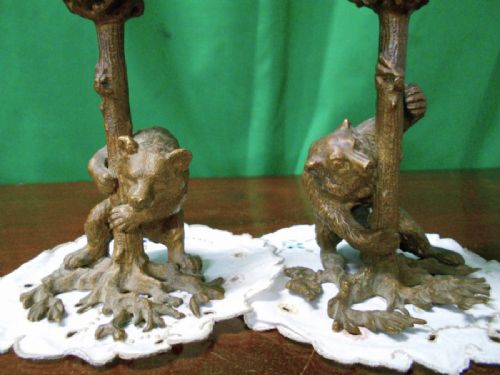
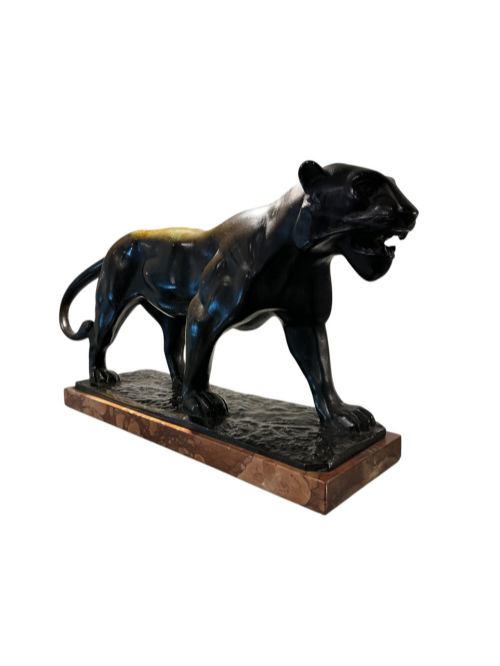
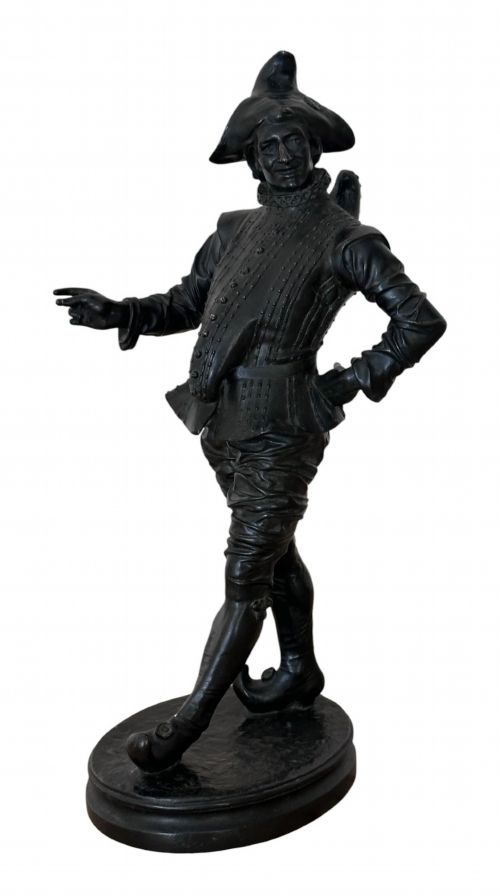
A black patinated bronze sculpture represents figures, animals, and classical subjects cast across the nineteenth and twentieth centuries. These works range from grand tour figures and Victorian dogs to Art Deco panthers and dancers.
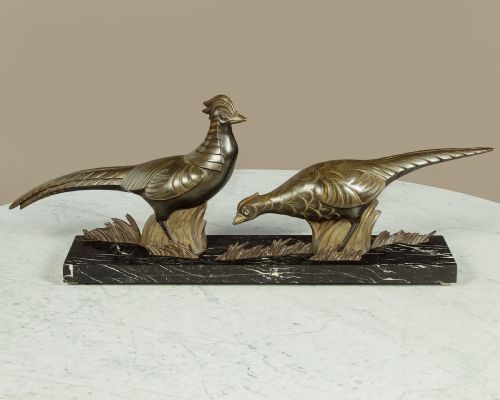
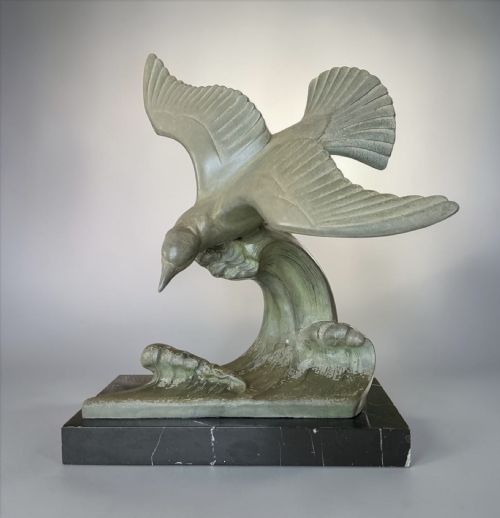
The version most likely to meet you on this page is an Art Deco subject from nineteen-thirty, often cast in bronze or patinated spelter and mounted on a marble or onyx base.
Earlier pieces draw upon nineteenth-century French and neoclassical traditions, portraying mythological figures, historical personages, and detailed wildlife studies.
Materials and casting methods
Foundries utilised bronze and alternative metals such as patinated spelter, pouring molten material into moulds to achieve intricate detail in hair, feathers, and drapery. The dark surface finish was then applied chemically to simulate age and depth.
Many of these sculptures incorporate heavy bases made of marble, black marble, or onyx, providing a stable foundation and a contrasting texture to the dark metal above.
Watch for attentive King Charles spaniels sitting quietly among roaring panthers and running greyhounds.
Distinctions in quality and execution
The integration of the metal figure with its stone base also indicates the standard of manufacture, where superior examples display tight joints and substantial materials like marble rather than lighter substitutes.
Ferdinand Barbedienne·Antoine Louis Barye·Demetre Chiparus·Geo Maxim·Franz Iffland
The Black Patinated Bronze Sculpture Glossary
- Patination
- The applied chemical treatment or natural oxidation on the surface of the metal that produces a darkened, aged appearance. This finish protects the bronze while defining the sculptural contours.
- Spelter
- A zinc alloy commonly utilised as a less expensive alternative to bronze during the Art Deco period. It accepts patination well but possesses a lighter weight than true bronze.
- Grand Tour
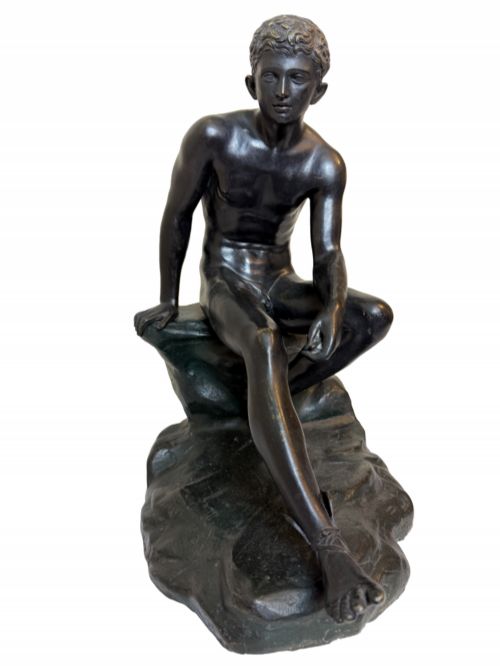
- A nineteenth-century tradition where travellers collected small-scale bronze replicas of classical antiquities and Renaissance masterpieces. These souvenirs mirror famous museum sculptures.
- Animalier
- A nineteenth-century artistic movement focused on realistic depictions of animals, particularly predators and domestic dogs in dynamic poses. Sculptors studied living creatures to capture authentic movement.
Black Patinated Bronze Sculpture: Frequently Asked Questions
How do I clean a bronze sculpture?
Dust the surface gently with a soft, dry brush to remove particles without disturbing the dark patination. Avoid using water, soap, or chemical polishes, which can strip the chemical finish from the metal.
Applying a very light coat of microcrystalline wax occasionally helps protect the metal from atmospheric moisture. Buff the wax gently with a soft cloth after application.
How can I tell bronze from spelter?
Bronze is substantially heavier and colder to the touch than spelter, possessing a resonant quality when gently tapped. Spelter is softer and may show a greyish or silvery metal underneath if the surface patination is scratched.
Many Art Deco animal and human figures utilise spelter mounted on marble bases. Examining the underside can often reveal the lighter base metal.
What is a Grand Tour sculpture?
Grand Tour sculptures are nineteenth-century bronze reductions of famous classical statues, created for travellers touring Italy and Europe. They served as scholarly and decorative reminders of antiquity.
These pieces typically depict mythological figures, Roman emperors, or Renaissance bronzes. Their patination often mimics ancient buried metal.
Where should I display these sculptures?
Place your sculpture on a stable surface away from direct sunlight and damp environments to preserve the marble base and metal patination. Hallway consoles, bookcases, and desks provide secure settings.
Ensure the piece is positioned where it cannot be easily knocked, particularly heavier bronzes mounted on stone bases. Good lighting helps accentuate the dark surface details.