

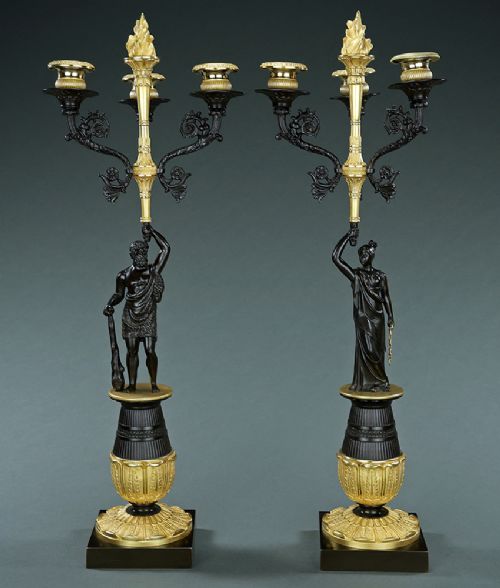



Black Patinated Bronze Figure
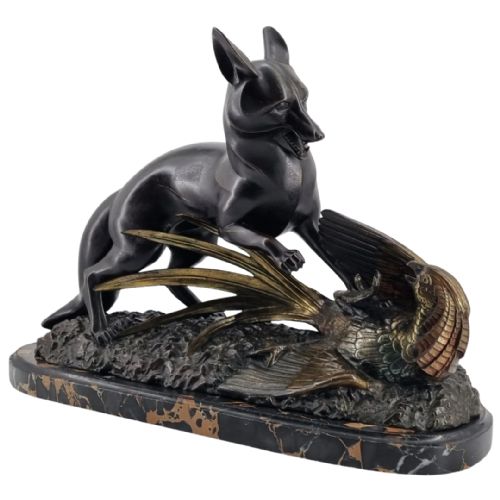
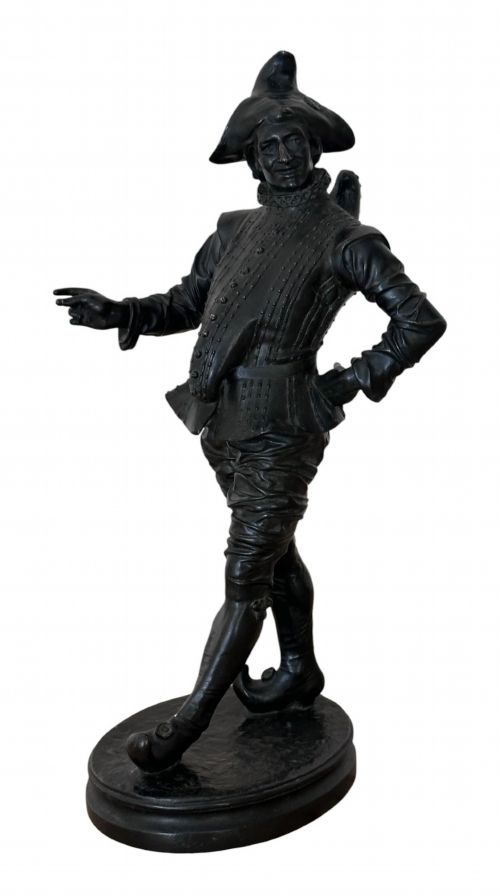
A black patinated bronze figure delivers classical form and modernist movement through a dark metallic surface that catches the light.
Black Patinated Bronze Figure
A black patinated bronze figure spans classical antiquities brought home by the Grand Tour, French Empire mythological subjects, and dynamic Art Deco dancers and animals.
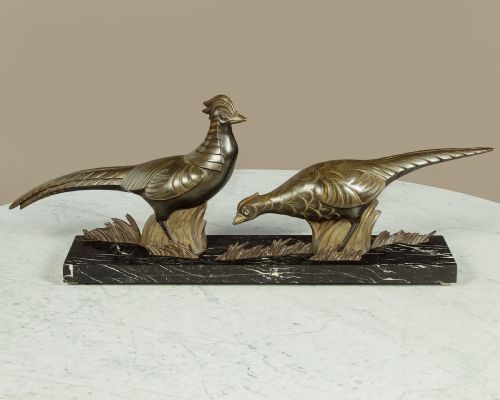
The selections here range from nineteenth-century Neoclassical casts and Black Forest bears to nineteen-thirties athletic figures mounted on marble and onyx bases.
Most pieces meet the eye as sculptural groups, candlesticks, or clock garniture sets, uniting cast metal with stone plinths.
How they were made
Foundries shaped these works using bronze, patinated metal, and spelter, often finishing the cast with a dark chemical patination to deepen the shadows.
Many sculptures sit upon heavy bases carved from marble or onyx, anchoring the metal figures securely.
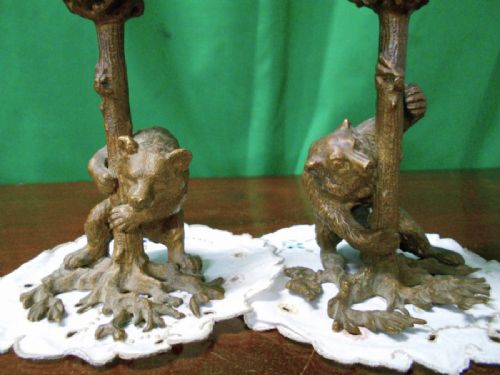
Black Forest bears emerge from the woods to hold your candles aloft.
What varies in quality
The fineness of the chiselling and the smoothness of the dark surface distinguish a master foundry cast from a commercial production.
Detail in the musculature, facial expression, and drapery reveals the skill of the artist and the quality of the original model.
Ferdinand Barbedienne·P Granet·Zoldan Kovats·P Sega·Geo Maxim·Desire Grisard·Chiparus·Demetre Chiparus·Paul Joris·Franz Iffland
The Black Patinated Bronze Figure Glossary
- Patination
- The chemical or natural treatment applied to the surface of the metal to alter its colour. This process creates the characteristic dark finish seen on these sculptures.
- Grand Tour
- A cultural journey undertaken by European elites in the nineteenth century. Souvenirs from these trips frequently included bronze reductions of classical statues.
- Spelter
- An alloy of zinc and lead used as a cost-effective alternative to bronze. It frequently receives a bronze-like patination to mimic heavier metal.
- Garniture
- A set of ornamental objects designed to match and sit together on a mantelpiece. These sets typically include a central clock flanked by candelabras or urns.
Black Patinated Bronze Figure: Frequently Asked Questions
How do I clean a bronze figure?
Dust the surface gently with a soft, dry brush to prevent particle buildup. Avoid using water, soap, or chemical polishes, which can strip away the dark patinated finish.
Apply a very light coat of microcrystalline wax occasionally if the metal appears dry, buffing it off completely with a clean cloth.
Are spelter figures fragile?
Spelter is a softer and more brittle alloy than bronze, meaning it bends or snaps under pressure rather than holding firm. Handle these pieces carefully by their solid structural parts rather than thin limbs.
Keep them away from high-traffic areas where they might get knocked or dropped.
What is a Grand Tour bronze?
Grand Tour bronzes are miniature or reduced-scale copies of famous ancient sculptures produced in Italy and France during the nineteenth century. Travellers collected them as sophisticated mementos of their classical education and travels.
These pieces usually depict mythological figures, Roman emperors, or Renaissance art.
How do I spot a marble base?
Examine the weight and the underside of the plinth, where natural veining and stone structure should be visible. Nineteenth-century and Art Deco pieces often combined dark bronze figures with contrasting coloured marble or onyx bases.
Check for chips along the sharp edges of the stone.