





Black Metal Stick Stand
A black metal stick stand organises hallways with robust utility, combining utilitarian strength with period design.
Black Metal Stick Stand
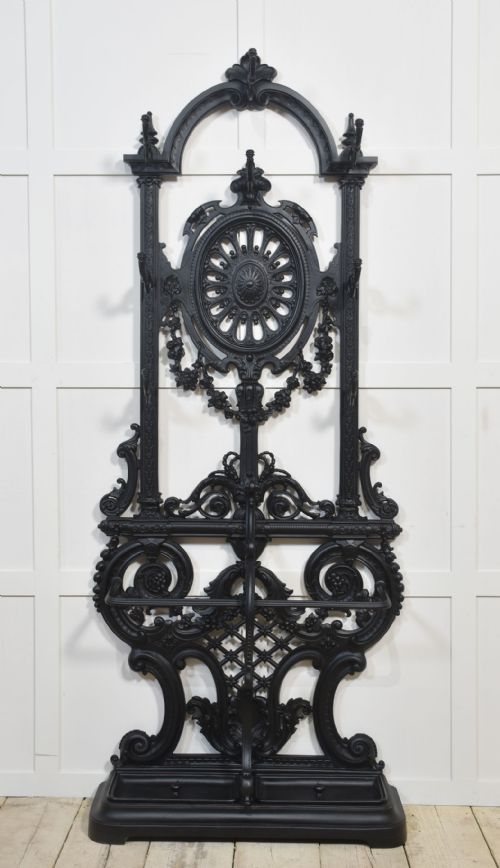
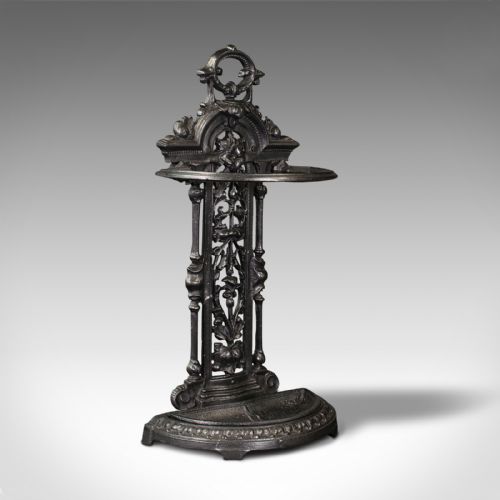
A black metal stick stand serves as a practical hallway fixture designed to hold walking canes, umbrellas and parasols. These furnishings appear predominantly in cast iron and tubular metal, spanning periods from the nineteenth century through the Art Deco era.
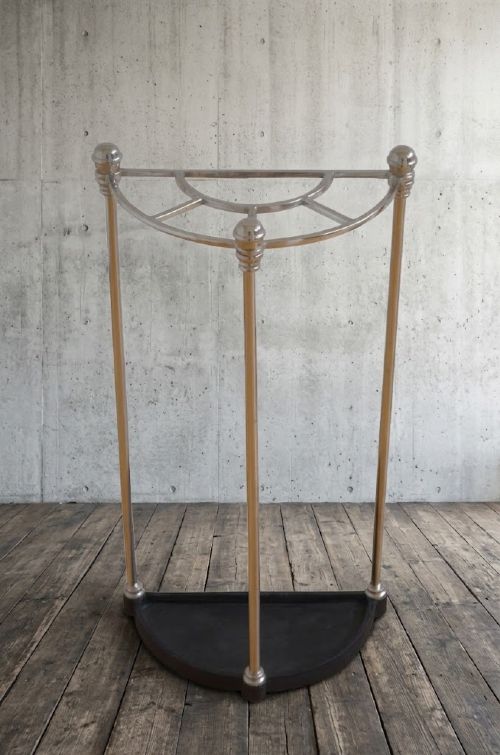
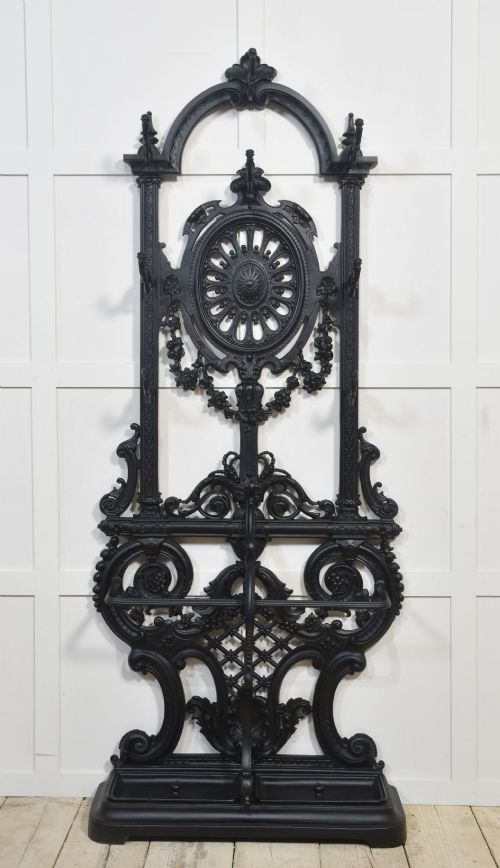
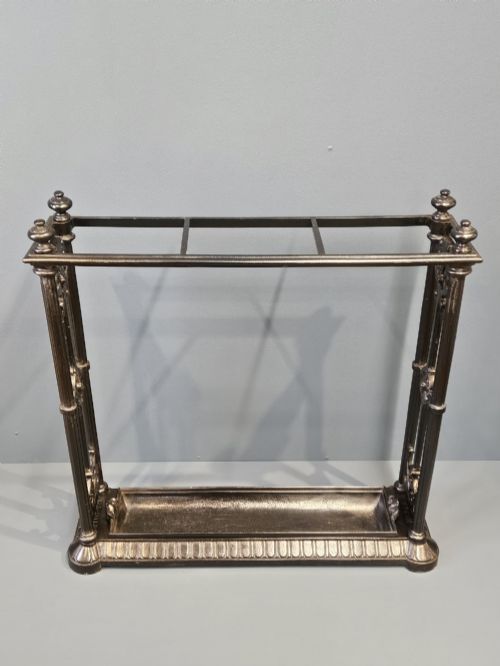
The pieces listed on this page range from compact demi-lune umbrella stands to large hall stands incorporating multiple divisions or twenty-four ring configurations. Victorian Gothic, Edwardian, Art Nouveau and Art Deco styles frequently define the aesthetic of these objects.
Buyers are most likely to encounter Victorian cast iron examples or nineteen-thirties tubular metal designs. Regional variations include English foundry work after Coalbrookdale, Belgian Art Nouveau pieces and carved wood Black Forest items.
Materials and construction methods
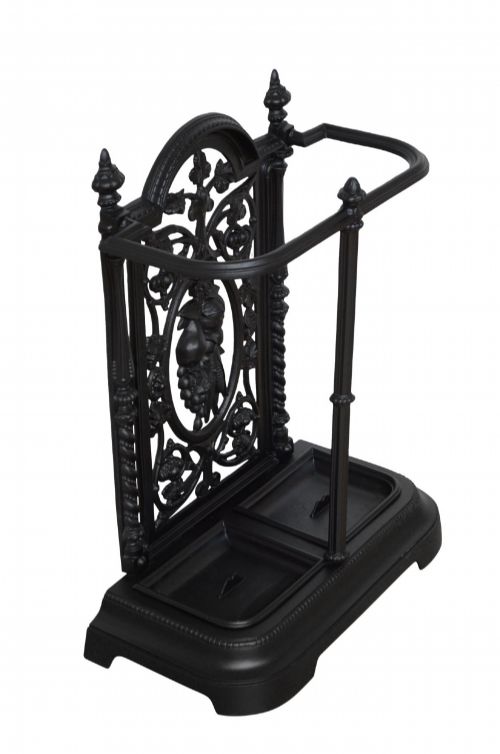
Foundries utilised cast iron poured into moulds to create ornate openwork patterns and heavy, stable bases for Victorian hall stands. Wrought iron and tubular metal provided alternatives for later styles, offering lighter frameworks.
Nickel plating was applied to certain metal surfaces during the nineteen-thirties to provide a bright, reflective finish contrasting with dark frameworks. Paint finishes frequently coated the iron elements to prevent oxidation in damp hallways.
The inventory records diverse origins, including English foundry work after Coalbrookdale and Belgian Art Nouveau production.
Assessing quality in metalwork
The crispness of casting detail distinguishes superior foundry work from simpler production, particularly in Coalbrookdale style or Victorian Gothic pieces where intricate foliage or tracery appears. Clean lines and precise joints dictate the success of later Art Deco tubular metal designs.
Structural integrity relies on the retention of original drip pans and the stability of heavy iron rings without replacement parts. The preservation of original surface finishes significantly enhances the authenticity of a piece.
Falkirk Foundry·Coalbrookdale
The Black Metal Stick Stand Glossary
- Demi-lune
- Half-moon shape. This semi-circular profile allows the stand to sit flush against a hallway wall.
- Hall stand
- A piece of furniture combining a stick stand with coat hooks and a mirror. These multifunctional items dominated Victorian hallways.
- Tubular metal
- Hollow metal tubing. This industrial material became popular in furniture construction during the nineteen-thirties.
Black Metal Stick Stand: Frequently Asked Questions
How do I clean cast iron?
Dust the surface regularly with a soft dry cloth to remove accumulated particles. Avoid harsh chemical cleaners that strip historical finishes.
Apply a light microcrystalline wax if the metal requires protection against moisture. Ensure the stand dries thoroughly after holding wet umbrellas.
Where should I place it?
Position the stand in an entryway or hallway where guests deposit wet outerwear. Ensure adequate clearance for umbrellas and walking sticks.
Keep the stand away from direct heat sources to preserve painted surfaces and wood components. Place a protective mat underneath if the base lacks a tray.
How do I date an umbrella stand?
Examine the manufacturing materials and stylistic motifs visible across the frame. Heavy cast iron openwork typically points to nineteenth century production.
Sleek tubular metal and nickel plating suggest nineteen-thirties modernist design influences. Hallmarks or foundry stamps confirm specific periods of origin.
Are drip trays usually missing?
Original removable drip trays frequently vanished over decades of domestic use. Replacements often utilise similar metal or zinc materials.
Check whether the base retains its internal water containment feature before purchase. Many collectors accept well-matched replacement trays on older stands.