


Cast Iron Brolly Stand
A cast iron brolly stand is a heavy, durable hall accessory designed to hold wet umbrellas and walking sticks, prized for its robust utility.
Cast Iron Brolly Stand
When searching for a cast iron brolly stand, buyers encounter functional hall furniture designed to hold wet umbrellas and walking sticks off the floor. These heavy items protect hallways from dampness while serving as a decorative entrance feature.
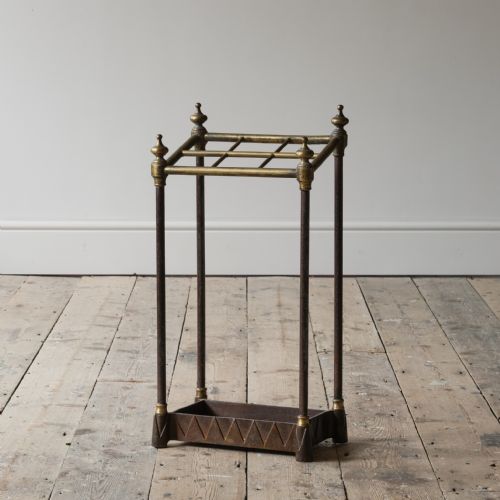
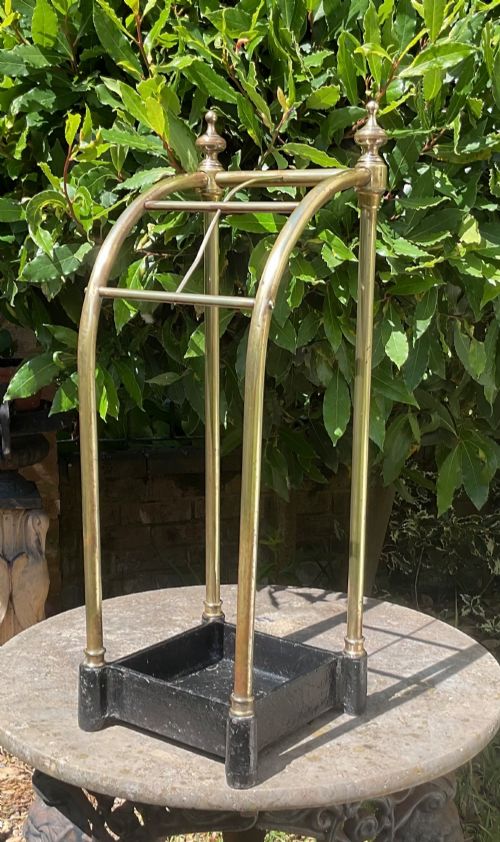
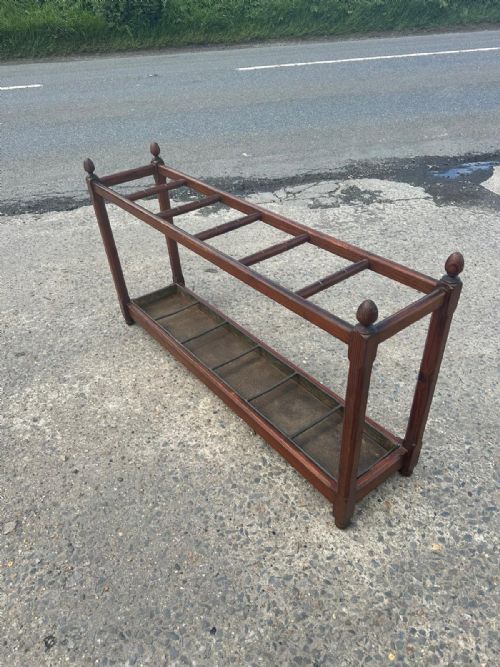
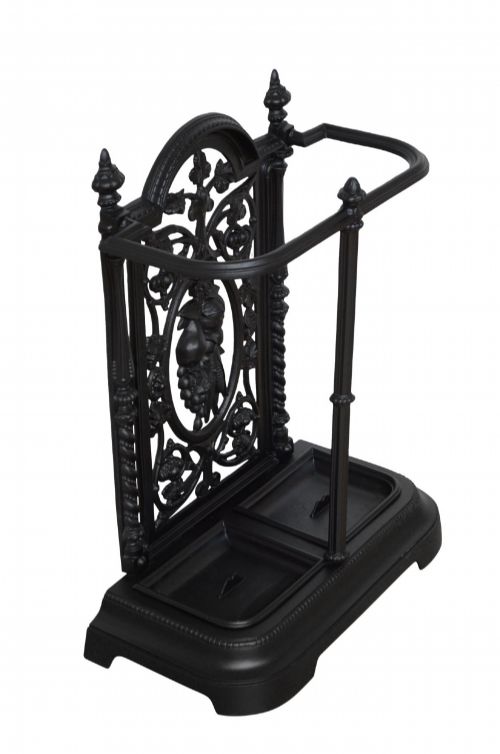
The versions most likely to meet a buyer on this page date from the nineteenth century, including Victorian and Edwardian periods. Examples vary from plain black pieces to ornate French Art Nouveau designs and dual-material combinations involving brass and pitch pine.
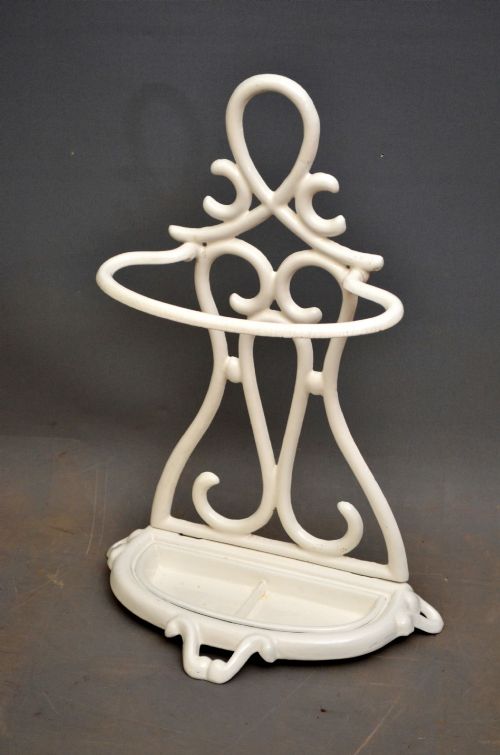
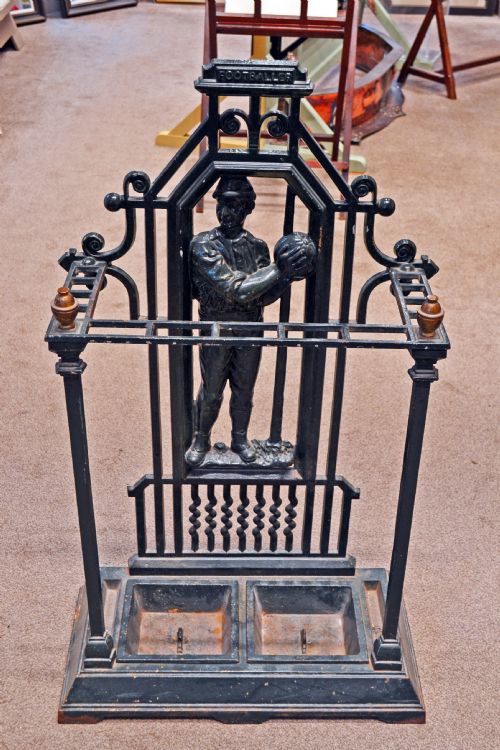
Forms range from oval and circular frames to architectural portico shapes and figural pieces like a footballer stick stand. Some models incorporate white enamel finishes or built-in umbrella loops to catch drips from wet items.
How they were made
These items rely primarily on cast iron, shaped in moulds to create openwork patterns, structural frames, and heavy bases capable of supporting tall sticks without tipping. Manufacturers sometimes integrated brass elements or utilised pitch pine for backing structures.
Surface treatments included protective black paint or white enamel finishes applied to the interior drip pans or bodies to prevent rusting from damp umbrellas.
Among the heavy metal hall furnishings, a cast iron footballer stick stand offers an unexpected sporting motif for the Victorian hallway.
What varies in quality
The sophistication of the casting work separates standard production pieces from finer examples, with intricate Art Nouveau curves or detailed figural subjects showing greater artistic ambition. The complexity of the design and the crispness of the moulded details define the visual merit of the piece.
Material combinations also influence the standing of an item, as mixed-media constructions pairing iron with brass or utilising pitch pine demonstrate more elaborate craftsmanship than plain utilitarian stands.
The Cast Iron Brolly Stand Glossary
- Cast iron
- A strong, heavy alloy of iron and carbon poured into moulds to form rigid objects. It provides the essential weight needed to prevent umbrella stands from toppling.
- Portico stick stand
- A hall stand designed with an architectural framework resembling a classical portico. This form often includes overhead bars and dedicated divider loops.
- Enamel finish
- A vitreous or painted coating fused to metal surfaces to provide a smooth, waterproof layer. It frequently lines the base of stands to catch moisture.
- Pitch pine
- A durable, resinous wood utilised in nineteenth-century furniture construction. It occasionally forms the body or backing of mixed-material hall stands.
Cast Iron Brolly Stand: Frequently Asked Questions
What is a cast iron brolly stand?
A cast iron brolly stand is a heavy hall furnishing built to hold wet umbrellas and walking sticks. It provides a stable, dedicated place to store damp items near an entrance.
These pieces typically feature openwork metal frames and integrated drip trays to protect hallway floors. Nineteenth-century examples often display Victorian or Art Nouveau design characteristics.
How do you use a stick stand?
Stick stands sit in hallways or porches to keep long items upright and contained. They prevent umbrellas and canes from sliding around or falling over.
The base catches water dripping from wet canopies, while upper rings or dividers keep multiple items separated and easy to grab.
Are all these stands made of iron?
Not all stands are made exclusively of iron, although the material forms the primary structure for the category. Some examples combine cast iron with brass components or pitch pine elements.
Other variations include applied white enamel finishes on the interior surfaces to manage moisture and simplify cleaning.
How do you date a Victorian umbrella stand?
Dating a Victorian umbrella stand involves examining the stylistic clues present in the casting, such as floral motifs or architectural portico details. Material combinations like brass and pitch pine also point towards nineteenth-century manufacturing trends.
Makers occasionally drew inspiration from French Art Nouveau styles or specific regional aesthetics prevalent during the period.