










Black Marble Base
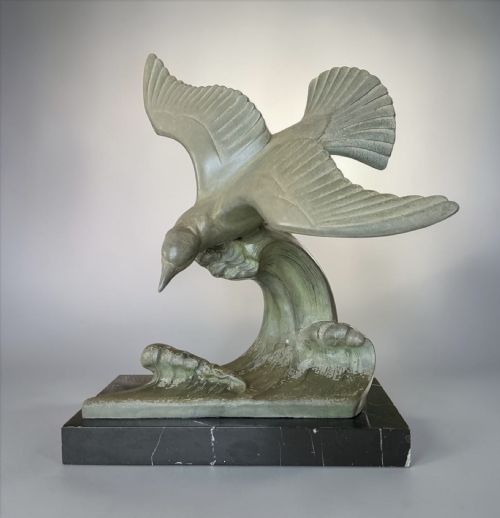
A black marble base grounds figurative bronzes, decorative objects and sculptural lamps with dark, heavy contrast.
Black Marble Base
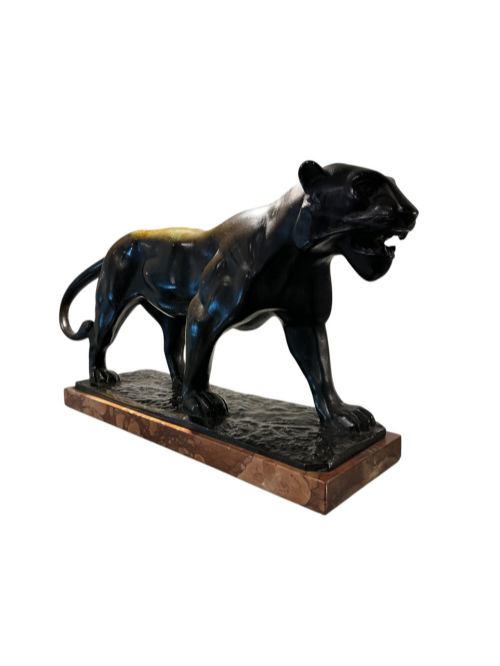
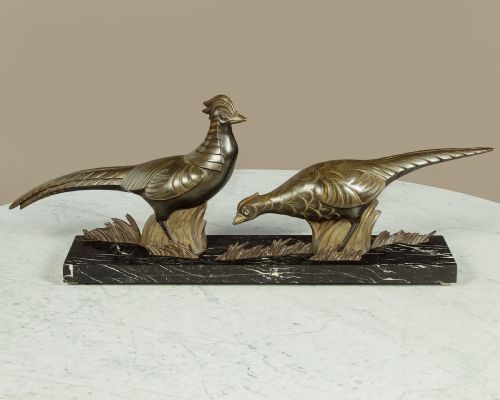
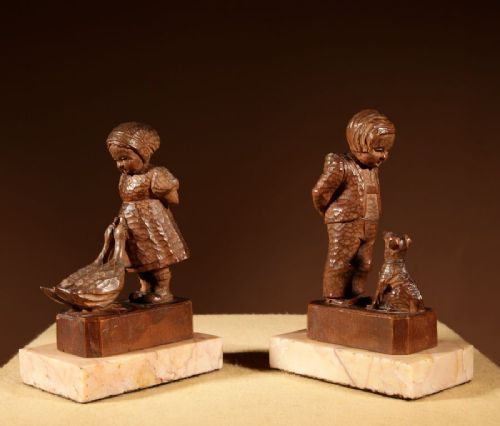
A black marble base appears primarily beneath twentieth-century Art Deco sculptures, nineteenth-century Grand Tour bronzes, and various decorative objects. Figures of animals, dancers, and mythological subjects stand directly upon these dark plinths.
The objects span periods from the Victorian era through the 1940s, originating largely from French and Italian workshops. Alongside pure sculptures, table lamps and occasional furniture integrate this dark stone.
Buyers seeking a black marble base encounter rectangular blocks, stepped plinths, and circular platforms supporting bronze, gilt bronze, spelter, or carved figures.
Materials and Technique
Pieces combine natural stone with cast metals, mounting bronze, patinated bronze, gilt bronze, or spelter figures onto heavy blocks of polished marble. Craftsmen shaped the stone bases to complement the metallic figures fixed upon them.
Sculptural figures utilise casting methods like the lost-wax technique before mounting to the stone plinths using threaded rods or pins. The stone surfaces receive a smooth polish to contrast with textured patinated or cold-painted metal above.
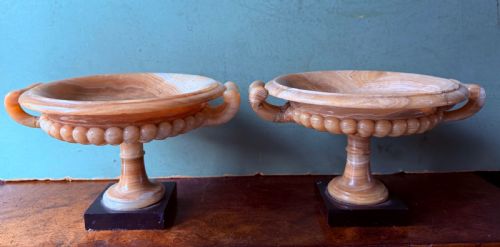
Materials appearing alongside black marble include bronze, gilt bronze, brass, spelter, onyx, and carved alabaster.
Gradations in Quality
Quality rests in the precision of the metal casting and the depth of the figure's chasing, alongside the density and grain of the supporting stone. Superior examples display crisp anatomical detail and secure, flush mounting between the sculpture and the plinth.
Lesser items substitute lighter spelter for bronze and rely on simple cast metal finishes rather than detailed cold painting or rich patination. The finishing of the stone edges and the absence of clumsy repairs distinguish finer studio pieces from standard production.
Bruno Zach·Pierre le Faguays·Ferdinand Preiss·Demetre Chiparus·Eugene Emile Borga·I Rochard
The Black Marble Base Glossary
- Patinated bronze
- Metal treated with chemical solutions to produce a specific surface colour and tone. This process protects the bronze while enhancing its visual depth.
- Spelter
- A zinc alloy frequently utilised as a less costly alternative to bronze during the art deco period. It often receives a bronze-coloured coating to mimic heavier metal.
- Grand Tour
- Souvenir objects acquired by nineteenth-century travellers visiting classical sites in Italy. These frequently comprise small bronzes mounted on marble blocks.
- Cold painted
- Paint applied to a bronze figure without subsequent heat firing. The technique produces vibrant surface coloration on early twentieth-century sculptures.
Black Marble Base: Frequently Asked Questions
Are these bases original to the sculptures?
Most period pieces retain their original matching plinths, fitted during initial manufacturing. Makers designed the stone dimensions specifically to counterbalance the weight and proportions of the mounted figure.
Inspect the mounting points underneath the stone for period fixings like slotted screws or threaded pins. Original pairings show consistent wear patterns between the metal sculpture and the supporting marble.
What is the difference between bronze and spelter?
Bronze is a durable copper alloy that accepts fine chasing and holds rich patination over centuries. Spelter is a softer, lighter zinc-based metal that was widely utilised for affordable decorative figures during the art deco era.
Lifting the piece usually reveals the difference, as bronze feels considerably heavier than spelter of the same size. Examining the underside can also expose the paler grey metal beneath worn areas of a spelter casting.
Where should I place these heavy objects?
Position these pieces on sturdy, level surfaces such as sideboards, heavy desks, or dedicated occasional tables. The combination of dense stone and cast metal creates a high overall weight that requires stable support.
Keep the items away from direct sunlight and strong heat sources to protect any cold-painted finishes or patinated surfaces on the figures above. Ensure the placement area has adequate clearance to avoid accidental knocks to projecting parts.