



Black Longcase Clock
A black longcase clock brings dark lacquer, ebonised wood and quiet rhythm to a hallway, grounding the room with eighteenth-century presence.
Black Longcase Clock
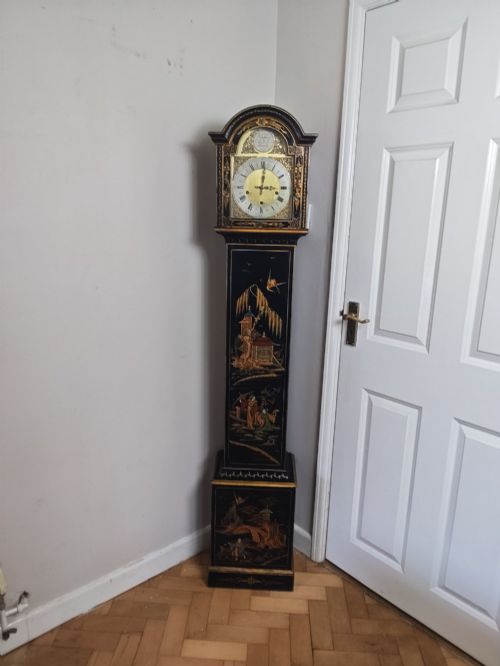
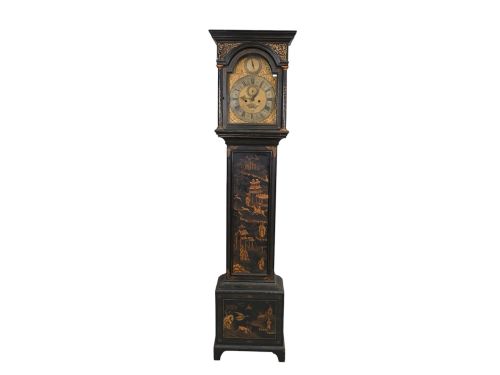
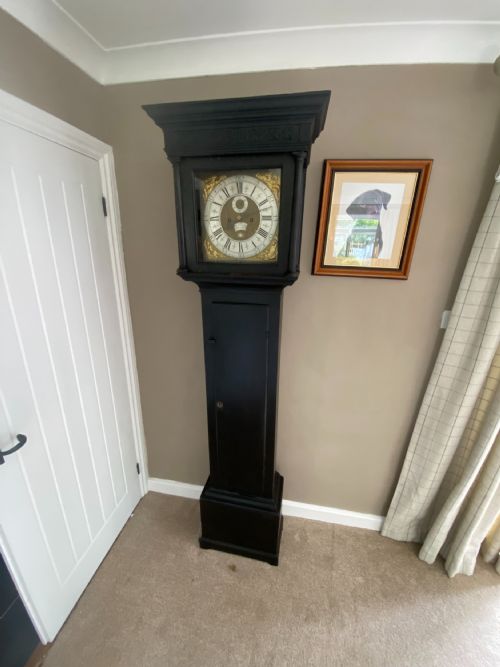
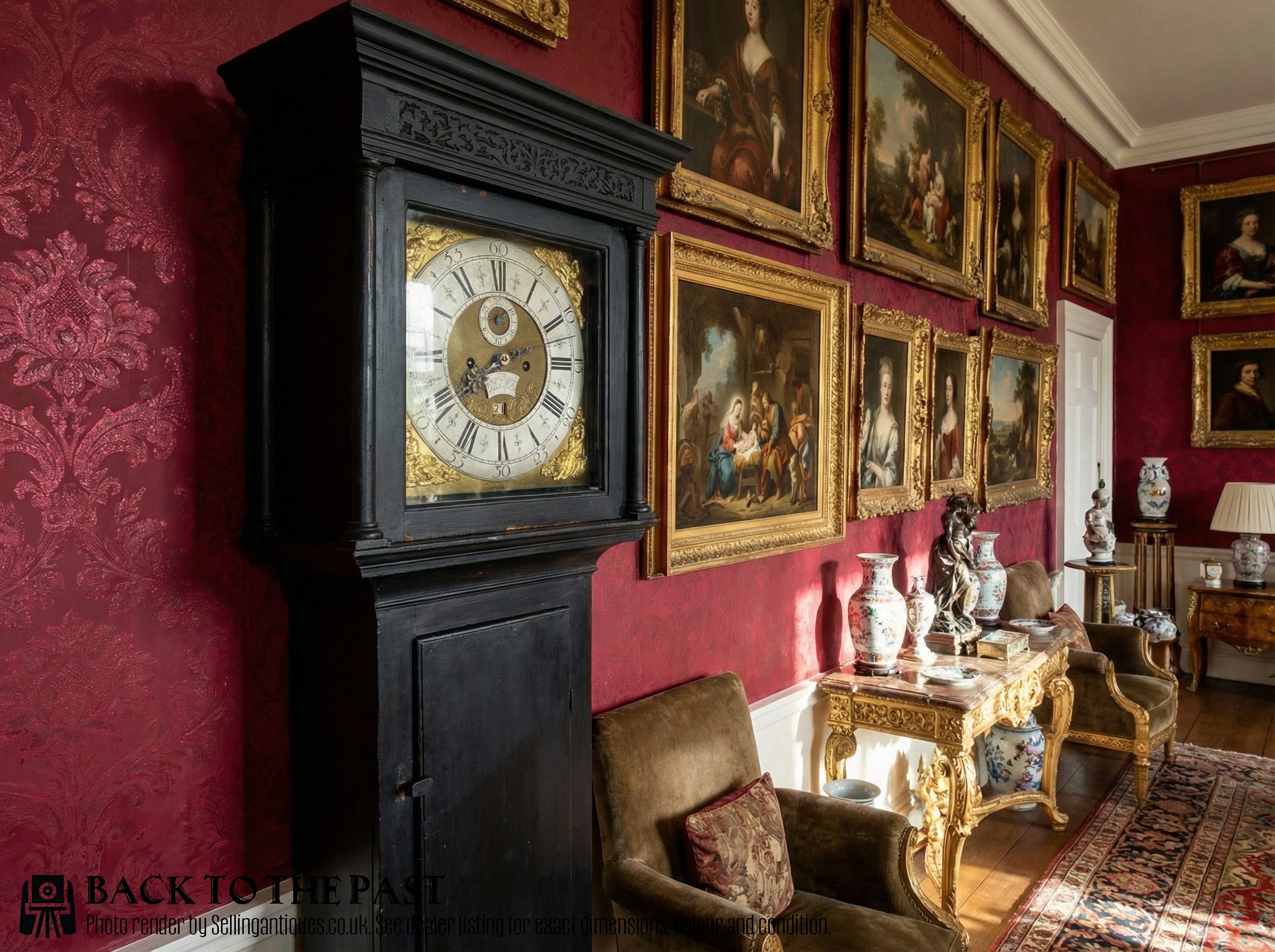
A black longcase clock stands as a tall wooden case enclosing a pendulum and weights, driven by brass movements. These pieces range from early walnut and ebony examples to later Japanned and Chinoiserie decorations.
The version most commonly met on this page is the eighteenth-century Chinoiserie or lacquered grandfather clock, decorated with raised figures and gold detailing. Smaller grandmother clocks and twentieth-century variations also appear among the listings.
Makers such as Wise of Reading, Thomas Utting of Yarmouth, and John Drew shaped these objects during the seventeenth and eighteenth centuries. Later German movements from the Black Forest and Art Deco periods bring alternative chimes and oak cases.
How they were made
Carinthian and English craftsmen built these cases using oak, pine, or ebonised wood, preparing the surfaces for layers of dark lacquer or black paint. Japanned decoration involved applying layered varnishes and raised metallic motifs in gold or red to simulate oriental screens.
Movements were constructed from brass and steel, featuring intricate gear trains for timekeeping and occasionally musical carillons or Westminster chimes. Glass doors protected the dial faces while allowing the slow swing of the brass pendulum to remain visible.
Some nineteenth-century makers installed patent chimes inside black cases, ensuring that solemn midnight hours arrived with musical accompaniment.
What varies in quality
The depth and preservation of the lacquer decoration set pieces apart, particularly where gold leaf and raised Chinoiserie details retain their original crispness. Subtle differences in the hand-painted figures reveal the skill of the regional or London artisan who decorated the case.
Movement integration matters greatly, as original brass dials signed by makers like William Tomlinson or Robert Berry carry distinct historical weight. The proportion of the trunk and the preservation of the original hood mouldings complete the measure of a superior piece.
Wise of Reading·Thomas Utting of Yarmouth·William Tomlinson·Benjamin Rogers·John Drew·Robert Berry·J and T Black·James Black·William Blackburn·Baduf
The Black Longcase Clock Glossary
- Chinoiserie
- European decorative style inspired by Chinese art and design, featuring painted or raised motifs of landscapes, figures, and pagodas. This technique defined many eighteenth-century longcase clock surfaces.
- Japanned wood
- European imitation of East Asian lacquerwork achieved through layered varnishes, often finished in black with gilt decoration. The process required multiple stages of drying and polishing.
- Ebonised wood
- Timber treated with stains, dyes, or finishes to resemble ebony. This dark treatment provided a sombre, formal appearance on seventeenth-century clock cases.
- Grandmother clock
- Smaller version of the traditional longcase clock, typically produced in the twentieth century. These shorter cases suit more compact rooms while housing standard chime movements.
- Carillon
- Musical mechanism within a clock that plays a sequence of tunes using bells or gongs. This system often accompanied the standard timekeeping train in later models.
Black Longcase Clock: Frequently Asked Questions
How do I wind a longcase clock?
Winding requires pulling the cords or using a crank key to raise the heavy brass weights inside the trunk. Care must be taken not to overwind the mechanism, which can damage the internal springs or gut lines.
Most eight-day movements need attention once a week, while thirty-hour versions require daily winding. Keeping a consistent schedule helps maintain the accuracy of the pendulum swing.
Where should I place a longcase clock?
These clocks require a stable, dry interior wall away from direct sunlight, central heating vents, and exterior doors. Placed on a solid floor, the case can stand straight without rocking.
Positioning the piece in a hallway or quiet room allows the pendulum beat and hourly chimes to resonate naturally through the space without competing with modern household noise.
How do I tell an 18th century clock from a later one?
Eighteenth-century examples show hand-cut brass movements, oak or pine carcases beneath dark lacquer, and square or arched dials signed by regional makers. The proportions reflect Georgian craftsmanship and joinery techniques of the period.
Later twentieth-century versions, such as those from the Art Deco or Black Forest periods, often feature patent numbers, Westminster chimes, and machine-toothed movements housed in distinct oak cases.
What is the difference between a grandfather and grandmother clock?
A grandfather clock is the traditional full-size longcase clock, standing over six feet tall to accommodate long pendulums and heavy weights. They were designed as substantial architectural fixtures for primary rooms.
A grandmother clock is a smaller, slender variant, frequently produced during the early twentieth century. These shorter versions fit into lower ceilings and narrower hallways while retaining chime functions.