


Painted Oak Grandfather Clock
A painted oak grandfather clock brings the steady tick of centuries into a room, combining honest regional cabinetry with colourful dial artistry.
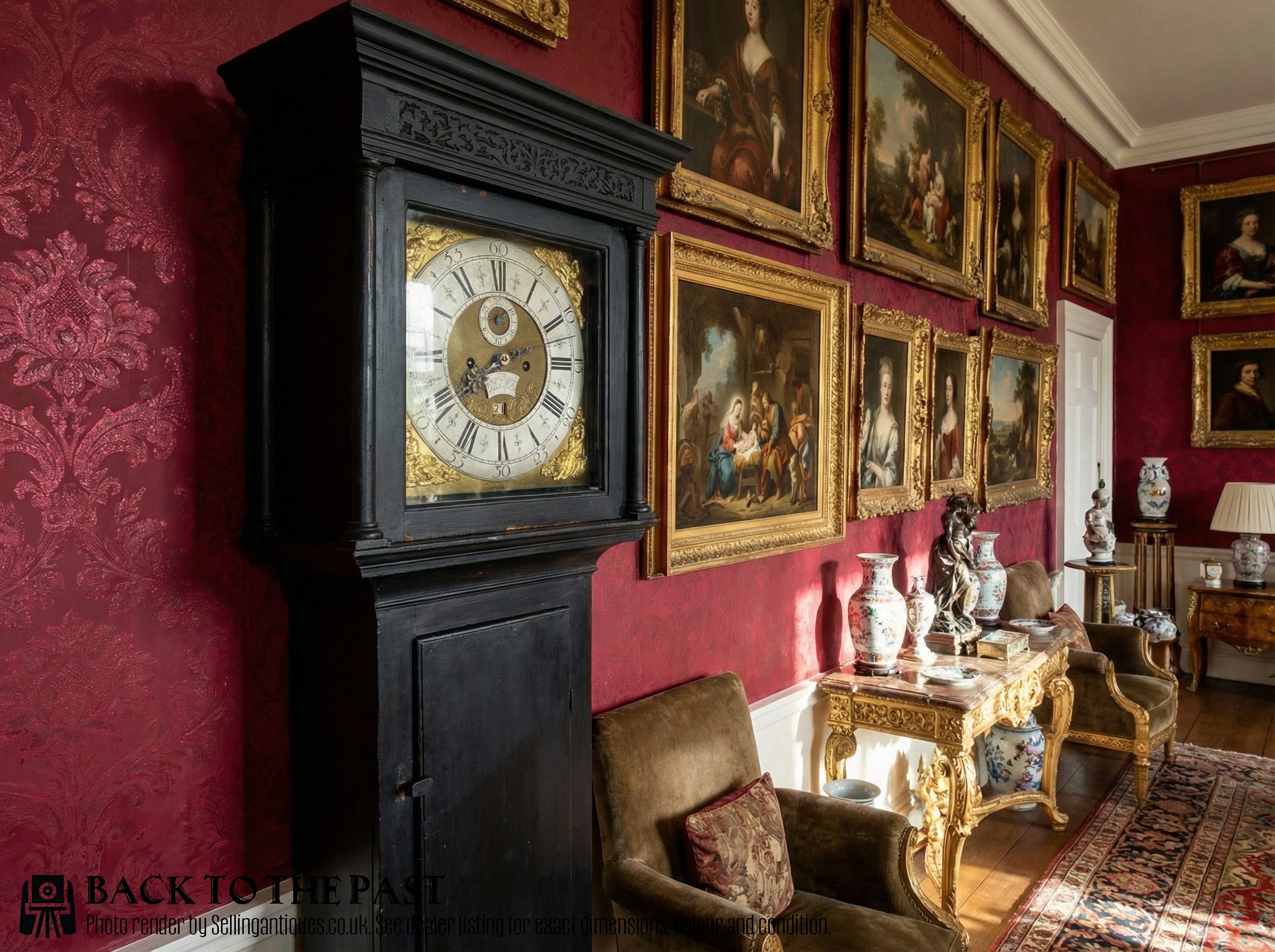
Painted Oak Grandfather Clock
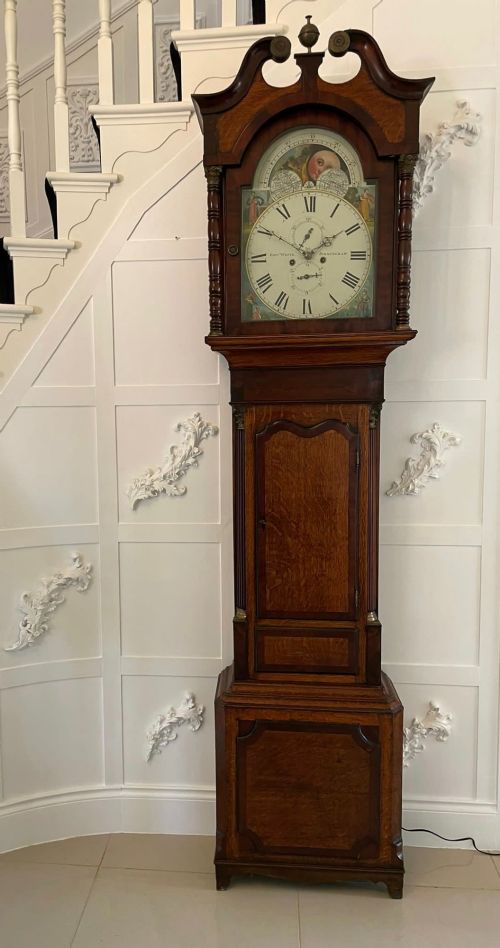
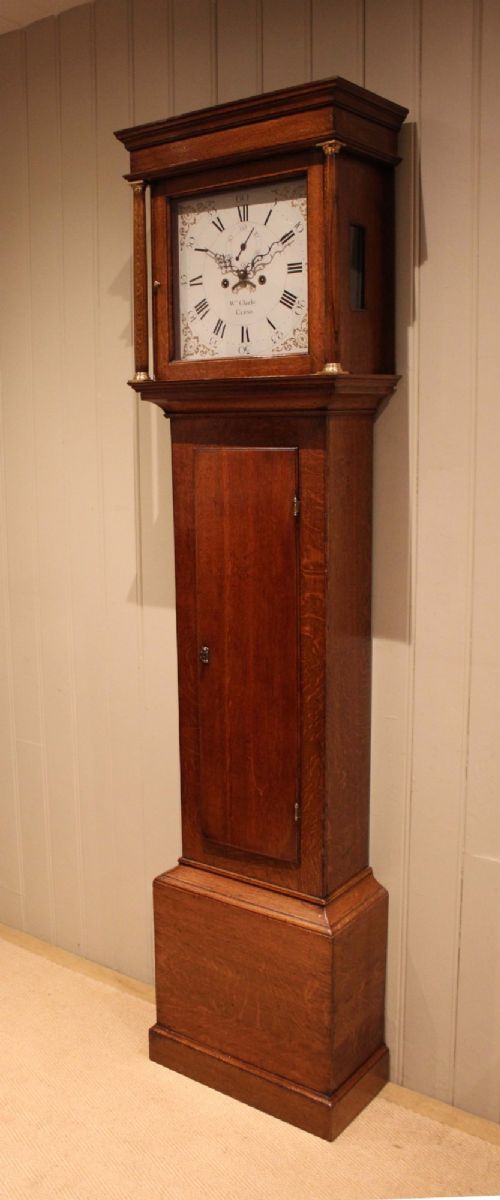
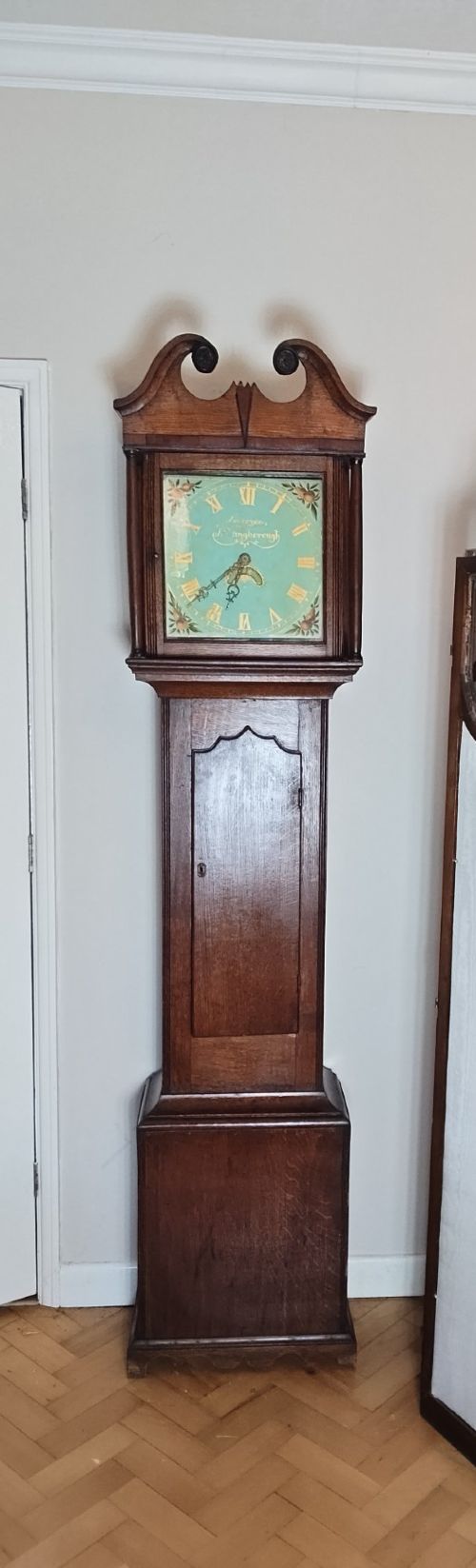
When you search for a painted oak grandfather clock, you are looking at tall domestic timepieces that span the Georgian, Regency and Victorian eras. These floor-standing pieces combine sturdy local timber cases with hand-painted dials, often featuring arch details, calendar apertures or rolling moon phases.
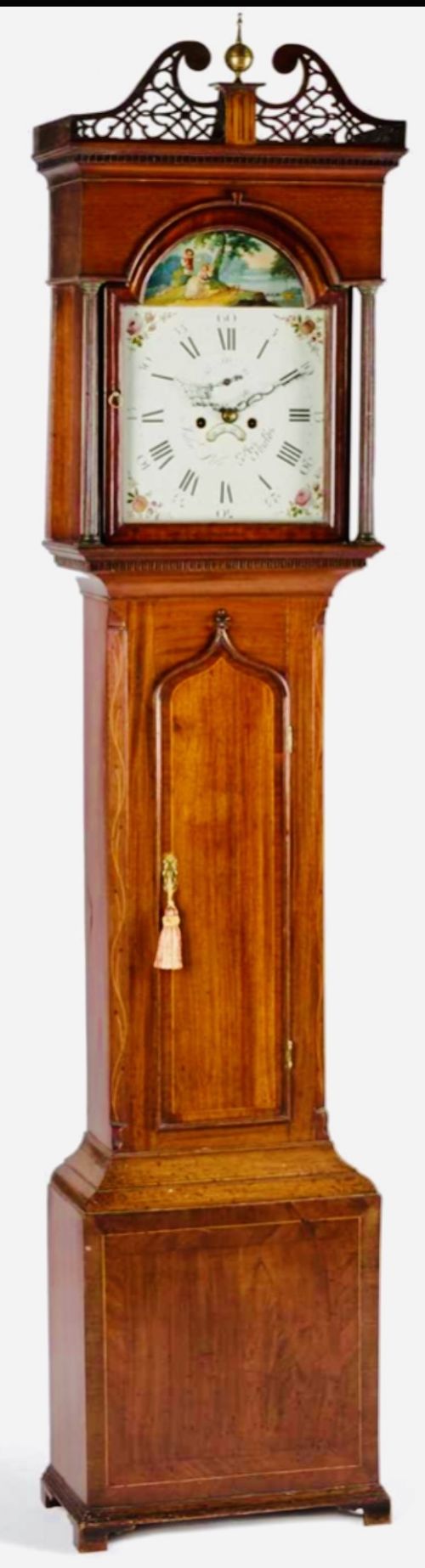
On this page, you will most frequently meet George III and wider 18th-century examples alongside early 19th-century variants. Many pair substantial oak bodies with contrasting mahogany banding, reflecting the regional workshops of makers from Birmingham to Wales and Scotland.
Materials and construction
Cabinetmakers built these tall cases primarily from solid oak, sometimes banding the grain with mahogany for a richer visual contrast. Iron and brass formed the complex gear trains within, while painted iron or metal dials provided the canvas for local artists.
The exteriors relied on traditional joinery techniques, housing either thirty-hour or eight-day movements behind glazed doors. Paint and gilt finished the clock faces, displaying floral motifs, maritime scenes or allegorical figures alongside maker signatures.
Some dials feature charmingly naive hand-painted moon faces that squint cheerfully across the room regardless of the lunar cycle.
What separates the grades
Quality in these longcase clocks rests upon the crispness of the cabinetwork and the artistic execution on the dial. Cases with well-figured timber, intelligent proportions and original brass fittings stand clearly apart from lesser, heavily restored examples.
The movement itself dictates the upper tier of the range, particularly complex eight-day mechanisms and rolling moon phases signed by notable regional clockmakers. Dial artistry also plays a decisive part, where finely detailed hand-painted scenes elevate a piece above standard production.
Thomas Webbe of New Quay·Edward White Birmingham·David Craig Ford Path head·Richard Prew Of Tewksbury·Richard Alexander Devizes·James Coster Of Henley·John Salmon Nantwich·Grocott Holywell·Nicholas of Birmingham·Walker of Nantwich·Benjamin Rogers·W Prior Skipton·Richard Northen·Hudfon Of Nottingham·Rob Parry Pwllheli·Anthony Binks·Preddy of Langport
The Painted Oak Grandfather Clock Glossary
- Longcase clock
- A tall pendulum clock housed in a wooden case designed to stand directly on the floor. These are commonly referred to as grandfather clocks by collectors.
- Moon phase
- A mechanical display on the dial tracking the lunar cycle through a rotating painted disk. This complication required precise gear ratios behind the clock face.
- Eight-day movement
- A clock mechanism requiring winding only once a week rather than every day. These systems typically utilised two heavy weights suspended inside the trunk.
- Arch dial
- A clock face featuring a curved upper section above the main circular chapter ring. This space often houses painted subsidiary scenes or maker signatures.
- Mahogany banding
- Thin strips of imported reddish timber inlaid into the oak case structure. Cabinetmakers utilised this technique to create decorative borders around the door and trunk edges.
Painted Oak Grandfather Clock: Frequently Asked Questions
How do I tell a thirty hour clock from an eight day clock?
Thirty-hour movements generally require a single drive weight and shorter cords, designed for simpler daily operation in modest homes. Eight-day versions utilise two weights and more intricate gear trains to keep time across a full week.
Looking inside the trunk often reveals the mechanical difference immediately. An eight-day clock employs dual lead weights, whereas a thirty-hour version relies on one lighter weight or occasionally a spring-driven variant.
Where were these regional clocks originally made?
British clockmakers operated in towns and cities across England, Wales and Scotland, marking dials with their business locations. Provincial hubs such as Birmingham, Nantwich and various Welsh parishes produced distinct regional cabinet styles.
Local joiners built the oak cases using native timber available in their specific counties. This creates distinct regional variations in mouldings and wood selection across different parts of Britain.
Why do some oak clocks feature mahogany banding?
Cabinetmakers introduced mahogany banding during the late Georgian period to add fashionable contrast to plain local oak. This decorative inlay work brightened the appearance of the tall case without requiring an entirely expensive mahogany construction.
Trade routes brought exotic timber into British ports, allowing provincial makers to incorporate these darker strips around door frames and trunk edges. It serves as a useful indicator of late eighteenth or early nineteenth-century manufacture.