

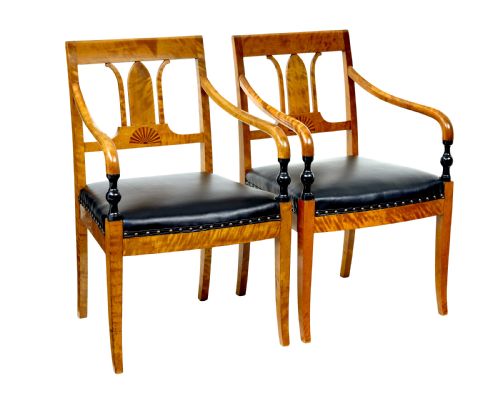
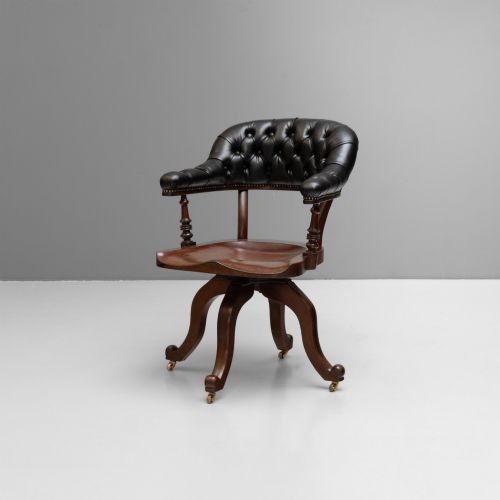


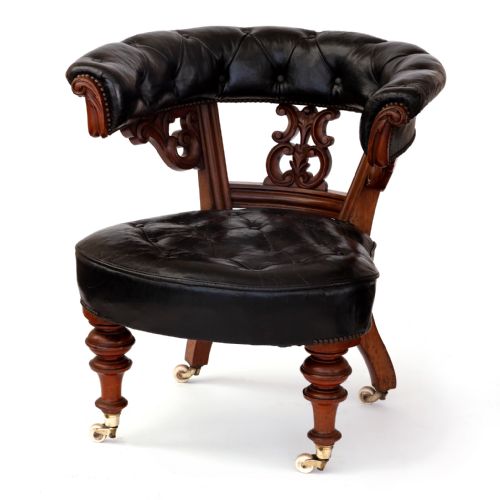

Black Leather Armchair
A black leather armchair brings substance to a room, offering deep comfort paired with the rich character of aged hide.
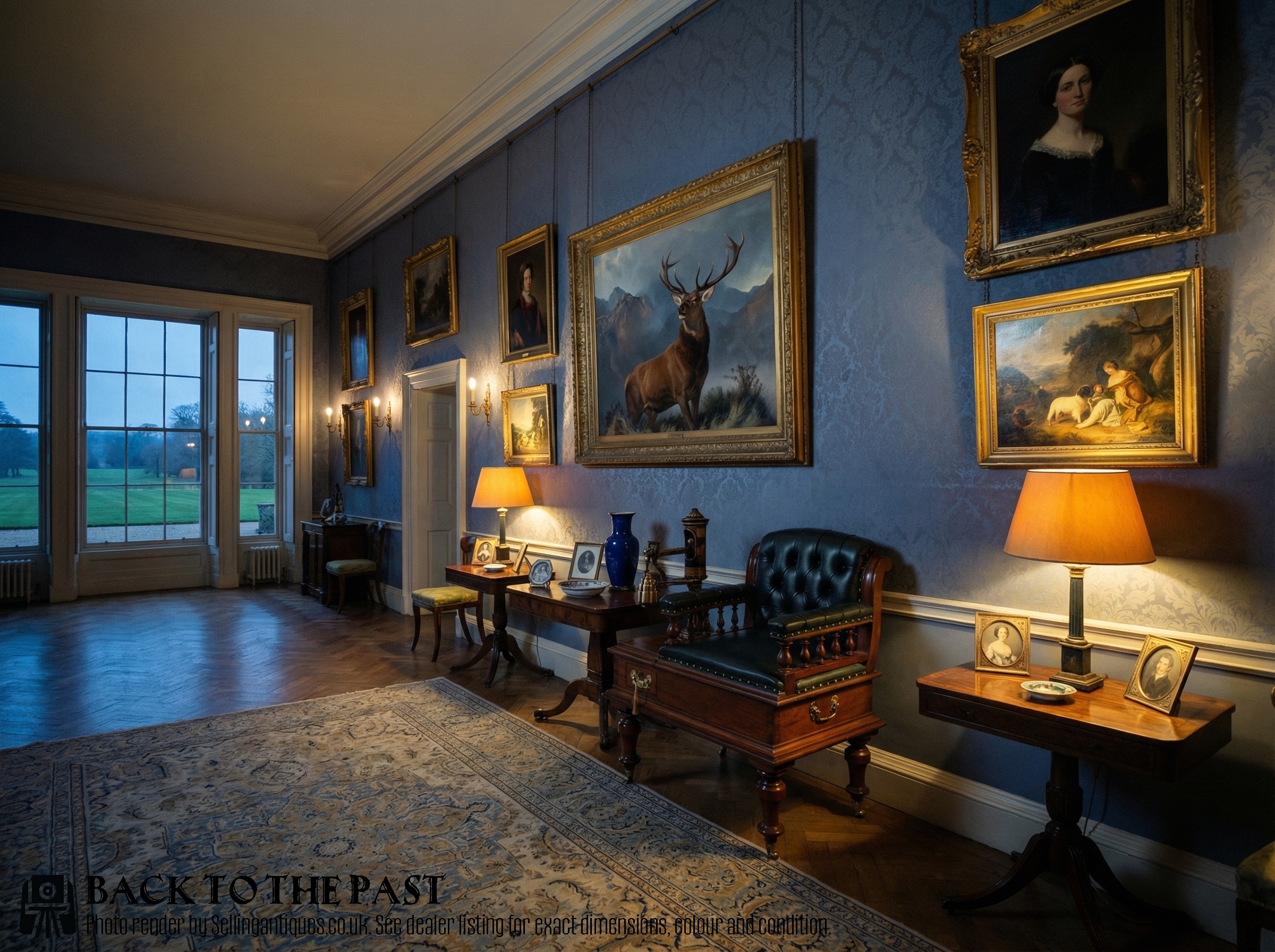
Black Leather Armchair
A black leather armchair combines seating utility with formal presence, spanning library chairs, swivel desk chairs, and carver seats. You will frequently encounter nineteenth-century mahogany and oak library forms alongside revolving desk variants.
The selection extends from Regency and Victorian iterations to Art Deco designs, taking in French Empire and Biedermeier expressions. These pieces range from heavy carved walnut frameworks to simpler open-arm chairs and folding campaign pieces.
How they were made
Makers built the structural frames using dense timbers such as mahogany, oak, walnut, and birch, often incorporating ebonised wood or hardwood details. Brass hardware, metal elements, and iron reinforcements provided mechanical strength and decorative contrast.
Upholsterers applied leather over padding to seats, backs, and armrests, sometimes finishing the edges with brass studs. Carving, turning, and shaping of the wooden frames required skilled joinery to support the weight and movement of the chairs.
Black Leather Armchair Retail Price Guide 2026
Typical asking prices for black leather armchair among the pieces listed under this phrase on Sellingantiques today, from the lower quarter to the upper quarter. They describe what is for sale here now, not the wider market.
One extraordinary nineteenth-century mahogany piece listed here measures the weight of objects rather than sitting readers.
What varies in quality
The refinement of the timber carving and the architectural proportion of the frame set superior examples apart from standard workshop production. Details such as swivel mechanisms, revolving desk functions, and original leather coverings dictate the historical integrity of each piece.
Pairs and matching sets demonstrate higher initial investment than single chairs, reflecting coordinated design and balanced execution. The weight and grain of the selected hardwoods, alongside the depth of the woodwork, indicate the standard to which the chair was built.
W.Williamson & Sons·W & T Avery·Bloomingdales
The Black Leather Armchair Glossary
- Carver chair
- An armchair designed with arms, often used at the head of a dining table or as a desk seat. These pieces frequently feature upholstered leather seats and shaped wooden frames.
- Library armchair
- A sturdy seating form built for reading rooms, typically combining heavy timber framing with upholstered leather support. They often incorporate carved woodwork or open arms.
- Revolving desk chair
- A swivelling seat designed for office and library use, allowing movement around a workspace. These versions combine a timber frame with a central rotating mechanism.
- Fauteuil de bureau
- A French desk chair style featuring an upholstered back and arms designed for writing tables. Examples often reflect nineteenth-century neoclassical proportions.
- Ebonised wood
- Timber treated to resemble ebony, creating a dark, uniform surface finish. This technique appeared on nineteenth-century frames to provide sharp contrast against lighter materials.
Black Leather Armchair: Frequently Asked Questions
How do I identify a Victorian library armchair?
Look for heavy timber frames in mahogany or oak, often decorated with carving or turned supports. These chairs usually feature wide leather-upholstered seats and backrests designed for comfort during long periods of reading.
The proportions tend to be substantial and grounded, reflecting the domestic architecture of the nineteenth century. Details like brass studding and dark wood patination help confirm the period.
Were these chairs used only for desks?
While many examples function as desk or library chairs, the category encompasses diverse forms including open armchairs, carver chairs, and revolving office seats. Pieces such as hall porters chairs and campaign chairs served entirely different household and travel functions.
Buyers select these seats according to the specific mechanical and spatial requirements of their rooms. The presence of castors, swivels, or folding frames indicates the intended manner of use.
How should I care for antique leather upholstery?
Maintain the hide by keeping the material away from direct heat sources and strong sunlight, which can dry out the surface over time. Regular gentle dusting prevents abrasive particles from settling into the grain.
Avoid heavy chemical treatments and consult a professional conservator if the leather requires conditioning or structural reinforcement. Preserving the original surface maintains the historical character of the chair.
What distinguishes Regency desk chairs from later styles?
Regency desk chairs often display classical architectural influences, including shaped back splats such as lambrequin or swag designs. The woodwork tends to feature finely carved mahogany with clean structural lines.
Later Victorian versions generally adopted heavier proportions and more elaborate carving. Comparing the joinery and decorative motifs clarifies the progression of design through the nineteenth century.