


Black Lacquered Chair
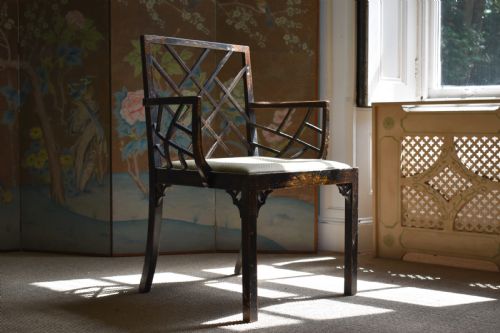
A black lacquered chair brings instant drama to a corner, combining deep dark surfaces with historic forms from the eighteenth century to the Edwardian era.
Black Lacquered Chair
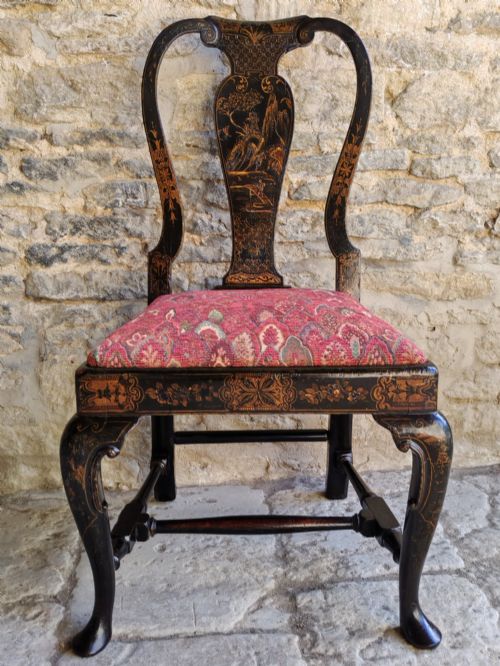
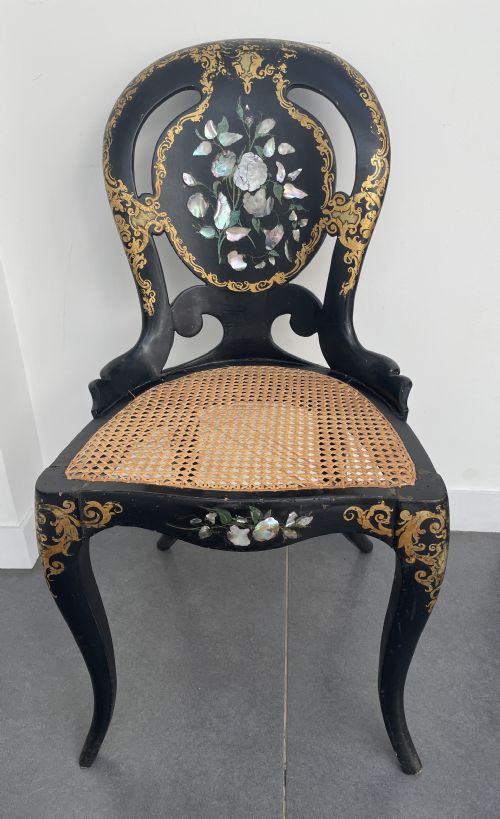
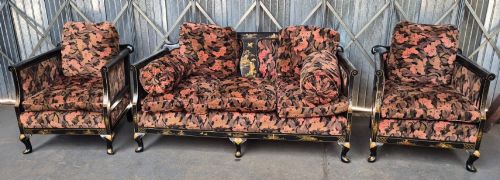
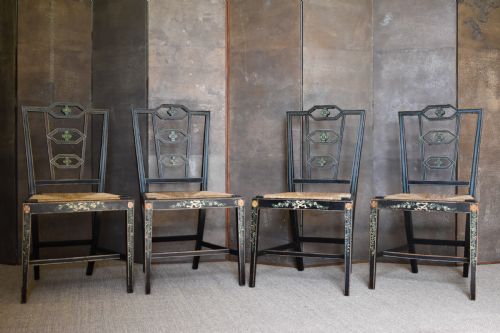
When you search for a black lacquered chair, you meet a varied group of seating ranging from early Georgian side chairs to Victorian papier-mâché bedroom pieces. The selection includes formal library armchairs, chinoiserie elbow chairs, and matching dining sets.
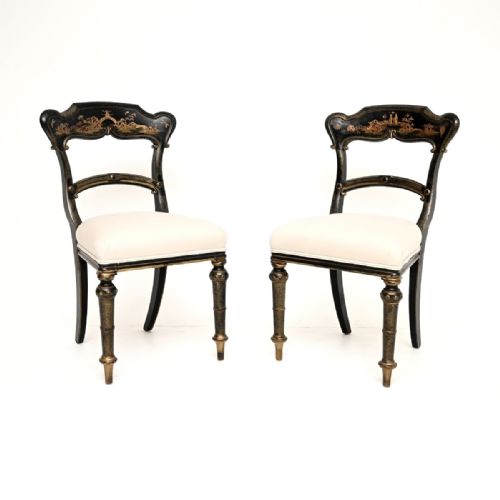
Most examples lean into decorative chinoiserie traditions or simple nineteenth-century ebonised forms. You will find single side chairs alongside pairs and larger sets suitable for a dining table.
Origins stretch from English workshops to Dutch makers, encompassing diverse styles like Queen Anne, Regency faux bamboo, and Edwardian interpretations.
How they were made
Craftsmen built these frames using traditional woods such as ebonised timber and papier-mâché, applying layers of dark lacquer to achieve a glossy finish. Artisans then added gilt decoration and hand-painted motifs to enrich the surface.
Seating portions incorporate cane work, woven textiles, and upholstered pads covered in various fabrics. Mother-of-pearl inlay also appears on select Victorian surfaces, pressed directly into the dark lacquer.
Children get their own miniature seats in the Victorian papier-mâché pieces, proving grandeur comes in pint-sized packages.
What varies in quality
The refinement of the hand-painted decoration and the crispness of the gilt detailing separate standard production from finer work. Intricate chinoiserie scenes executed with depth command greater attention than simple flat motifs.
Structural integrity of the wood and the original condition of the lacquer finish dictate overall value. Pieces retaining their early surface without heavy modern intervention hold more integrity for collectors.
The Black Lacquered Chair Glossary
- Chinoiserie
- European decorative style inspired by Chinese artistic traditions, featuring painted landscapes, figures, and motifs. It frequently appears on eighteenth-century and Edwardian furniture.
- Japanned
- European replica of East Asian lacquerwork, created through layered varnish and painted decoration. It provides the dark glossy finish seen on many historic frames.
- Papier-mâché
- Composite material made from paper pulp mixed with adhesive, pressed into moulds and dried. It formed lightweight, durable chair frames during the Victorian period.
- Bergere
- Upholstered armchair with enclosed cane panels on the back and sides. This form appears in twentieth-century iterations within the selection.
- Ebonised
- Wood treated with stain or paint to imitate expensive ebony. It serves as a dark base for gilt highlights on nineteenth-century seating.
Black Lacquered Chair: Frequently Asked Questions
How do I clean a lacquered chair?
Dust the surface gently with a soft, dry cloth to prevent scratching the glossy finish. Avoid harsh chemical cleaners or excess moisture, which can damage the aged lacquer.
For stubborn marks, use a damp cloth with mild soap, drying the area immediately afterwards. Regular gentle care preserves the delicate painted details and gilt highlights.
Are these chairs comfortable for daily use?
Many side chairs and dining chairs were designed for formal posture rather than lounging. Upholstered library armchairs and suite pieces offer more substantial support for relaxing.
Consider where you intend to place the seating and how heavily it will be used. Lighter bedroom chairs suit occasional sitting better than sturdy dining variations.
How can I tell the period of my chair?
Examine the construction methods, wood types, and decorative styles visible on the frame. Eighteenth-century examples often feature distinct Queen Anne or early chinoiserie motifs.
Victorian pieces frequently utilise papier-mâché or mother-of-pearl inlay, while Edwardian versions revive earlier chinoiserie aesthetics with different joinery. Comparing the painted details helps narrow down the era.
Can I mix these chairs with modern decor?
The dark reflective surfaces and bold decorative motifs provide a strong contrast in contemporary interiors. A single statement armchair anchors a minimalist room effectively.
Pairing antique side chairs with a modern dining table creates an eclectic, layered look. The historic craftsmanship adds character and visual weight to simple spaces.