


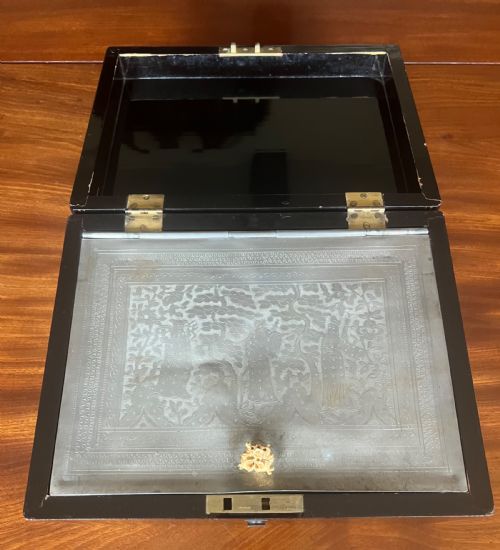


Black Lacquer Caddy
These black lacquer caddy examples bring dark, polished surfaces and intricate ornament to a room, holding the dry leaves once guarded like currency.
Black Lacquer Caddy
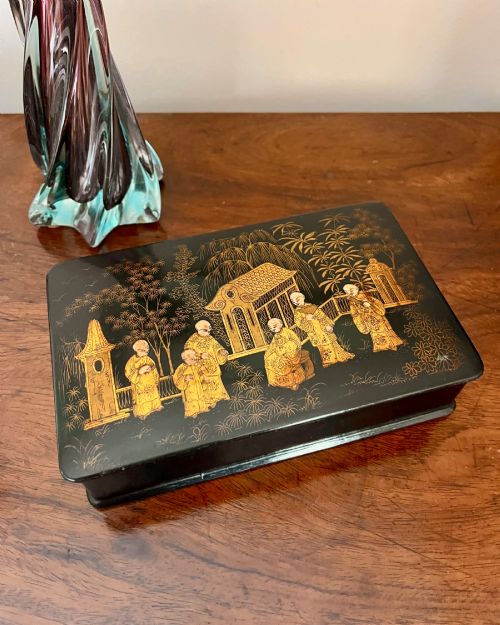
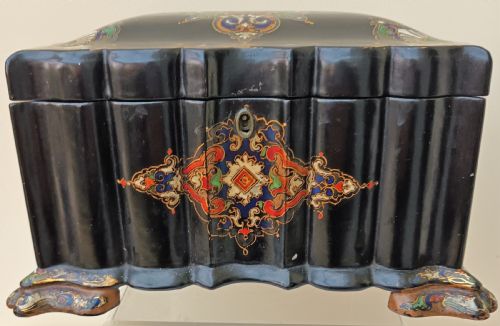
A black lacquer caddy satisfies the search for dark-finished storage vessels designed for loose leaf tea during the Georgian, Regency, and Victorian eras. These containers range from Chinese export pieces to English interpretations featuring orientalist motifs.
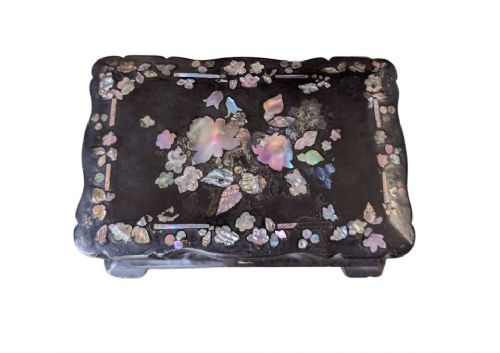
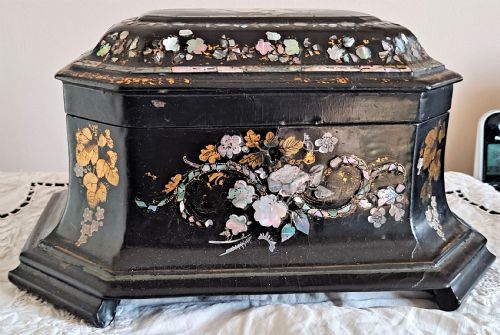
Most examples encountered on this page date from the nineteenth century, including papier-mâché tea caddies with inlaid mother-of-pearl and penwork boxes decorated with delicate figures and landscapes.
Beyond standard tea caddies, the category encompasses related forms such as spice boxes, decorative boxes, and occasional table lamps adapted from tea canisters.
Materials and construction
Construction relies primarily on wood, papier-mâché, and tôleware, built into rigid box forms before receiving multiple coats of dark lacquer. Artisans then applied gold leaf, paint, and penwork to build up pictorial scenes and botanical borders.
Many nineteenth-century specimens incorporate contrasting inlays like mother-of-pearl and bone to catch the candlelight, adding texture and shimmer to the dark ground.
Victorian tea drinkers locked their leaves away to protect them from light-fingered servants, making these boxes miniature domestic treasuries.
Judging quality in black lacquer
Quality rests on the crispness of the penwork and the durability of the lacquer surface against chipping and wear. Finer pieces display sharply rendered Chinoiserie figures and secure, flush inlays rather than flat, muddy decoration.
The interior appointments also distinguish the work, as superior boxes retain fitted compartments, mixing bowls, and original bone or ivory handles.
The Black Lacquer Caddy Glossary
- Penwork
- A decorative technique using fine ink lines on a prepared surface to simulate intricate engraving or oriental carving. It appears frequently on Regency boxes.
- Papier-mâché
- A composite material made from paper pulp or sheets of paper mixed with glue and pressed into moulds. When dry, it provided a smooth base for lacquer and mother-of-pearl inlay.
- Chinoiserie
- European artistic styles reflecting Chinese motifs and artistic traditions, popular during the Georgian and Regency periods. It defines the pictorial scenes found on many lacquered tea caddies.
- Tôleware
- Lacquered or painted sheet metal items produced in imitation of Asian lacquerware. It provides a durable alternative to wood and papier-mâché.
- Caddy
- A small box or chest once used for storing tea leaves. The term derives from catty, the Chinese pound measurement.
Black Lacquer Caddy: Frequently Asked Questions
How do I clean a black lacquer caddy?
Dust the surface gently with a dry, soft microfiber cloth to prevent scratching the delicate finish. Avoid using water, alcohol, or modern chemical polishes, which can dissolve the historical lacquer.
For stubborn grime, consult a professional restorer rather than attempting home remedies. Keeping the box away from direct sunlight and damp environments preserves the lacquer and prevents wood movement.
Were these boxes only used for tea?
While primarily manufactured to store expensive loose leaf black and green teas, many compartments held spices, sugar, or documents. As tea became more abundant and less costly, owners repurposed the vessels for sewing implements, letters, or trinkets.
Today, collectors use them for modern storage or display them as sculptural objects on side tables and mantels.
How do I tell Regency caddies from Victorian ones?
Regency examples often feature meticulous penwork, neoclassical proportions, and delicate Chinoiserie landscapes executed in monochrome or subtle gilt lines. They date from the early nineteenth century and lean toward geometric or architectural box shapes.
Victorian pieces, by contrast, frequently utilise papier-mâché with bold mother-of-pearl inlay and richer floral ornamentation. The later nineteenth-century forms tend to feel heavier and display more overt surface pattern.
What is Chinese export lacquer?
Chinese export lacquer refers to pieces made in workshops in Canton and other Chinese ports specifically for the Western market during the eighteenth and nineteenth centuries. These items combined traditional Asian lacquering techniques with European furniture forms demanded by trading companies.
They represent the cross-cultural exchange of the period, bringing authentic materials directly into British homes.