



Black Iron Hearth Andirons
These black iron hearth andirons anchor an open fire, holding logs steady across centuries of domestic warmth.

Black Iron Hearth Andirons
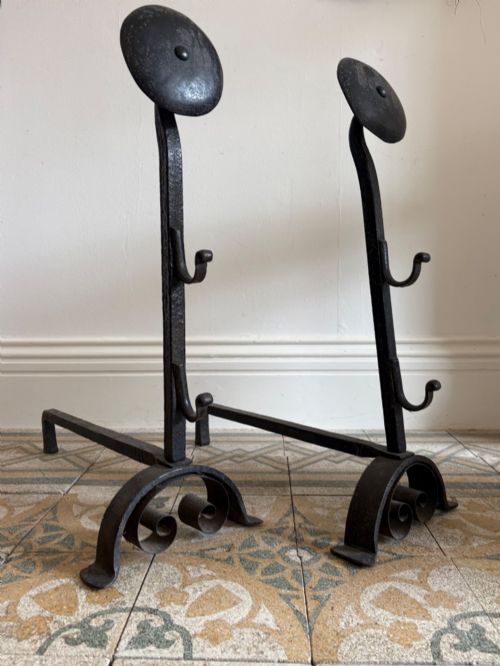
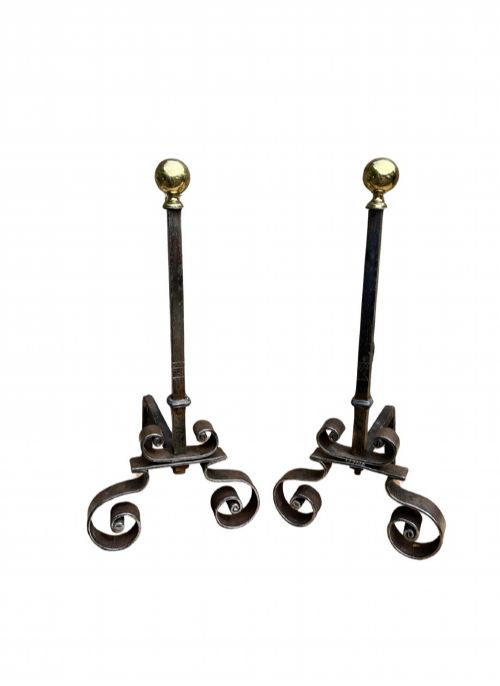
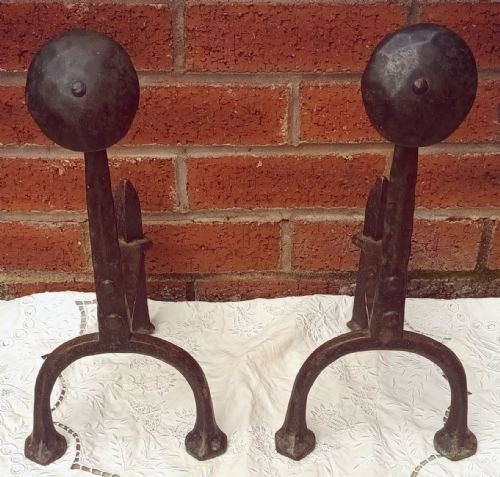
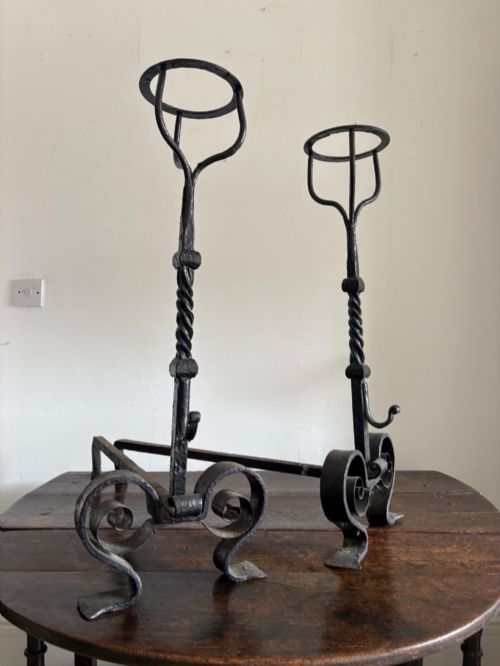
When you search for black iron hearth andirons, you look at heavy fire dogs and fire baskets designed to support wood in an open hearth. The versions most likely to meet you on this page span the nineteenth century, including Victorian, Edwardian, and Arts and Crafts examples.
Many pairs arrive alongside matching fire baskets, grates, or inglenook sets, while others stand alone as substantial forged supports. They originate from English and French workshops, utilising robust metal forms built to withstand intense domestic heat.
Materials and Method
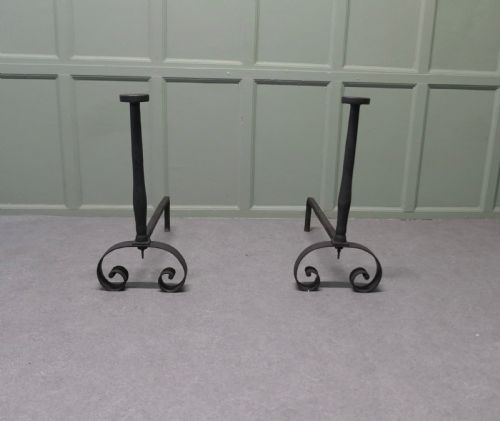
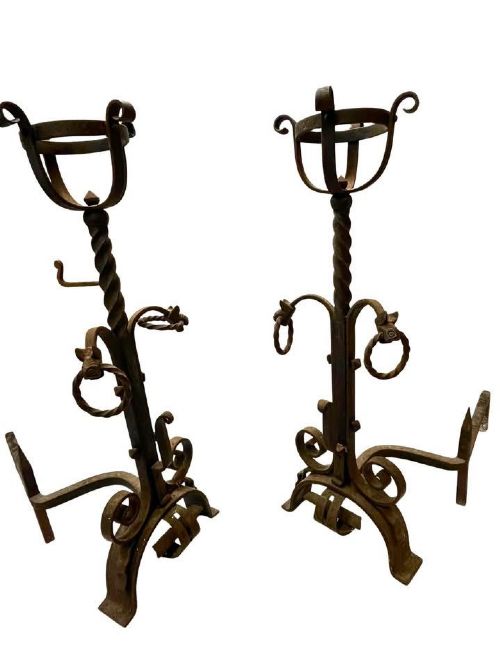
Makers shaped these pieces primarily from wrought iron and cast iron, sometimes combining them with brass, copper, or firebrick components. Wrought iron versions show the hammer marks of hand-forged construction, where blacksmiths heated and bent heavy metal bars into upright standards and sturdy horizontal billets.
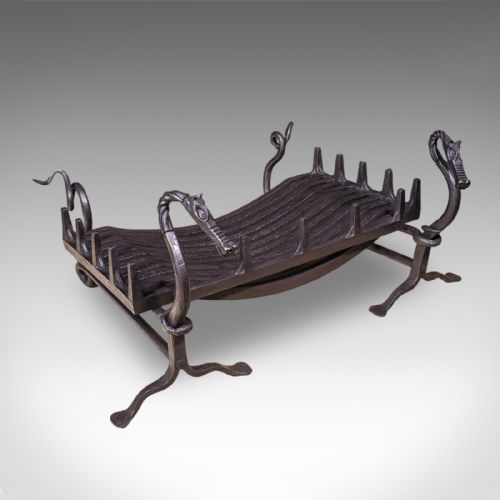
Cast iron examples relied on molten metal poured into moulds, producing decorative motifs such as dragons or gothic tracery. The combination of forged strength and cast ornamentation provided both structural endurance and visual weight beside the hearth.
Listings feature periods ranging from the sixteenth century through the Georgian, Victorian, and Edwardian eras, executed in wrought iron and cast iron.
Quality and Build
Substantial weight and material thickness separate standard utility pieces from monumental examples built for large inglenook fireplaces. The crispness of hand-forging or the precision of the iron casting reveals the skill invested by the original maker.
Proportion and stability matter greatly, as does the integrity of the joints where the vertical standard meets the horizontal support log bar. Pieces retaining their original tool rests, fire baskets, or matching grates hold greater architectural completeness.
The Black Iron Hearth Andirons Glossary
- Andirons
- Supports for firewood in an open fireplace, consisting of a vertical front standard and a horizontal bar. They elevate logs to improve air circulation and combustion.
- Fire Basket
- A metal grate holding fuel within a hearth, frequently used in combination with andirons or integrated into a single fireplace set.
- Inglenook
- A large recessed fireplace space, often requiring very heavy andirons and grates to heat the wider hearth area.
- Wrought Iron
- Iron that has been heated and hammered into shape by hand, showing characteristic surface texture and high tensile strength.
Black Iron Hearth Andirons: Frequently Asked Questions
How do I use andirons?
Place the pair facing into the hearth with the horizontal bars pointing backward into the fireplace cavity. Wood rests across these bars to allow air underneath for a steady burn.
Larger pairs can support fire baskets or hold logs in wide open hearths. Ensure the floor of the hearth is level and protected from intense heat before placing heavy iron supports.
Are these suitable for modern fireplaces?
These iron supports fit open masonry hearths and large basket grates, though measurements matter significantly. Check the depth and height of your fireplace opening against the dimensions of the metal standards.
Many examples weigh substantially and require deep hearths designed for traditional wood-burning fires. Confirm clearances before installation in contemporary chimney systems.
How do I clean black iron?
Remove loose ash and soot with a soft brush, then wipe surfaces down with a dry cloth. Avoid harsh chemical cleaners that strip the historic finish of the metal.
Applying a light coat of specialist grate polish or neutral wax helps protect the iron from moisture. Buff gently after application to maintain a natural dark sheen.
What period do most pieces come from?
The selection centres primarily on the nineteenth century, encompassing Victorian and Edwardian periods alongside earlier examples. Arts and Crafts and Gothic Revival styles appear frequently among the listed pairs.
Hand-forged nineteenth-century pieces sit alongside detailed cast iron designs from English and French makers. Each era brings distinct decorative motifs to the upright standards.