



Black Iron Fire Guard
A black iron fire guard protects a room from stray embers while bringing industrial strength and period craftsmanship to the hearth.
Black Iron Fire Guard
When you search for a black iron fire guard, you are looking at functional hearth furniture designed to contain sparks and ash. These items range from sturdy nursery guards to decorative screens, forming an essential part of period fireplace accessories.
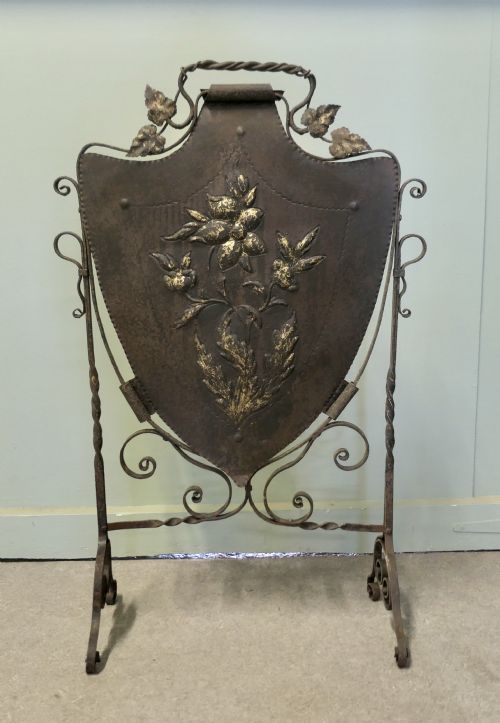
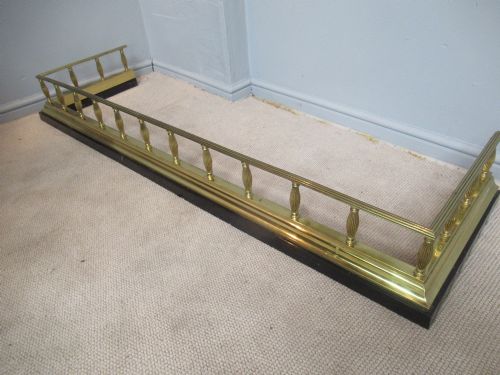
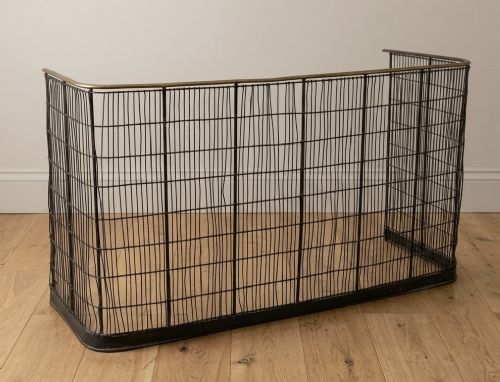
The versions most commonly met on this page date from the nineteenth and early twentieth centuries, encompassing Victorian, Edwardian, and Regency periods. They appear in forms such as folding fireguards, spark guards, and nursery fenders equipped with brass tops or clothes rails.
Makers and designers applied various historical styles to these pieces, including Gothic Revival, Arts and Crafts, and English Country House aesthetics. Whether constructed as a simple mesh barrier or an elaborate shield screen, each object reflects the domestic safety needs of its era.
How they were made
Black iron fire guards rely primarily on wrought iron, cast iron, and steel mesh for their core structural integrity. Blacksmiths and metalworkers shaped these ferrous materials through forging and casting to build durable frames capable of withstanding intense hearth heat.
Makers frequently combined iron with brass accents, gilt details, and woven wire mesh to balance heavy protection with lighter visual elements. Some domestic nursery fenders also incorporated oak components or integrated clothes rails for practical household use.
Several nursery fenders include built-in clothes rails, proving that Victorian hearth guards doubled as indoor laundry dryers when the children were safely in bed.
What varies in quality
Quality in these fire guards rests on the weight of the metalwork and the integrity of the joinery. Heavier wrought iron frames and tightly woven wire mesh indicate superior durability and skilled hand-forging compared to lighter production pieces.
The refinement of decorative details, such as Gothic shield motifs, cast iron ornamentation, and the clean integration of brass top rails, distinguishes finer examples. Surviving structural stability across folding mechanisms and screen hinges also marks the difference between standard utilitarian items and superior craftsmanship.
The Black Iron Fire Guard Glossary
- Nursery fender
- A protective barrier designed to encircle a hearth and keep children and pets at a safe distance from the fire. These guards often feature raised frames and integrated wire mesh.
- Spark guard
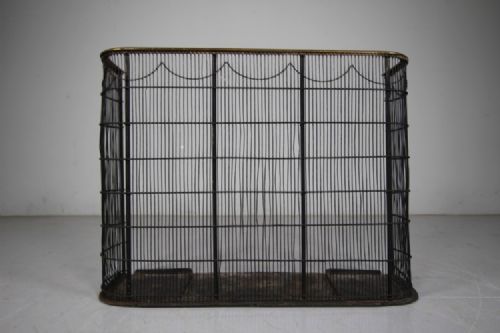
- A fine wire mesh screen positioned directly in front of an open fire to catch flying embers. They are typically lightweight and designed for easy placement and removal.
- Club fender
- A low fireside seat featuring a padded top supported by a metal frame, combining hearth protection with domestic seating. The evidence shows examples built with steel and oak.
- Gothic Revival
- An architectural and decorative style popular during the nineteenth century, characterised by pointed arches, quatrefoils, and heavy ironwork. Many fire screens on this page adopt these medieval motifs.
- Wrought iron
- Iron that has been heated and hammered into shape by hand, resulting in a fibrous structure with high tensile strength. It is the defining material for many traditional fire guards.
Black Iron Fire Guard: Frequently Asked Questions
What is a nursery fender?
A nursery fender is an extended metal barrier designed to enclose the hearth area completely. It prevents children and pets from getting too close to burning coals.
These pieces often feature tall wire mesh sides and sometimes incorporate a clothes rail for drying garments by the fire.
How do I clean a cast iron fire guard?
Cast iron fire guards should be dusted regularly with a soft brush to prevent soot accumulation. Avoid harsh chemical cleaners that can damage the historical surface.
Applying a light coat of grate polish or specialised iron wax can help maintain the dark finish and protect against moisture.
Are wire mesh screens period correct?
Wire mesh has been utilised in hearth safety equipment since the nineteenth century, particularly on Victorian and Edwardian nursery fenders. The mesh allowed heat to radiate into the room while effectively trapping sparks.
Inspectors will find wire mesh combined with brass frames and iron structures across multiple periods represented in the listings.
How do I style a heavy iron screen?
A heavy iron screen or fire guard anchors the fireplace visually, working well against traditional stone or brick hearths. It provides an immediate focal point in a period room.
Pairing the ironwork with matching companion sets or brass fire furniture balances the dark metal tones with polished highlights.