



Black Gilt Porcelain
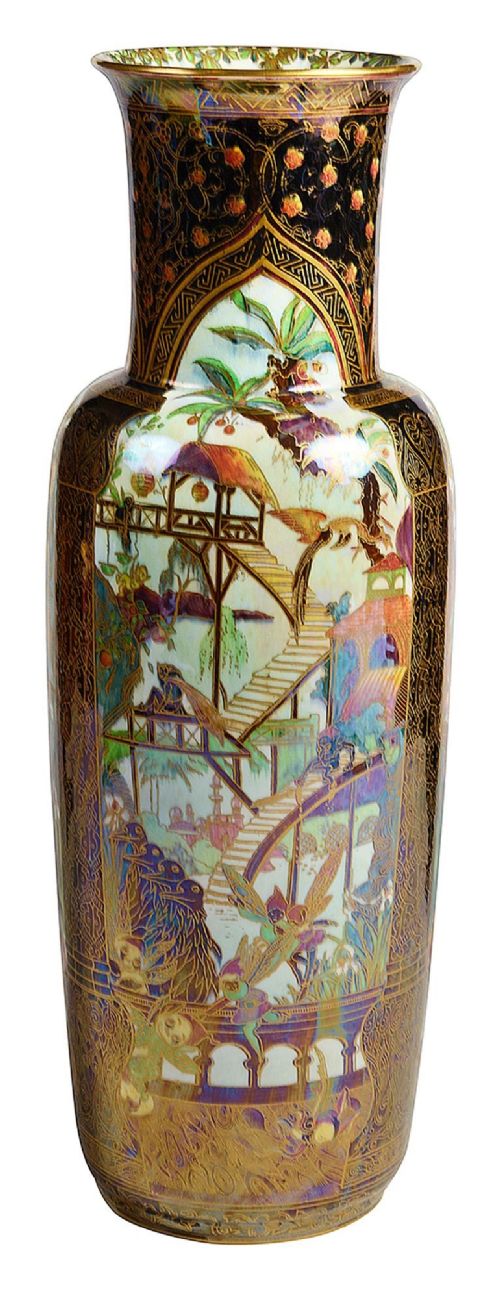
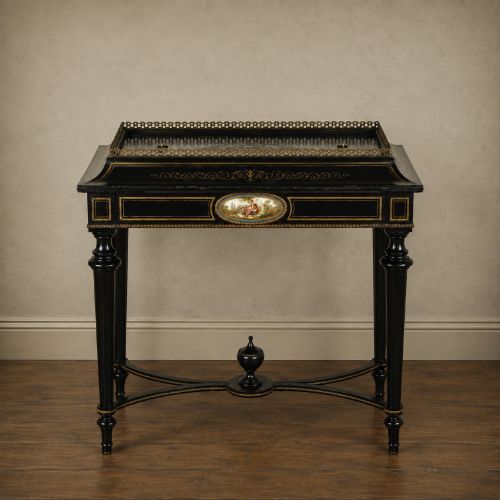
Black gilt porcelain brings together dark grounds and brilliant metallic leaf, offering a striking contrast that draws the eye across nineteenth-century cabinets and tables.
Black Gilt Porcelain
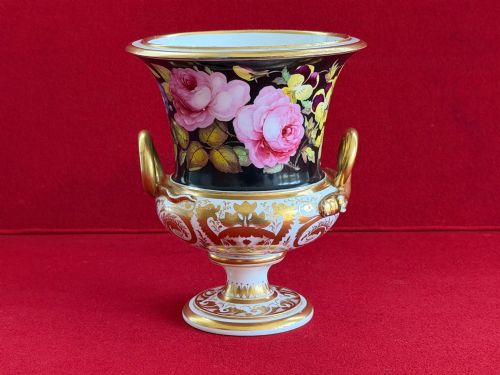
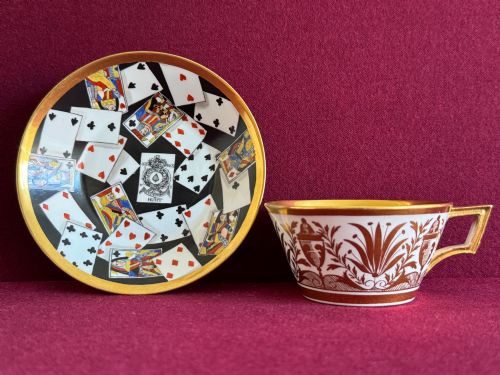
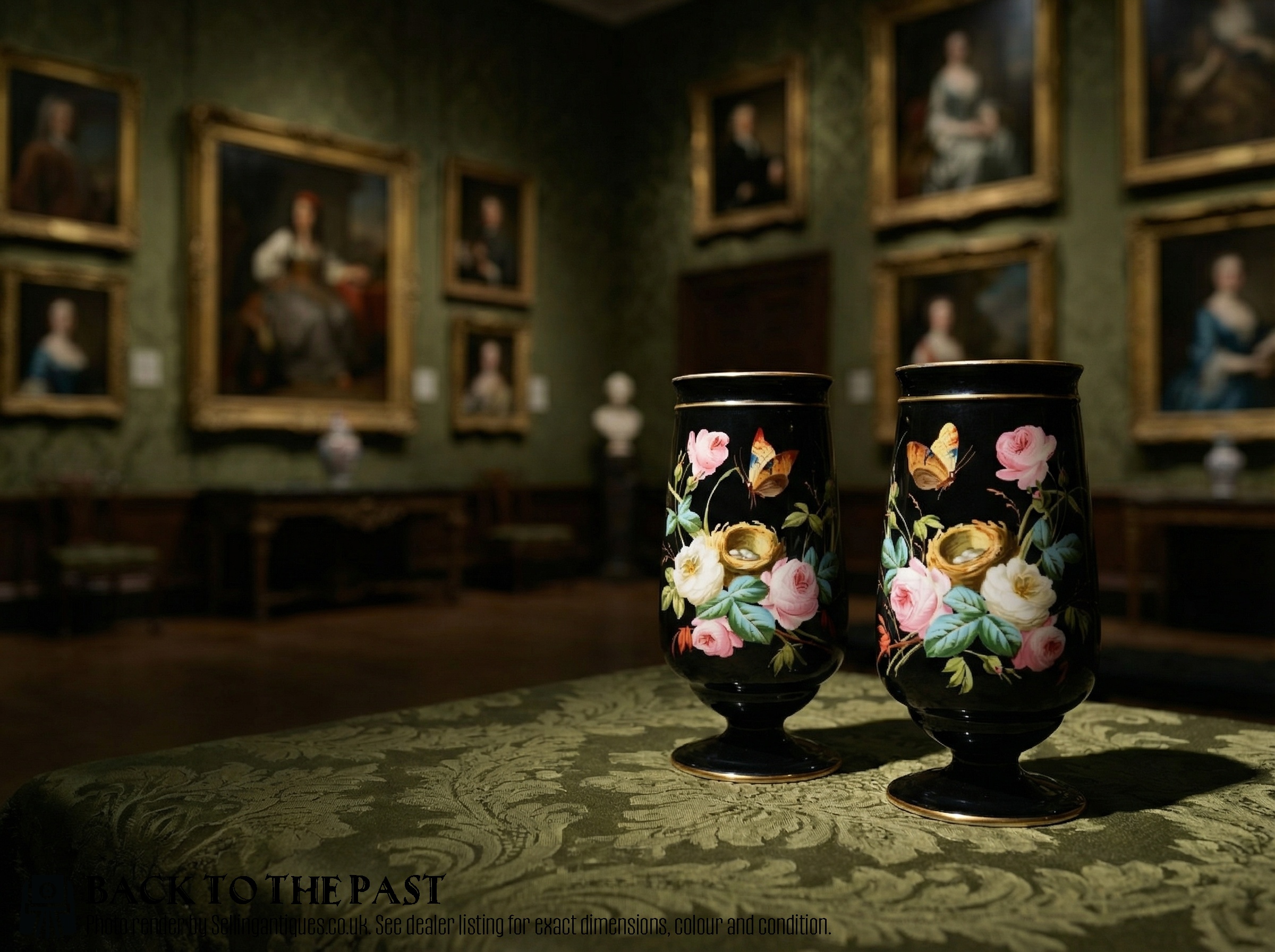
Black gilt porcelain covers decorative wares and mounted furnishings from the nineteenth century, including vases, dishes, boxes, and lamps. These pieces combine deep black ceramic bodies or ebonised surrounds with rich gold leaf and enamel highlights.
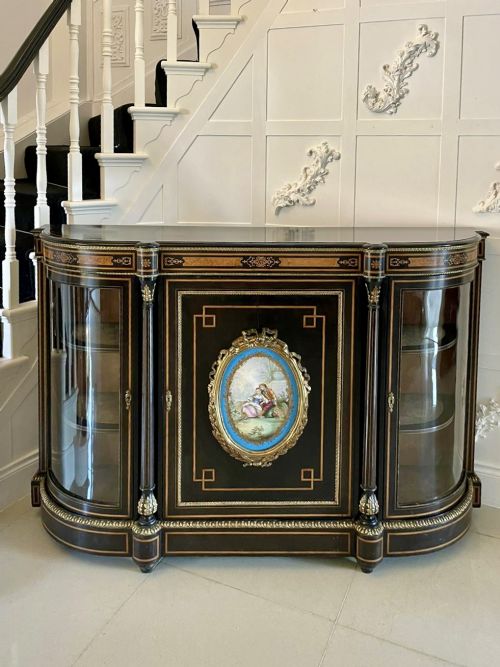
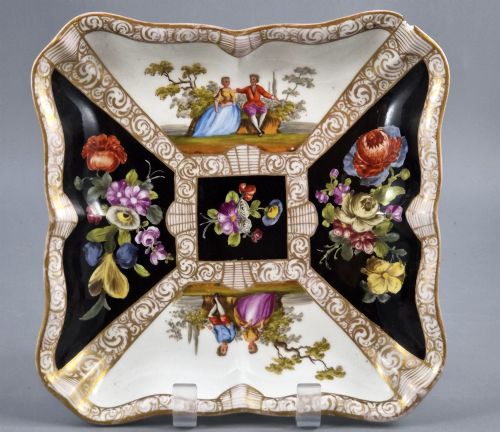
The selections span English, continental, and Asian production, featuring Meissen plates, Wedgwood lustre, Japanese Satsuma, and Chinese Famille Noire style vases. Victorian ebonised cabinets and credenzas mounted with porcelain plaques also appear frequently alongside these ceramic vessels.
Buyers encounter forms influenced by Rococo Revival, Chinoiserie, and French Neoclassical design. The palette relies on the heavy contrast between opaque black surfaces and reflective gilding, often paired with hand-painted scenes or mythical motifs.
How they were made
Makers applied rich gold leaf and enamel over porcelain bodies or layered lacquer over black paint. Ormolu mounts and gilt-metal framing frequently secure the ceramic elements to ebonised wood structures.
Firing techniques achieved deep black grounds, upon which artisans hand-painted intricate motifs such as Watteau scenes, dragons, and figures. Subsequent gilding added relief and linear detail to complete the visual depth.
Black Gilt Porcelain Retail Price Guide 2026
Typical asking prices for black gilt porcelain among the pieces listed under this phrase on Sellingantiques today, from the lower quarter to the upper quarter. They describe what is for sale here now, not the wider market.
Some items feature dragon motifs and arhats, proving that nineteenth-century artisans enjoyed populating fine china with mythical beasts and wise men.
What varies in quality
Quality rests in the precision of the hand-painting and the crispness of the gilding against the dark ground. Pieces featuring detailed figural work or complex enamel integration show superior craftsmanship compared to simpler monochrome applications.
The integration of secondary materials dictates the standard of furniture and mounted items. Finely cast ormolu mounts and carefully joined ebonised timber elevate the overall execution of the piece.
Meissen·Wedgwood·Beswick
The Black Gilt Porcelain Glossary
- Ebonised
- Wood treated to imitate ebony, giving a dense black finish that provides a dark backdrop for porcelain panels and ormolu mounts. This treatment is common in Victorian cabinetwork.
- Ormolu
- Gilt bronze mounted onto furniture and ceramic objects for decorative accent. It adds metallic warmth and structural framing.
- Famille Noire
- A Chinese ceramic palette dominated by a black enamel ground. It often highlights floral or figural designs in contrasting colours and gold.
- Lustre
- A type of ceramic glaze containing metallic oxides that produce an iridescent sheen. Wedgwood produced notable examples in this technique.
Black Gilt Porcelain: Frequently Asked Questions
What is black gilt porcelain?
Black gilt porcelain refers to ceramic vessels, dishes, and mounted furnishings characterised by dark or black surfaces enriched with gold leaf and enamel decoration.
These pieces draw on nineteenth-century European and Asian traditions, merging ceramic arts with cabinetmaking and metalwork.
How were these pieces used?
Objects such as vases, boxes, and plates served as decorative accents within Victorian and continental interiors, often displayed on credenzas and pier cabinets.
Larger items functioned as lamps or centrepieces, while mounted porcelain plaques adorned household furniture to project status and taste.
How do I date these items?
Dating relies on stylistic markers, factory marks, and associated mounting techniques such as ormolu frames and ebonised woodwork.
The listings span the nineteenth and early twentieth centuries, capturing periods from Victorian production to Art Deco.
How do I care for black gilt porcelain?
Care requires gentle dusting with a soft, dry cloth to protect delicate gold leaf, enamel painting, and ebonised wood finishes.
Avoid chemical cleaners and excess moisture, which can damage the metallic gilding and the integrity of the ceramic ground.